Tokyo 5 Day Itinerary: A First-Timer's Guide (From 3 Months Living There)
- Last Updated On July 30, 2026
Disclaimer: Some of the links on this site are affiliate links. This means I may earn a small commission if you make a purchase through them at no extra cost to you. I only recommend things I genuinely use or believe in.
The first time we stepped off the plane in Tokyo it was an attack on the senses, and that was after spending three weeks in Thailand.
The crowds, the lights, the sheer amount of things to see and do. We couldn’t be more excited!
I still remember landing late at night, getting lost in Shinjuku station and stopping to have a McDonald’s to figure out how on earth we got to our apartment.
It’s funny to look back on it now and realise just how clueless we were.
Now that we’ve spent a total of 3 months in and out of Tokyo, and even lived there for 1 month, we feel like we’ve come to understand just how much the city has to offer (although we still get lost in Shinjuku station). Which is exactly why we built this Tokyo 5 day itinerary around how we’d actually do it ourselves.
This guide won’t necessarily stop you from getting lost (that’s the best part of travelling), but we hope that it can help cut through the noise and give you a clear structure on what we think is the best way to tackle Tokyo.
Whether you’re on a classic golden triangle trip, passing through on the way to a ski season or simply on an extended layover. This 5-day itinerary is designed to feel full without feeling rushed, which we think is how Tokyo should be experienced.
In a Rush? Here Are Our Favourite Hotels in Tokyo
Contents
Toggle5 Day Tokyo Itinerary: Quick Guide
If you’re looking for a quick overview of what you should be getting up to in Tokyo, here’s the whole trip at a glance. (Though if you’ve got the time, we’d argue every day below is worth the full read.)
| Day | Area | What You're Doing |
|---|---|---|
| Day 1 | Shinjuku | Land, drop your bags,get a taste of Shinjuku's chaos |
| Day 2 | Asakusa, Kitchen Street & Skytree | Senso-ji at sunrise, kitchen knives, and a "golden poo" you won't forget |
| Day 3 | Shinjuku to Shibuya | A picnic in Gyoen, an ancient forest shrine, then straight into Shibuya Scramble at golden hour |
| Day 4 | Tokyo Tower, Ginza, Akihabara & Ueno | Old Tokyo, new Tokyo, and cheap Torikizoku beers |
| Day 5 | TeamLab Planets & Omakase | Slow down, dissolve into some light art, and let a chef feed you your last supper |
Is 5 Days in Tokyo Enough?
It’s one of the first questions people ask when planning a trip here, and honestly, it’s the right one to ask. Afterall, Tokyo is the world’s largest city!
So, is five days enough?
For a first visit, we genuinely think it’s the sweet spot.
We’ve spent a combined three months in Tokyo across multiple trips. That includes an entire month living in the city back in 2024. Not as tourists rushing between landmarks, but actually living slowly, finding our neighbourhood coffee shops, getting lost on purpose, and learning which backstreets were worth getting lost in.
We’ve done Tokyo in 48 hours (rushed, would not recommend) and we’ve done it with no agenda at all. Five days sits right in the middle, and we think it’s where the magic happens.
With five days you have enough time to see all the main attractions (which really are worth the hype), as well as explore the quieter neighbourhoods that let you actually get a feel for the city.
If we were to go back and do Tokyo for the first time. This is exactly what we would do.
Short on time? We’ve also written a 1-day Tokyo itinerary for anyone squeezing in a flying visit.
How to Get Around Tokyo
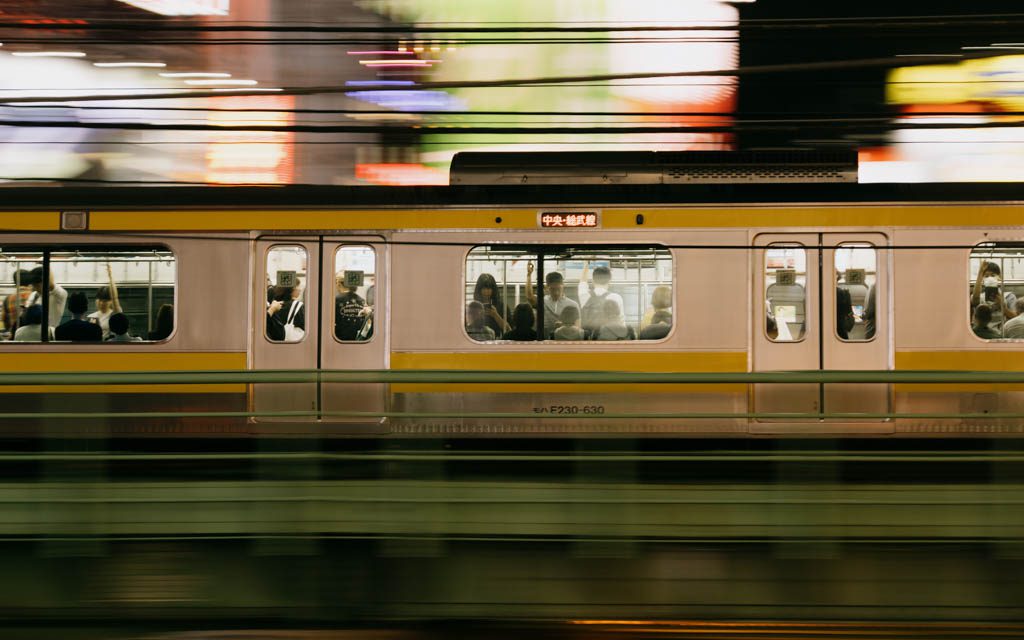
How you get around Tokyo is going to play a major part of how we structure our itinerary. The key to getting the most out of 5 days in Tokyo is to utilise the vast network of trains (and buses) to make sure you see the top attractions spread throughout the city.
Now if you’re from the UK then you might be dreading the thought of relying on public transport, but rest assured, Japan, and Tokyo in particular has public transport down to a tee! It’s hard to comprehend just how perfectly Japan runs its public transport system with so few faults, especially when you compare it to the lackluster service we’ve grown used to in the UK.
But, back to Tokyo! For five days in Tokyo, the metro will be your best friend. Here’s everything you need to know before you tap in for the first time.
Get a Suica Card for Tokyo
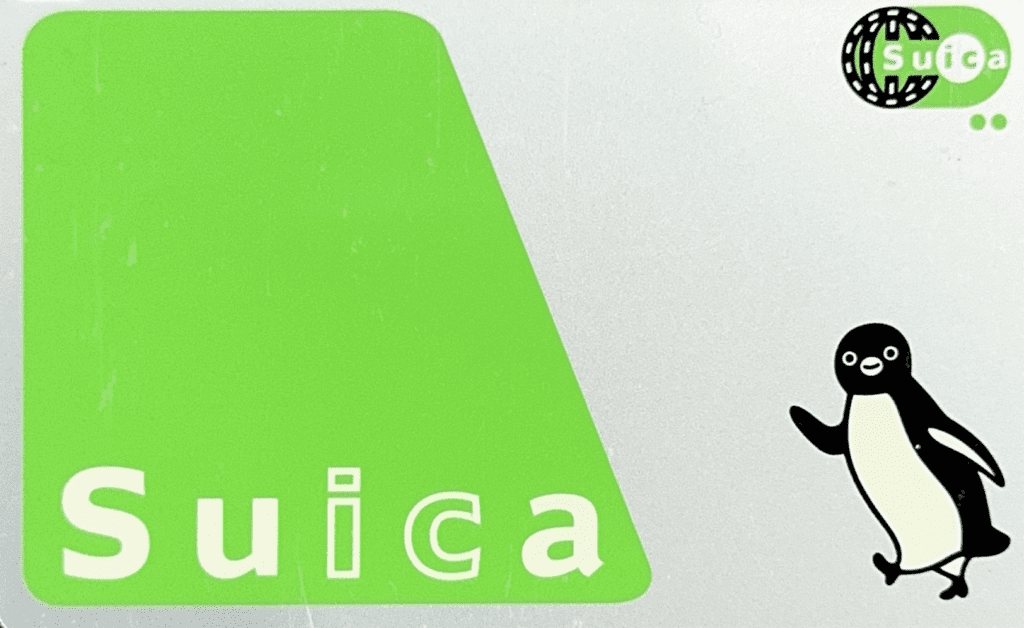
This card will be your key to using transport all over Japan. Trains, subway, buses. It’s an essential piece of the puzzle for navigating Japan.
Unsure how to get a Suica card? We’ve written a step-by-step guide on how to set up a Suica card.
Tokyo’s Rail Network Explained
Tokyo’s rail network is actually operated by separate companies: JR lines, subway lines (split between Tokyo Metro and the Toei Subway), and various private railways. They all interconnect, they all accept your IC card, but knowing they’re different helps explain why the map looks the way it does.
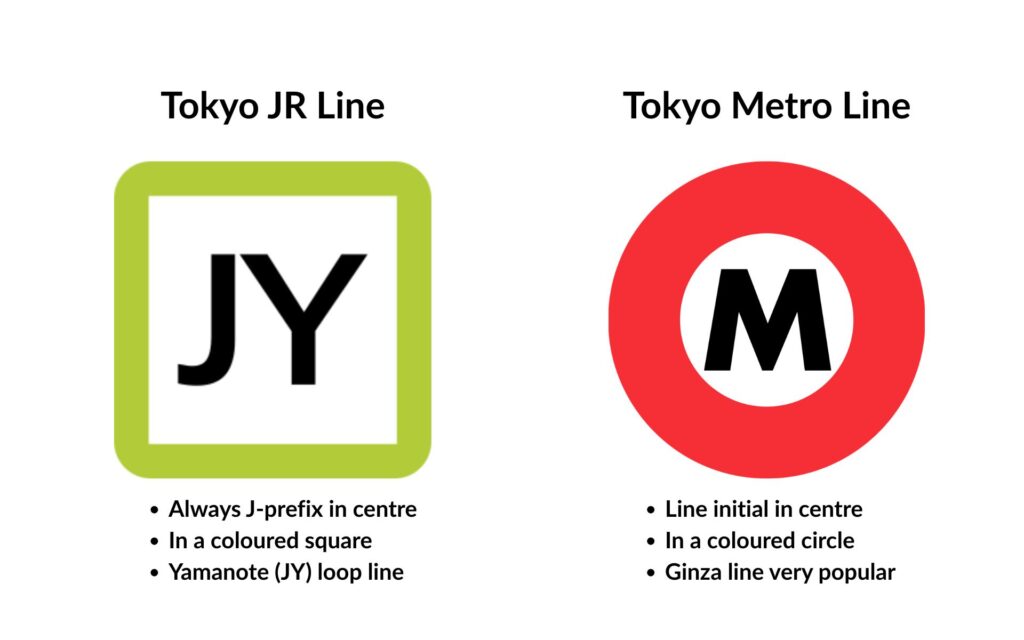
If you ever want to know which is which at a glance, JR lines sit in a coloured square, Metro lines in a coloured circle.
In practice, you don’t need to think about this too hard. Get a Suica card, let Google Maps tell you which train to take, and trust the process.
But if you want a rough mental map, JR covers the big above ground loop lines (the Yamanote Line being the one you’ll use most), Tokyo Metro handles most of the underground routes into the neighbourhoods in between, and Toei fills in the gaps.
If you only memorise one line before you arrive, make it the Yamanote. It’s the green loop that connects all the major hubs in Tokyo. Shibuya, Shinjuku, Harajuku, Ueno, Akihabara. It’ll be your anchor for the whole trip.
Everything else, just ask Google Maps.
Best Time to Visit Tokyo
Tokyo is worth visiting any time of year. But some seasons are undeniably better than others, and a little context goes a long way when you’re planning a trip this far in advance.
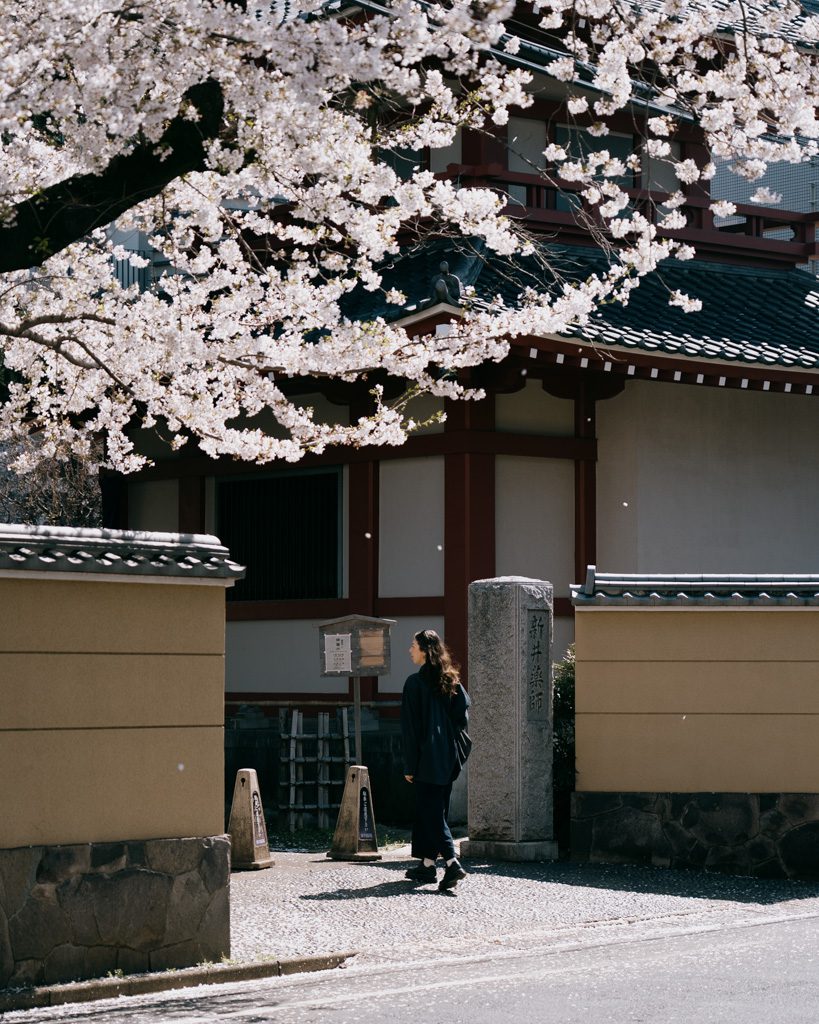
Spring in Tokyo (March–May)
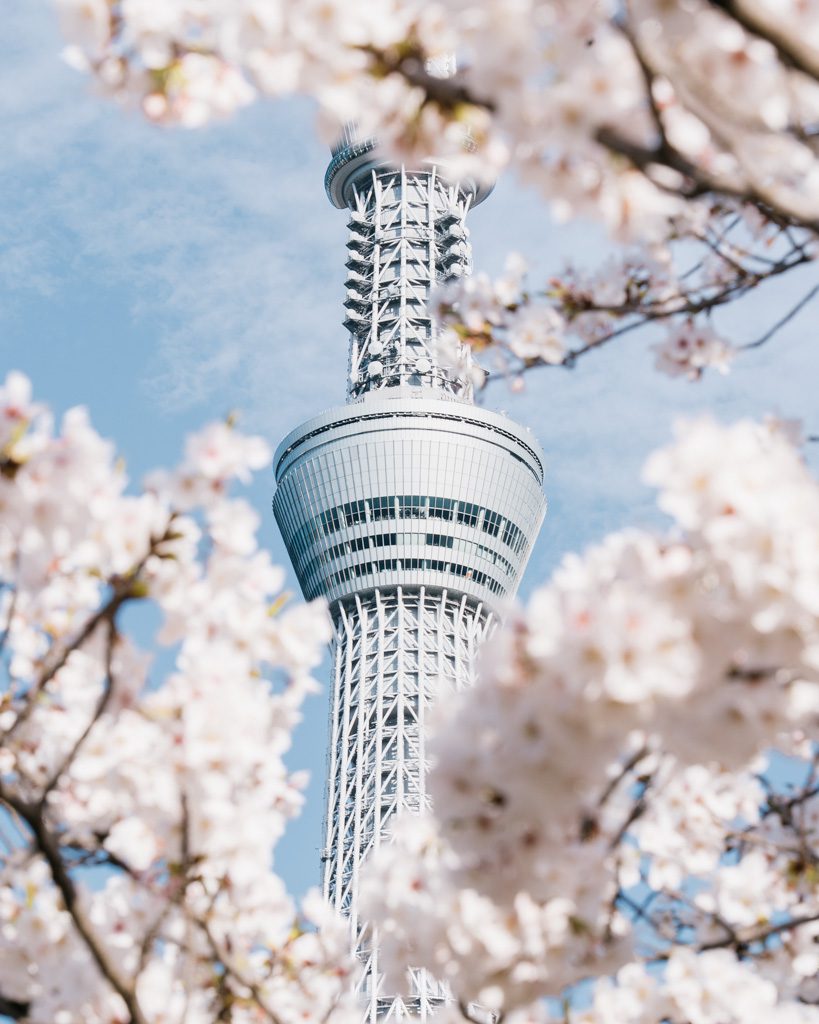
Spring is Tokyo at its most beautiful, with cherry blossoms, mild weather, and petals falling into your convenience store coffee. It’s one of our favourite seasons but it’s also everyone else’s. It’s going to be busy so book early!
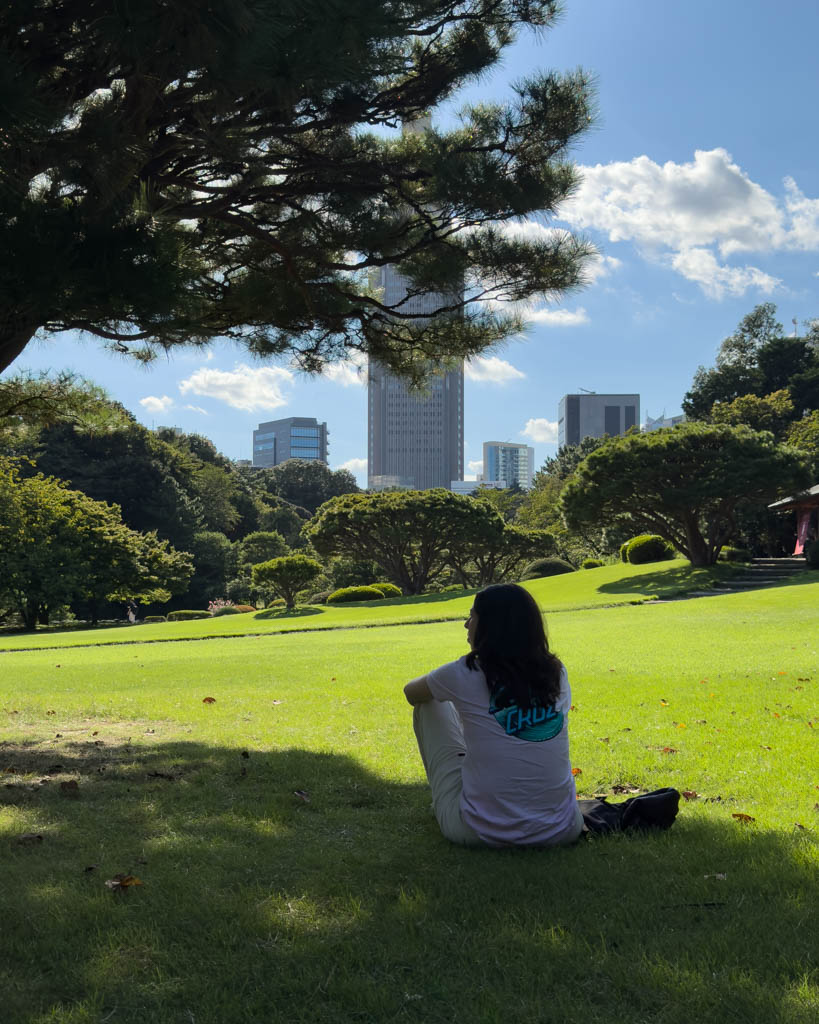
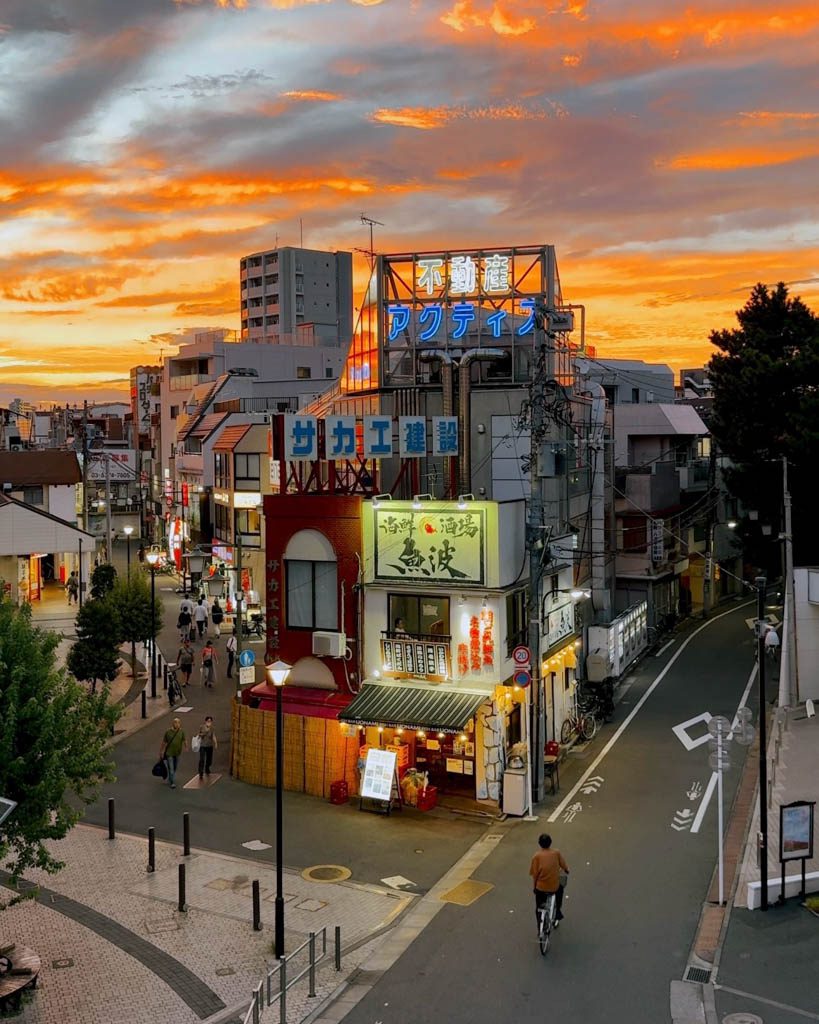
Summer in Tokyo (June–September)
A Tokyo summer brings a packed festival calendar and fireworks most weekends, but the heat is genuinely brutal. We spent a month living here in September 2024 and planned entire days around which konbini had the best air conditioning.
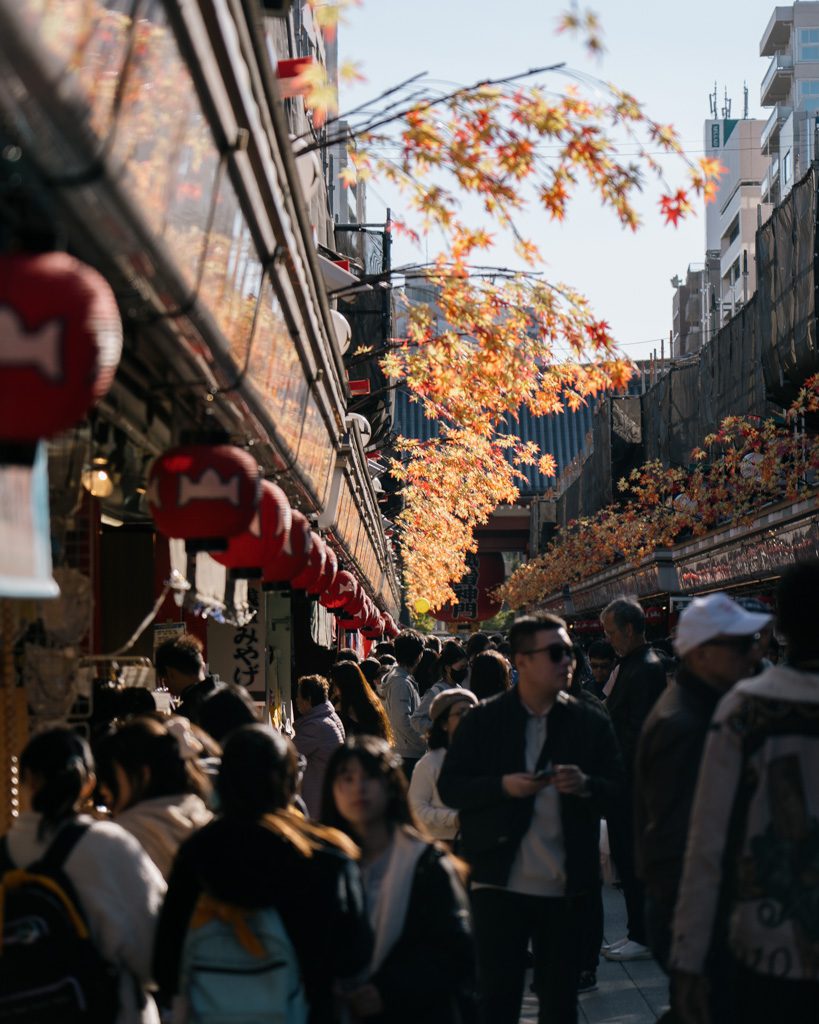
Autumn in Tokyo (September–November)
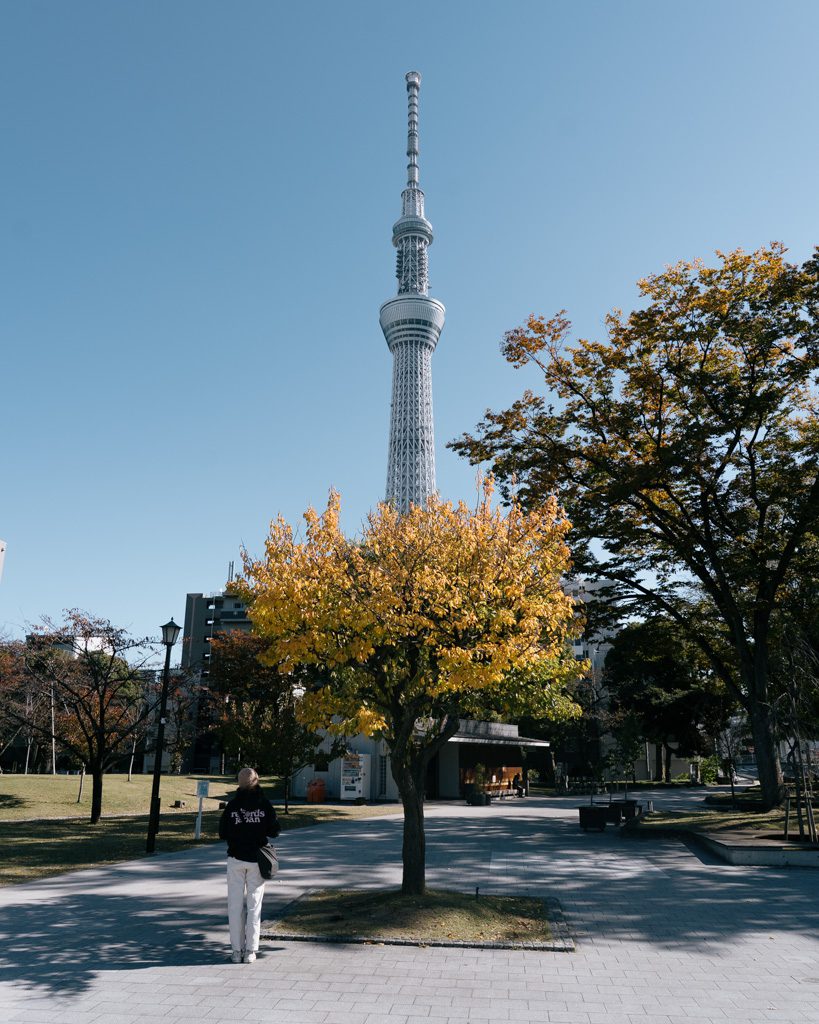
Autumn gives spring a real run for its money, with amber and gold trees lining the parks, thinner crowds, and one of the best windows for a Mt Fuji day trip. Just know the colours don’t peak until mid to late November, so check the foliage forecast before booking.
Winter in Tokyo (December–February)
Winter is quiet, affordable, and Tokyo is full of illuminations, though we’ve spent the least time here ourselves, having opted for a ski resort most winters instead. If you’re into skiing, why not add a few days on the mountain to your Tokyo trip?
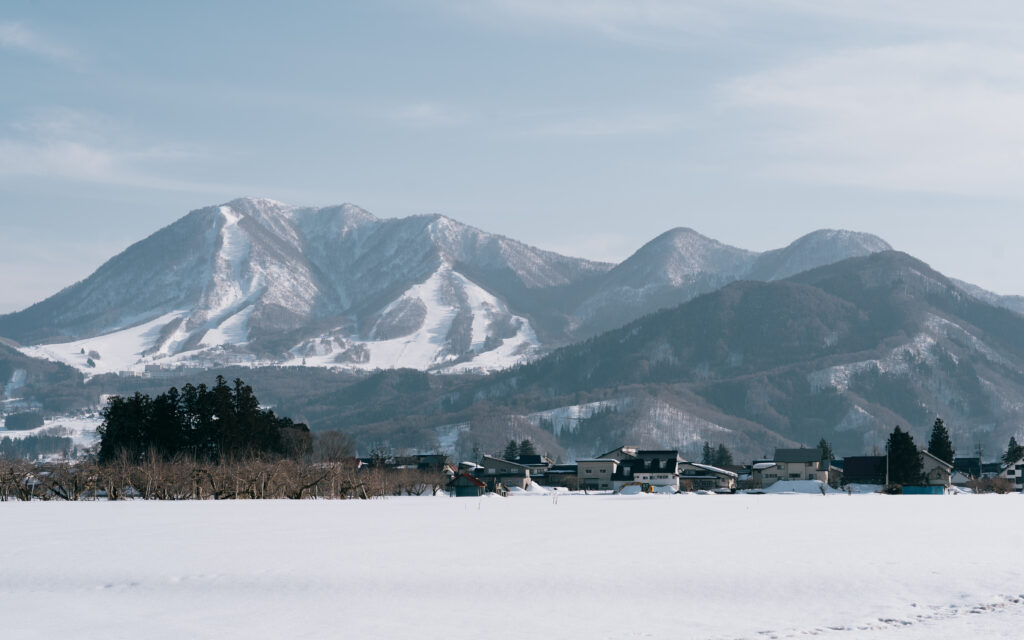
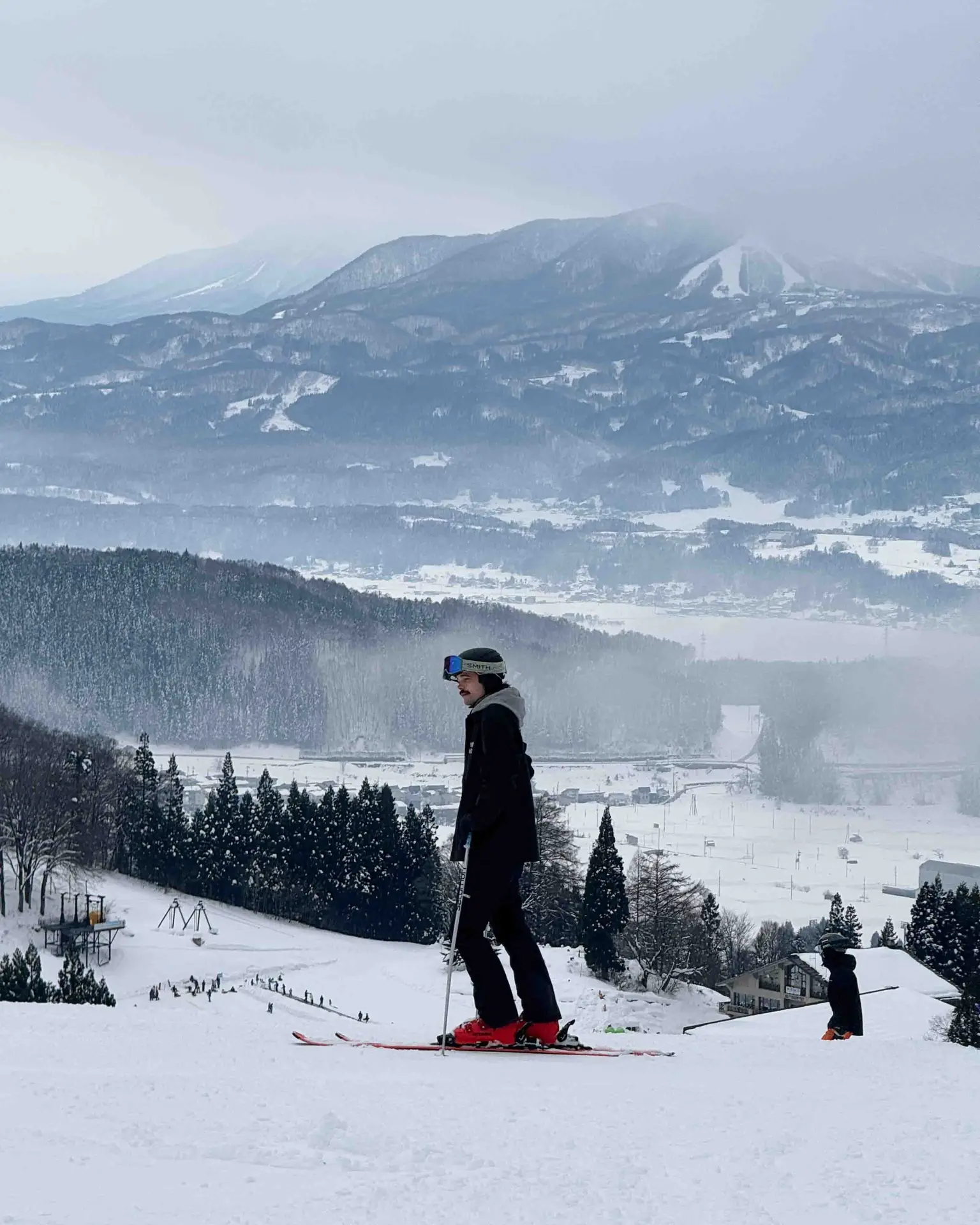
Slopes near Nozawa Onsen only two hours away from Tokyo!
Best Season to Visit Tokyo: Our Recommendation
If you can choose when to visit Tokyo, go in spring for the cherry blossoms or autumn for the momiji season. Both offer mild weather, stunning scenery, and Tokyo at its most photogenic. Just come prepared for the fact that you won’t be the only one who thought of it.
If summer is your only option, embrace the festivals, pack light breathable clothing, and make peace with the fact that the nearest air conditioned konbini will become your best friend.
👉 We’ve written a full breakdown of weather, crowds, and what to expect for each season:
Best Time to Visit Tokyo.
Where to Stay in Tokyo for 5 Days
Choosing the right neighbourhood for your 5 day Tokyo itinerary can make or break your trip. With Tokyo being such a vast, spread-out city, where you stay shapes your entire trip. You ideally want somewhere that has a lot of local attractions, meaning you don’t have to travel far to see a lot of the big sites. As well as somewhere that is well connected to the Yamanote line.
We’ve put together a full guide to the best areas to stay in Tokyo for first-timers, covering everything from the buzzy neon chaos of Shinjuku to the iconic Shibuya Crossing, to the quieter, more atmospheric streets of Asakusa. Including our personal recommendations for mid-range hotels in each area.
Here are our top picks for where to book, spread across Shinjuku, Shibuya, and Asakusa:
Tokyo 5-Day Itinerary: Day-by-Day Breakdown
Day 1 - Welcome to Tokyo: First Impressions in Shinjuku
I honestly think there’s no better introduction to Tokyo than arriving in Shinjuku after dark.
If you can time your first evening here, and we’d always recommend trying to, do it. The neon, the noise, the sheer relentless energy of it all. Nothing quite prepares you for it.
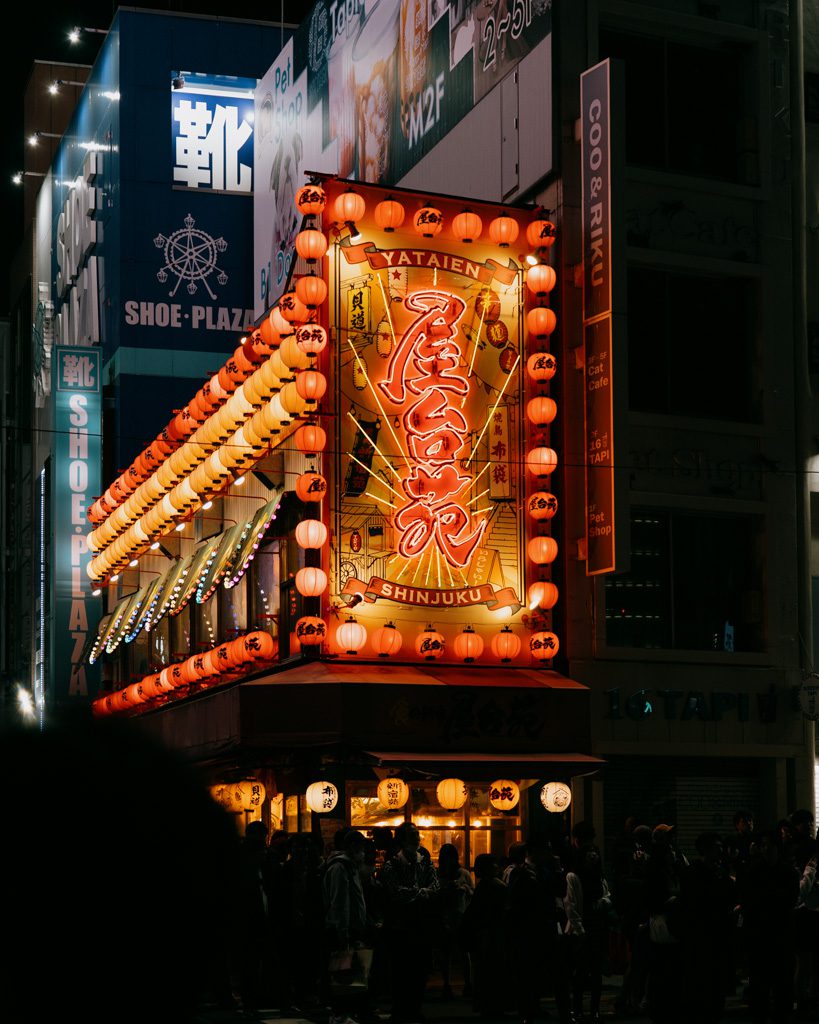
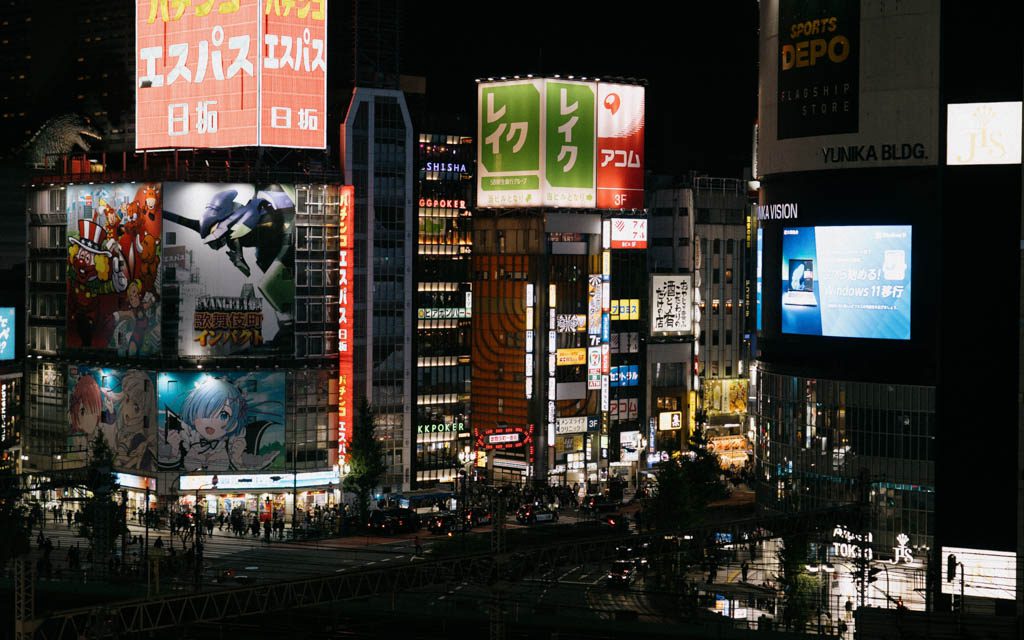
As you arrive in Shinjuku station, aim to come out of the East exit area. That’s where you’ll find the iconic 3D cat billboard that is all over the internet these days. It was our first impression of the city when we arrived in Japan and it definitely set the tone of wonder and amazement that we experienced throughout the trip.
Very much a ‘we made it’ moment!
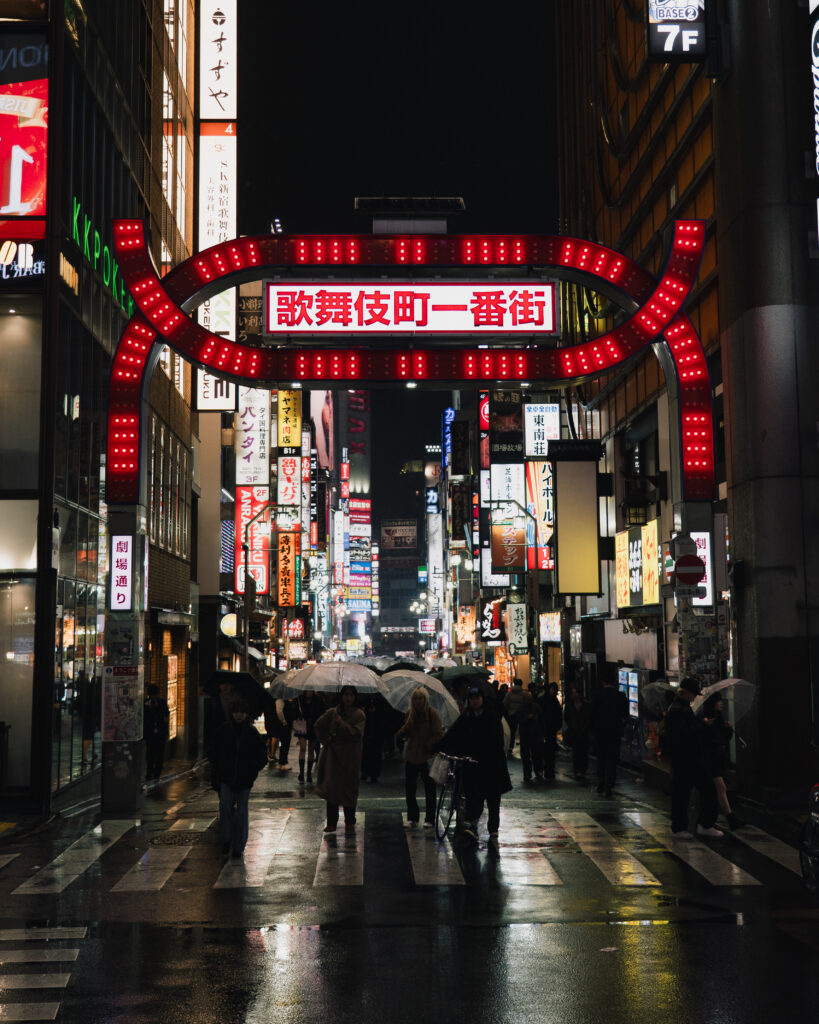
Now that you’re in Shinjuku, we’d recommend seeking out the Godzilla statue looming above the Toho Cinema building and the iconic Kabukicho gate, the neon-lit arch that marks the entrance to Tokyo’s so-called red light district (not as crazy as it might sound).
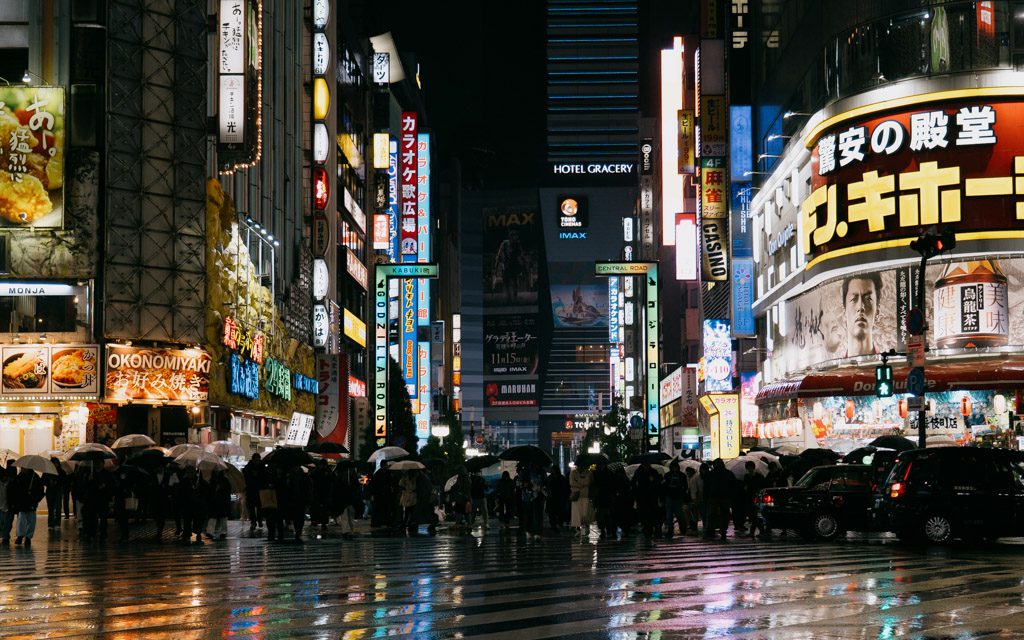
Navigating Shinjuku Station
A quick word on Shinjuku Station before you attempt to navigate it.
Get comfortable with being lost.
I wish I could sit here and give you a detailed guide on how to get around Shinjuku station but that feels like an impossible task.
We spent an entire month living in Tokyo and still regularly emerged from the wrong exit. It has over 200 exits, serves 3.5 million people per day, and is currently undergoing renovation, which means the exits keep moving! Download Google Maps offline before you arrive, embrace the confusion, and remember that getting lost in Shinjuku is still getting lost in one of the most amazing places on earth.
Where to eat in Shinjuku: First Night
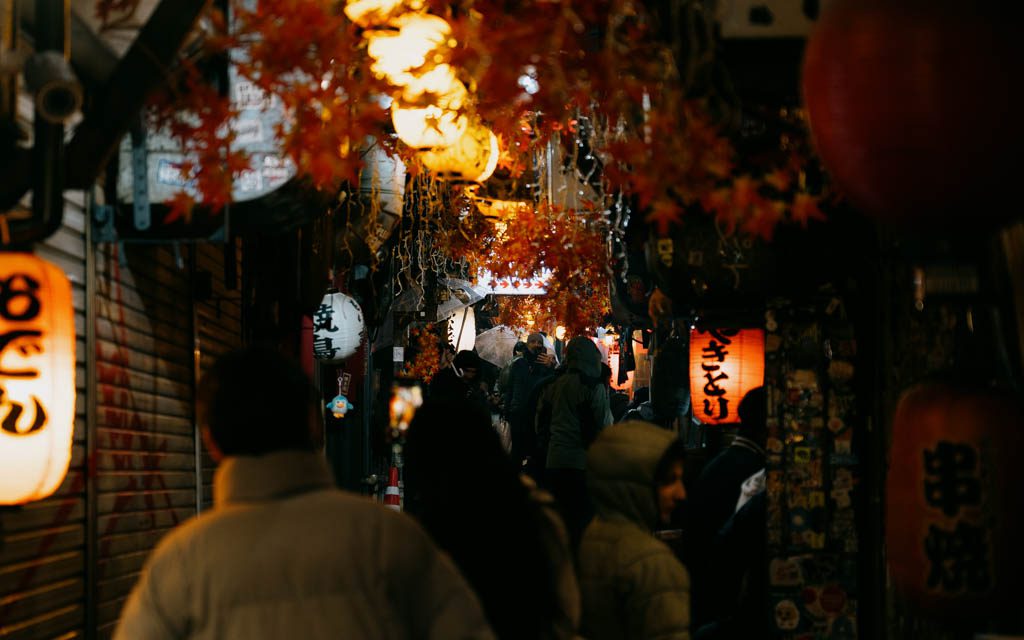
When that first night hunger hits, try to have more willpower than we did (straight to McDonald’s, no shame). If you’ve got more resolve, head to Omoide Yokocho instead. Duck behind Shinjuku station’s west exit and follow the smoke.
Omoide Yokocho is a narrow, lantern-lit alley crammed with yakitori stalls (chicken skewers), so tight you’re elbow-to-elbow with whoever’s next to you, tourist or local, doesn’t matter. Every stall blurs into the next after a few visits, so don’t overthink which one you pick. Grab a stool, point at whatever looks good, and order more skewers than you think you need. It’s the best introduction to izakaya culture we can think of.
If jumping into a local izakaya on the first night sounds exhausting, Kura Sushi is the place to go. A conveyor belt sushi chain where you order on a tablet (english menu), the plates arrive at your table, and you win a small prize for every five plates deposited. This spot became a regular for us on our first trip to Japan. Convenient and delicious!
Day 2 - Old Tokyo: Asakusa, Kitchen Street & Skytree
Day 2 Quick Summary
Senso-Ji, Viewpoint & Kitchen Street
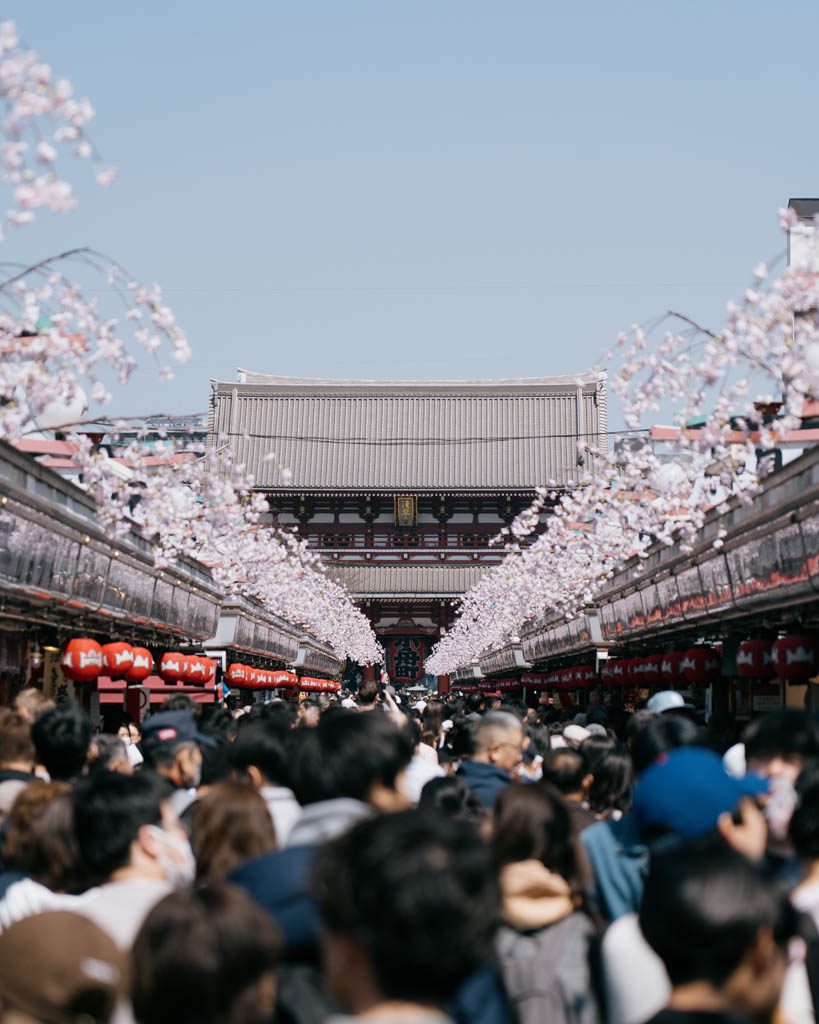
We’d recommend starting your first full day in Tokyo by immersing yourself in the more ancient and cultural experiences Tokyo has to offer. Senso-Ji.
Just be warned, it’s best done with an early start, so if you can beat the jet lag and get to Senso-Ji by 8am, do it.
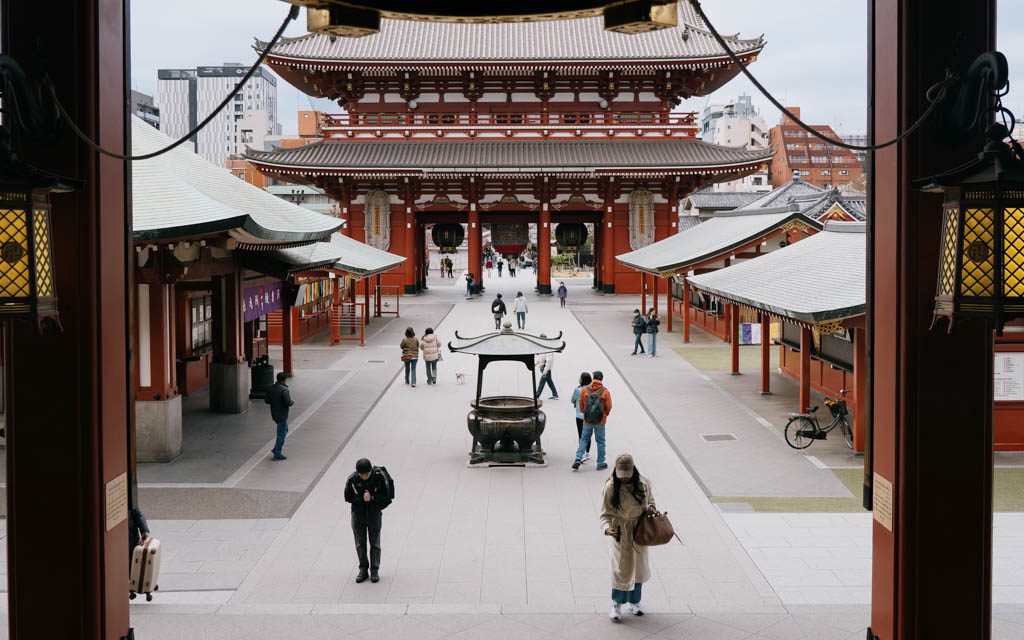
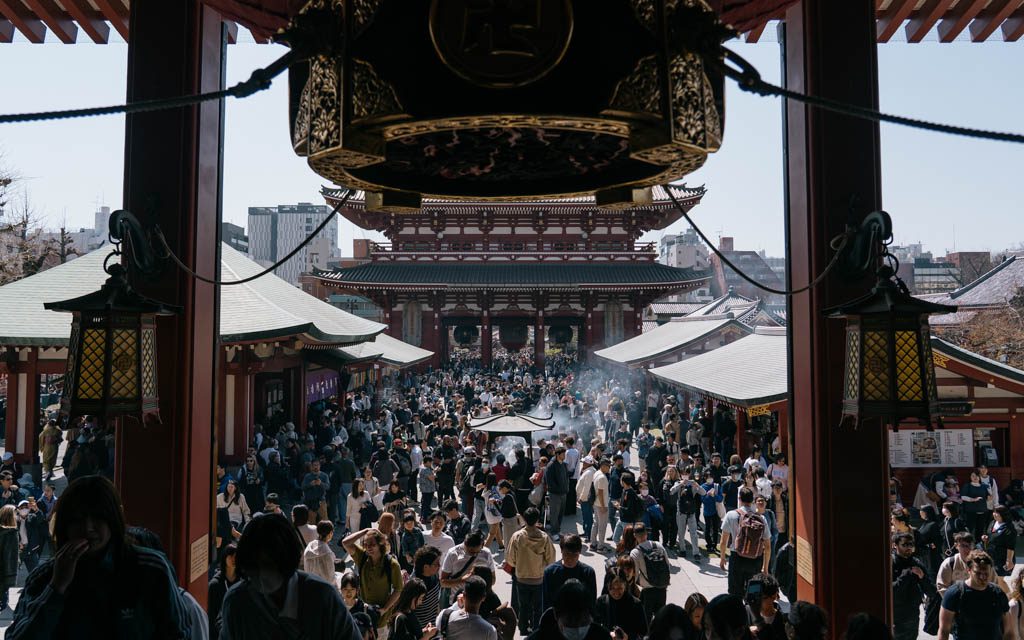
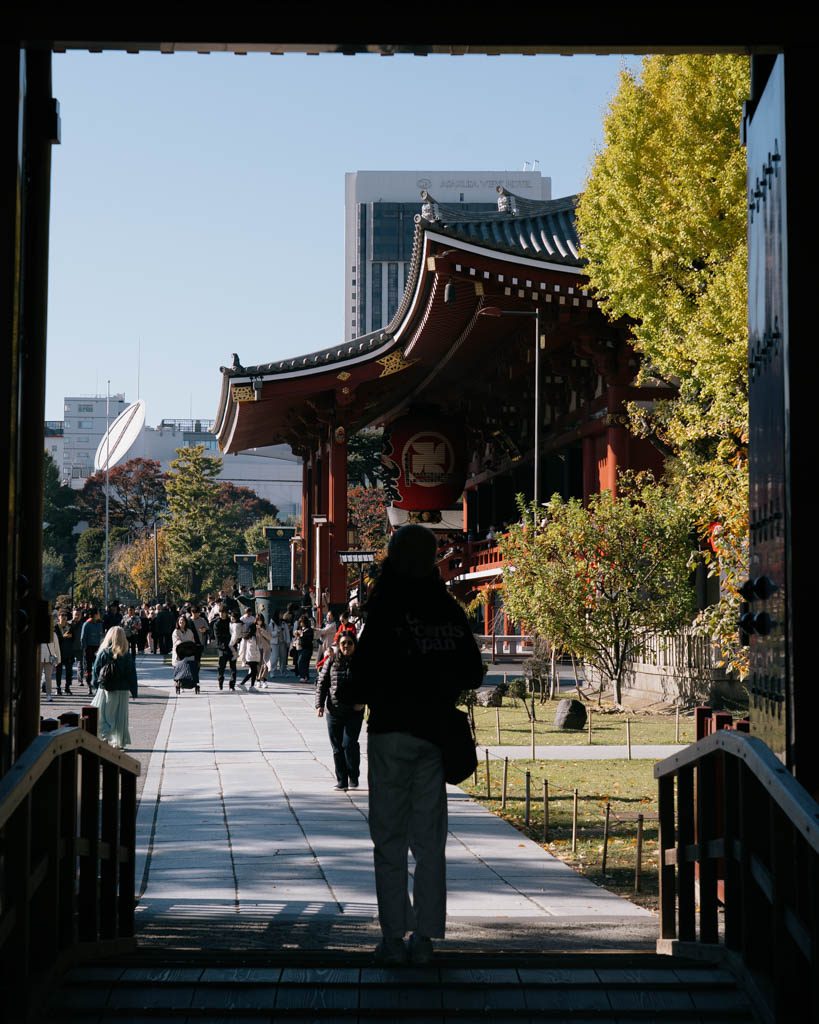
Swipe to see why it’s worth getting up early!
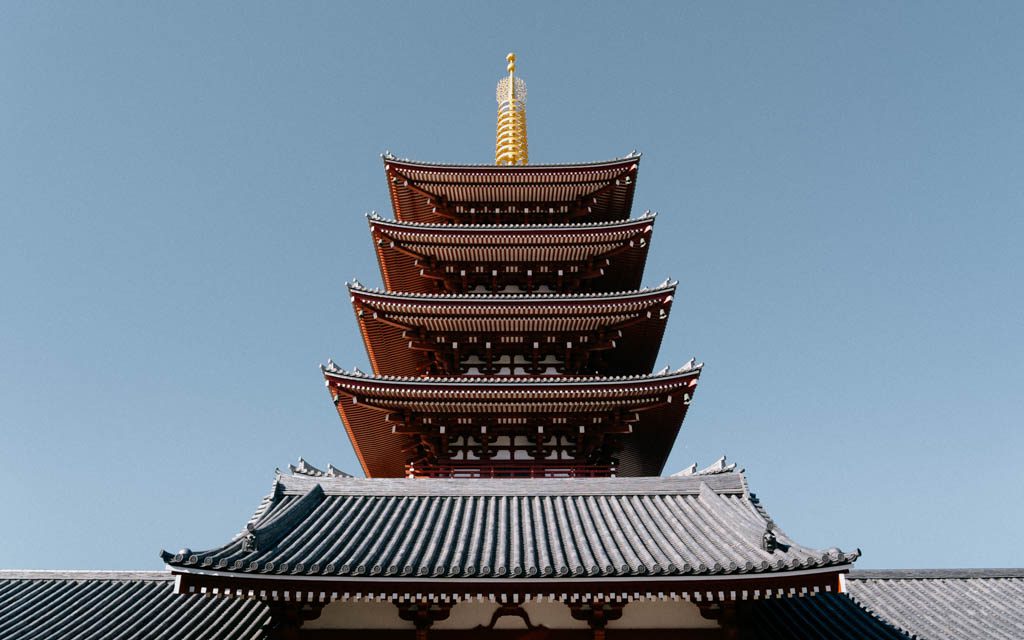
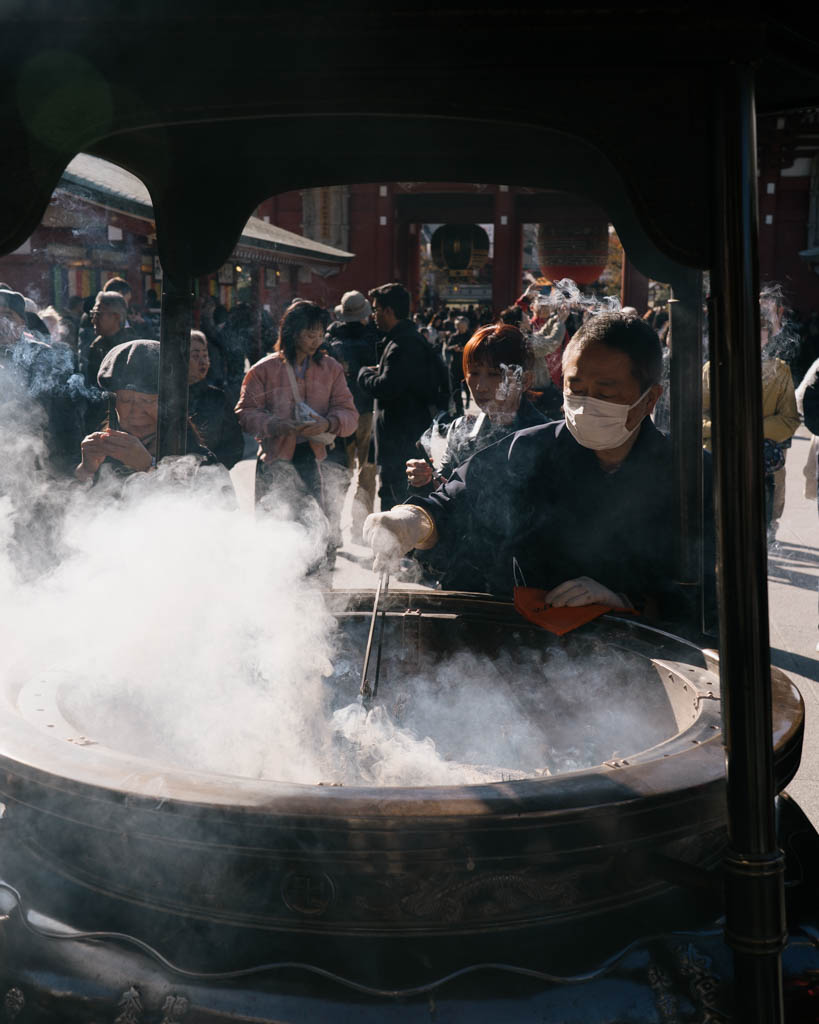
Senso-Ji is the oldest and most significant temple in Tokyo. In the early morning the incense is already going and the crowds haven’t completely filled Nakamise-dori.
One of our fondest memories of our time in Tokyo is when we found ourselves travelling through the city often and stopping in Sakura Hostel just behind Senso-Ji. A regular part of our morning routine became walking through the temple grounds before the crowds arrived. We couldn’t believe that this was a regular routine in our lives!
Don’t leave Senso-Ji without doing a fortune slip. You donate 100 yen, shake the canister, pull a stick out, and open the corresponding drawer to the number on your stick. If your fortune is good then keep it. If it’s bad then tie it to the rack outside the temple and leave it there. Bit of a loose interpretation of “leaving your problems behind” but we’ll take it.
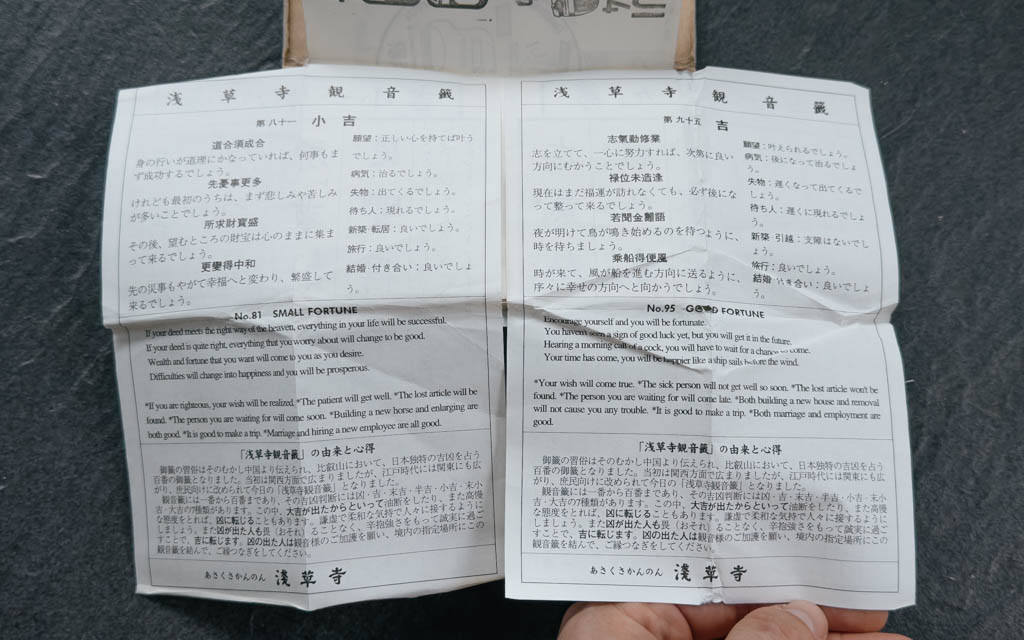
Our good fortunes which live in our souvenir book!
Feel free to wander around the shopping streets leading up to and adjacent to the temple, before crossing the road from Kaminarimon gate to the Asakusa Culture Tourist Information Centre. Take the lift up to the 8th floor where you’ll see free stunning views over the temple and Nakamise-dori.
Pro tip: If you’re collecting stamps in Japan, there are a couple at the front desk of the visitor center.
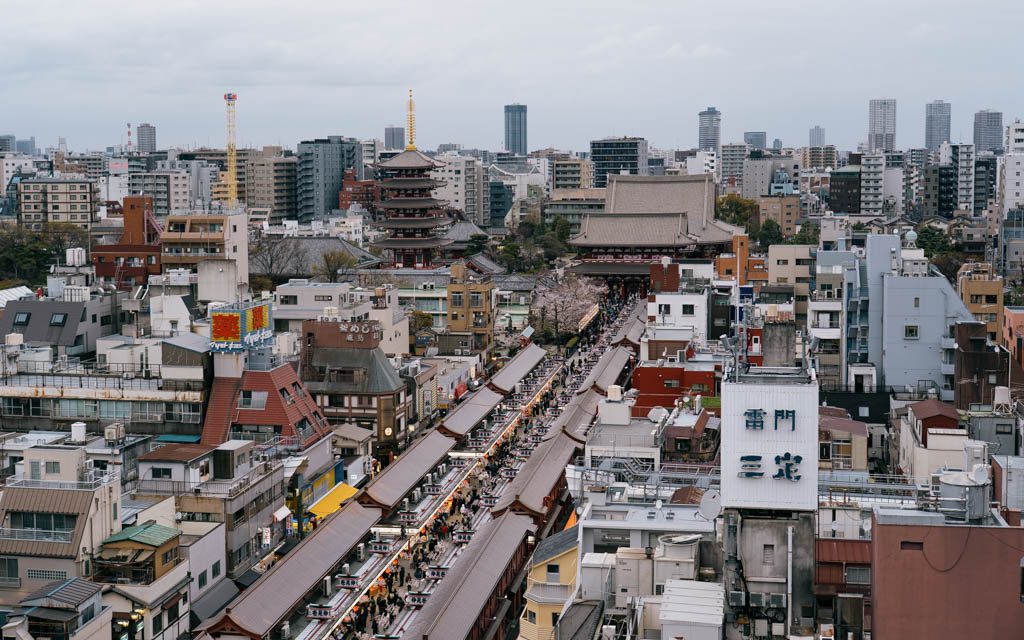
View from Asakusa Culture Tourist Information Centre
Check out our mini guide to Senso-Ji temple for a more in-depth look. 👈
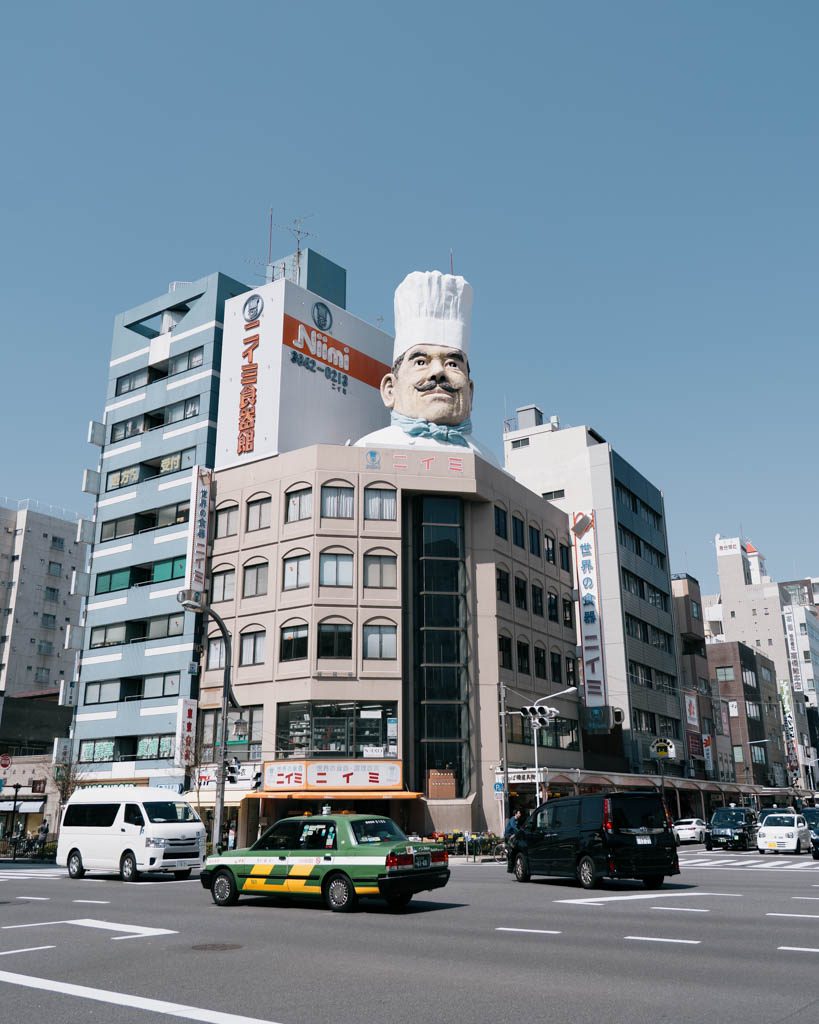
From there, it’s just a 10-minute walk to Kappabashi, Tokyo’s famous kitchen supply street. Even if you’re not planning to buy anything, the hyper-realistic plastic food replicas alone are worth the detour.
We ended up buying one of the sharpest knives we’ve ever seen as a gift for Sarah’s mum. The shop owners really know their stuff and will happily demonstrate just how sharp the knives are before you buy. Ours even came with a free engraving, which was a really nice touch.
Just a heads up though, most of the shops are closed on Sundays.
Sumida Park & Tokyo Skytree
Next up is one of our favourite parts of the day, and something we do with every friend who visits. Let’s head to the river!
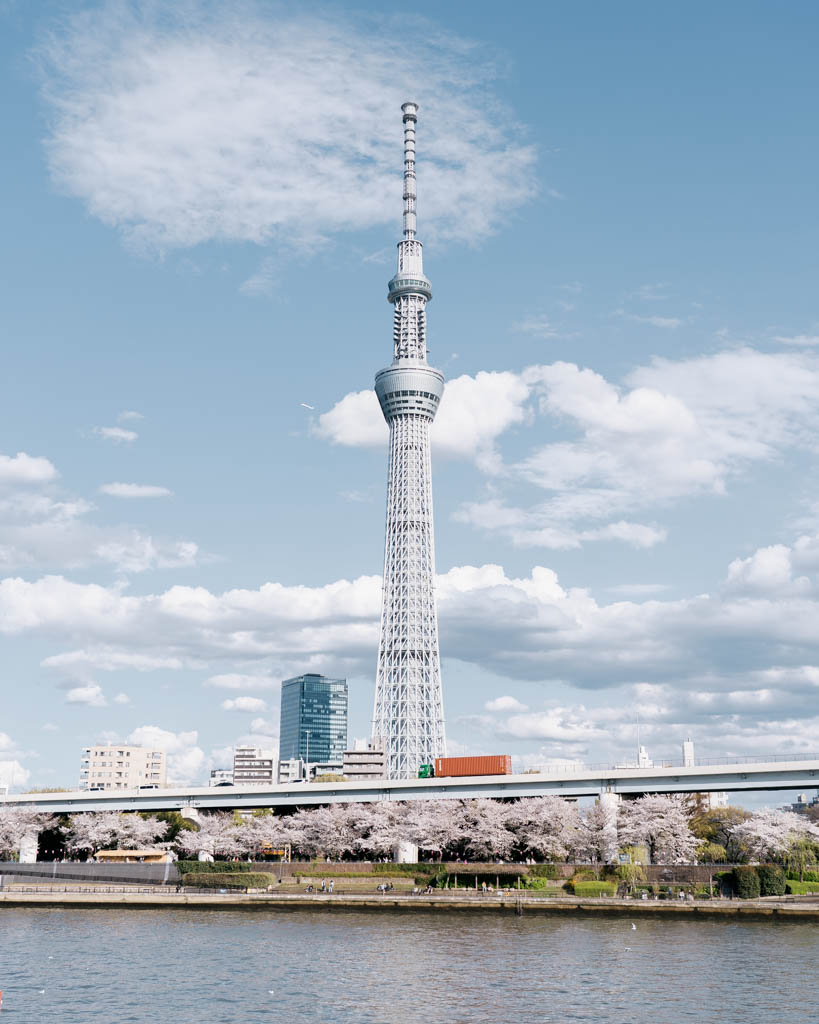
From Kappabashi, head to Sumida Park along the Sumida River Walk. If you’re visiting Tokyo during cherry blossom season this is a great place to come to see the iconic Tokyo Skytree framed by gorgeous sakura trees.
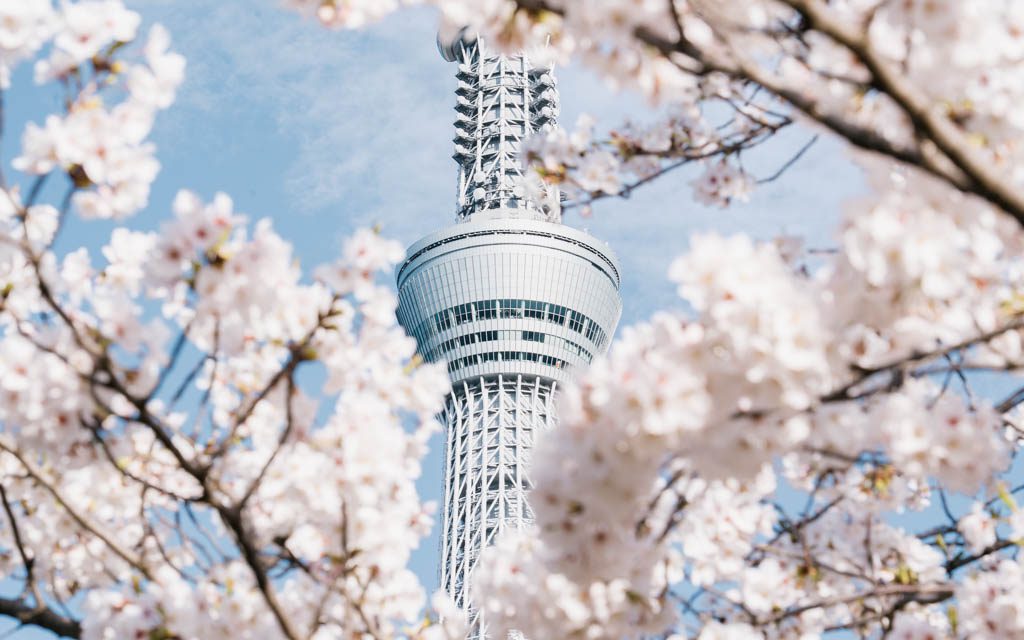
One of my fondest memories from our first trip to Japan is grabbing a bunch of snacks from a konbini (convenience store) before finding a spot in the park for a picnic beneath the falling cherry blossoms.
What better way to experience your first konbini?
On the west side of the park, keep an eye out for Deus Ex Machina. It’s one of my favourite apparel shops anywhere in Tokyo, and they even have an in-store café that’s well worth checking out.
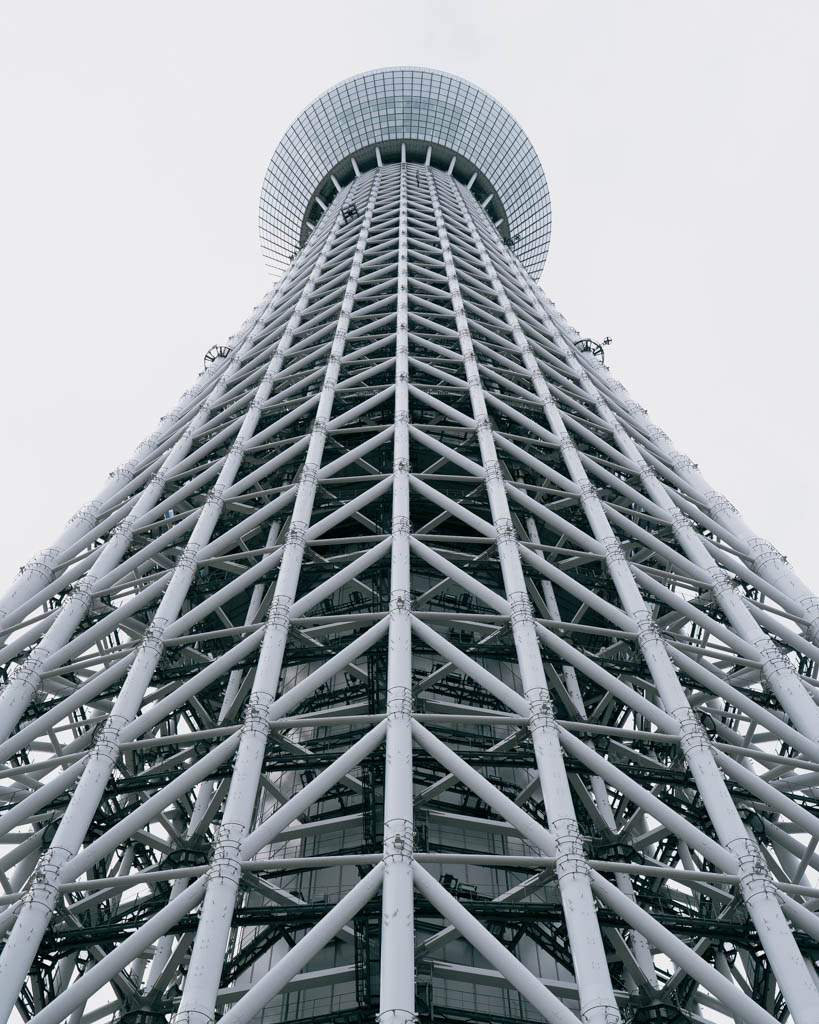
Keep walking through the park with Tokyo Skytree loaded on Google Maps. When you actually reach Skytree, look up. Every single time, it makes us feel dizzy. It’s just an absolute monolith!
If you want to go up to the observation deck we recommend booking it in advance through Klook (walk in queues on weekends are no joke) . The Tembo Deck at 350m costs around ¥2,100 (£10). Whilst the upper Tembo Galleria at 450m is available for around ¥3300 (£15).
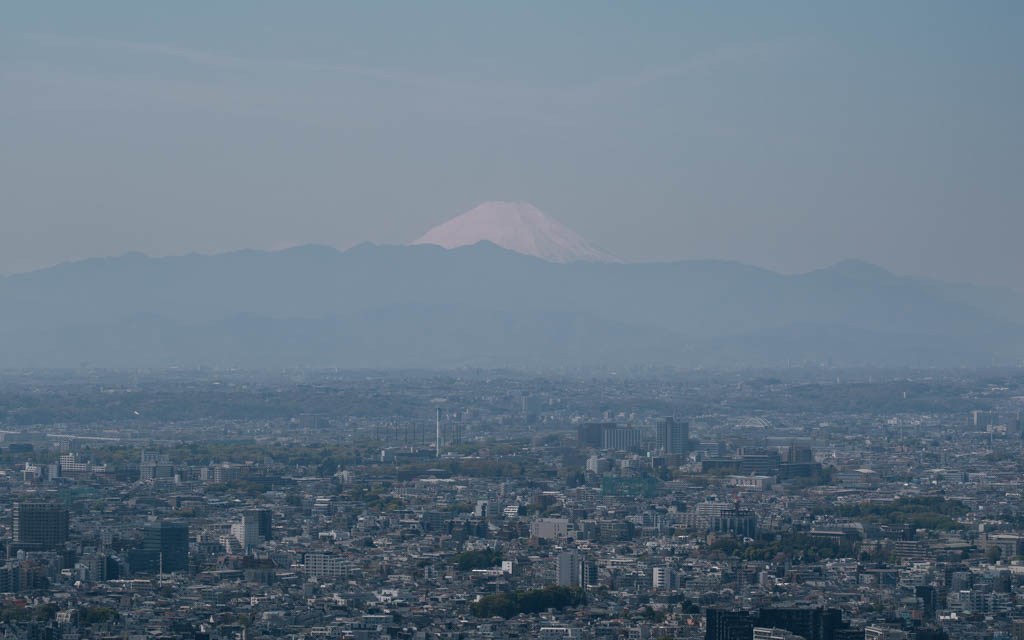
On a clear day you can see all the way to Mount Fuji!
If you’re afraid of heights or just don’t fancy doing this viewpoint then there’s still plenty to do inside the mall. A Pokemon Centre, hundreds of shops unique to Japan, and a supermarket on the 2nd floor.
If you didn’t have a picnic lunch earlier or are still feeling a bit peckish then this is a great time to grab a bento or fresh sushi from the supermarket and eat it in the food court on the 3rd floor. It’s one of those small, perfect Tokyo moments that costs almost nothing and we absolutely love doing on a slow day.
Asahi Beer & Don Quijote
If, like us, you’re of the opinion that a day of sightseeing should include a nice cold beer then look no further. On your walk back to Asakusa from Skytree, put “Asahi Sky Room” into Google Maps and follow it to what locals call the golden poo. No, that’s not a typo. The Asahi headquarters sits on the Sumida River, topped with a strange gold flame sculpture that’s earned the building its nickname.
Head up to the Sky Room for a cold pint with one of the best views over the city. Entry’s free, you just pay for whatever you order.
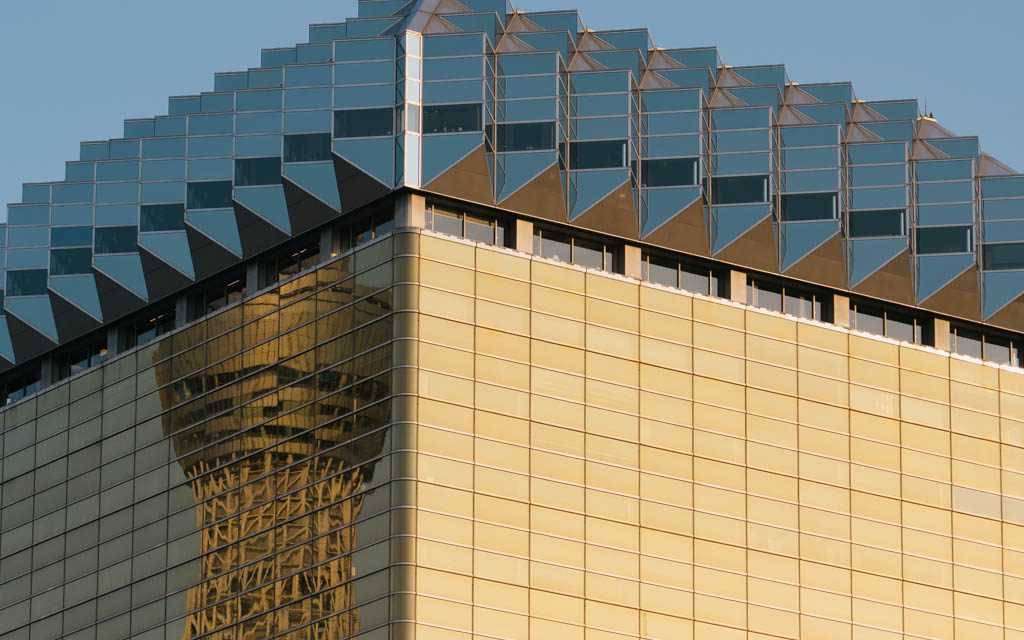
Asahi Sky Room building with Skytree reflected in the windows.
We’re not done yet though. Finish the walk back to Asakusa and head to Don Quijote!
Seven floors of pure, glorious chaos. Snacks, electronics, beauty products, fancy dress costumes, sake, jewellery, and KitKat flavours you didn’t know existed. You’ll be glad you had that rest at the Asahi Sky Room.
Don Quijote is a big chain all over Japan (you might have even seen one in Shinjuku). Just make sure to budget 45 – 60 minutes and come out with things you didn’t know you needed.
If you’ve bought too much for your suitcase, which will happen, you can literally just buy another suitcase while you’re in there! They really have thought of everything.
Where to Eat in Asakusa: Night Two
For dinner, we have two options. If you want an atmosphere, Hoppy Street is the place to be. A narrow lantern-lit alleyway just west of Senso-ji that most visitors walk straight past. Think plastic stools, red lanterns, strangers clinking glasses at tables spilling into the alley. A truly authentic vibe that can be a little intimidating to first time visitors, especially when it comes to the lack of English menus, but we recommend just throwing yourself into it!
To keep it simple, order a Hoppy set and pair it with yakitori or stew.
If you want something substantial and less intimidating then we recommend Happy Beef Curry. It’s our go to curry spot when we’re staying in Asakusa. A short walk from Don Quijote, it’s a small, unpretentious spot that we keep finding ourselves back in whenever the curry craving hits.
Day 3 - Parks, Shrines & the Scramble: Shinjuku to Shibuya
Today is our favourite walking day through Tokyo.
We’ll take you through a natural corridor from a quiet morning in Shinjuku all the way down to Shibuya at golden hour. You won’t have to hop around on trains as every step is worth doing on foot.
Day 3 Quick Summary
Shinjuku Gyoen & Meiji Jingu: A Tranquil Morning in Tokyo
This time we’re seeing Shinjuku in a completely different light, quite literally. Start the morning with a trip to Shinjuku Gyoen, and get ready to fall in love with this area all over again. By night, Shinjuku is neon and noise. By day, inside Gyoen’s gates, it’s about as tranquil as Tokyo gets.
Grab breakfast from a konbini on your way in and find a spot for a picnic once you’re inside. It’s one of Tokyo’s great little rituals, and it costs almost nothing. Gates open at 9am, entry is ¥500.
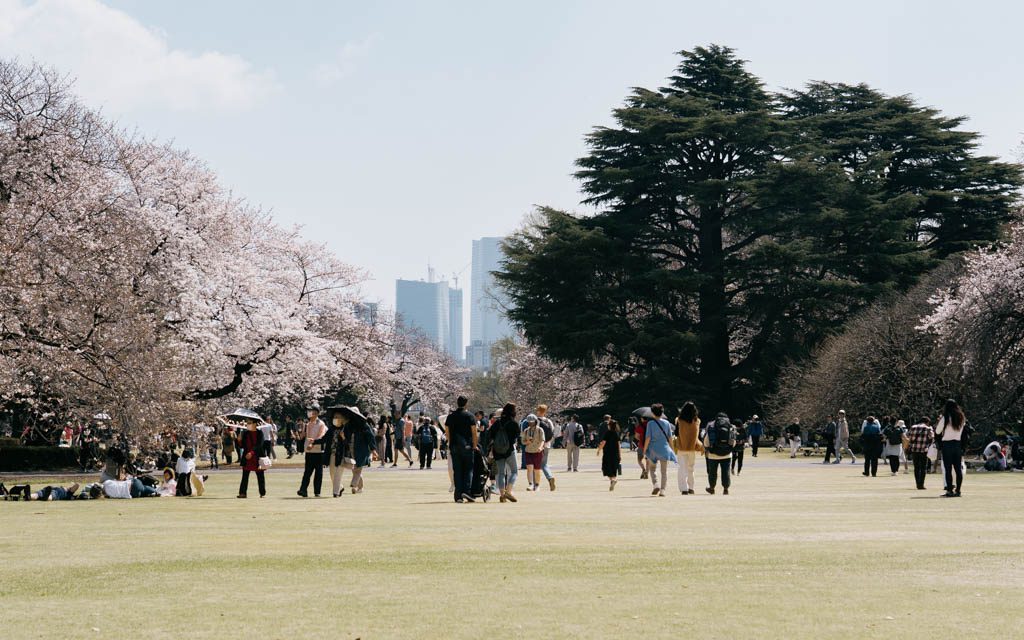
Shinjuku Gyoen is beautiful year round, but during cherry blossom season it’s on another level entirely. Several varieties bloom at slightly different times here, extending the sakura window longer than almost anywhere else in the city. It’s our favourite place in the city for sakura, and we go back on every visit.
Just a heads up, during peak cherry blossom season you may need to book a timed entry slot beforehand. It caught us out on our last visit, though we were able to sort the booking on the spot.
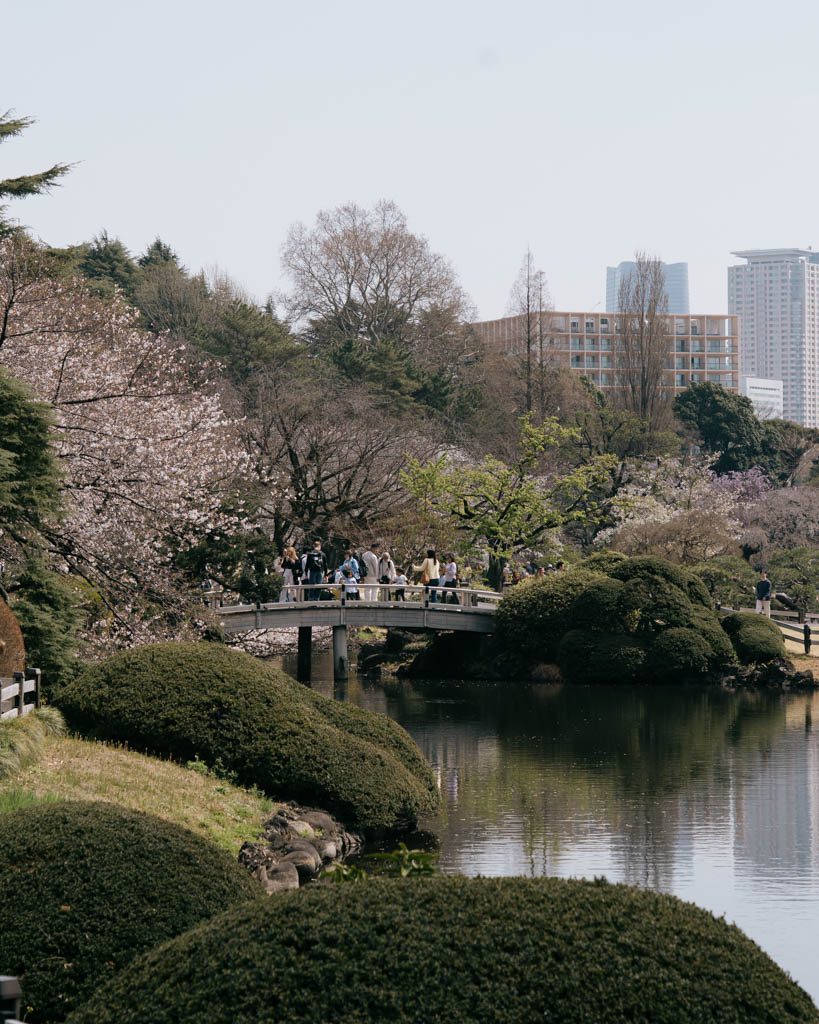
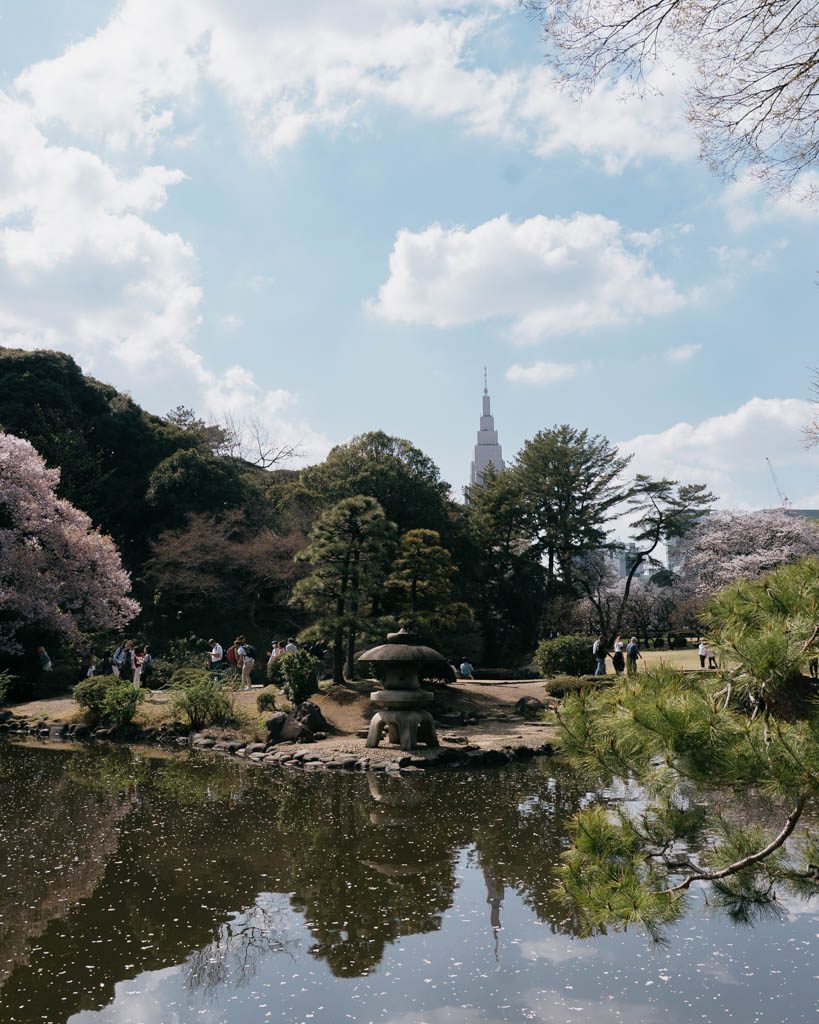
From Gyoen walk towards Meiji Jingu Shrine. On your way take a slight detour to see an iconic Tokyo photo spot, that if timed correctly shows a classic Tokyo scene of two yamanote trains passing each other on different levels.
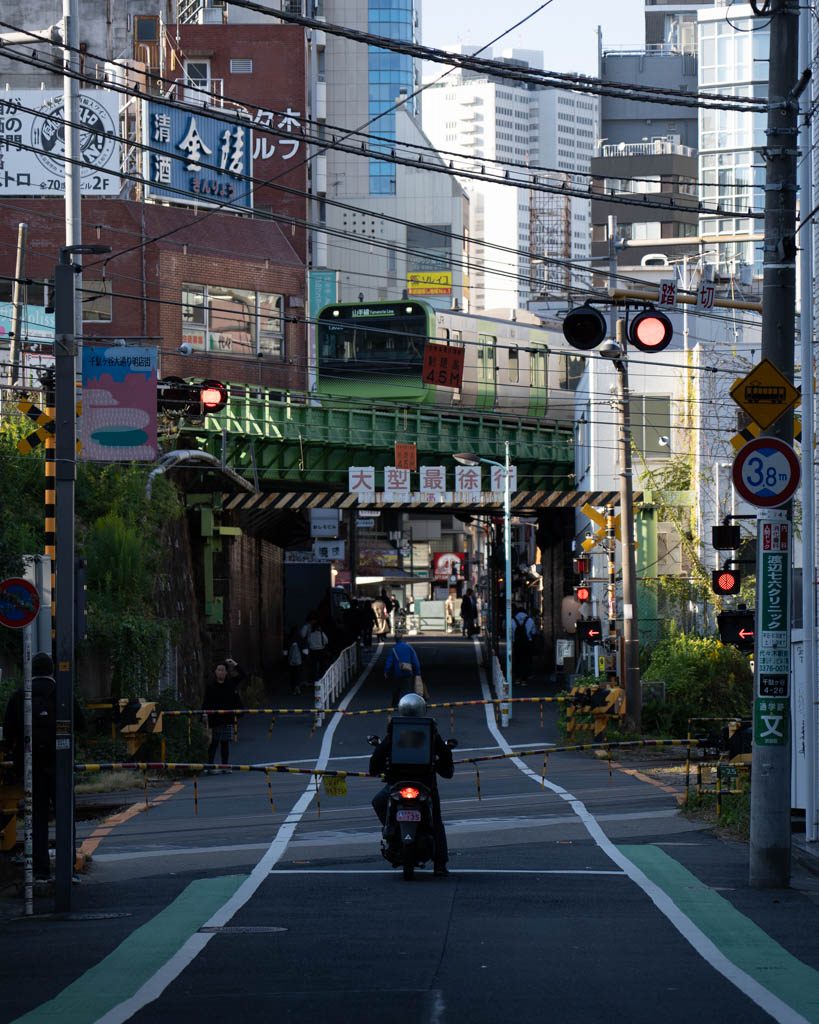
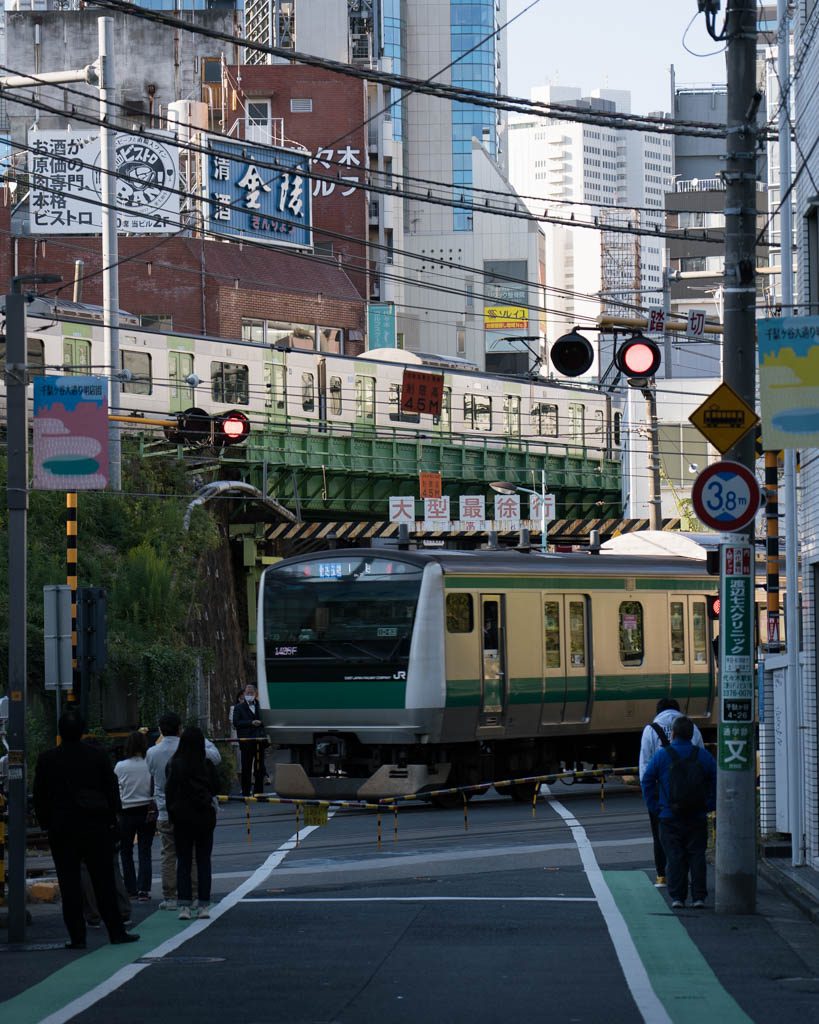
Iconic train crossing in Yoyogi, Tokyo
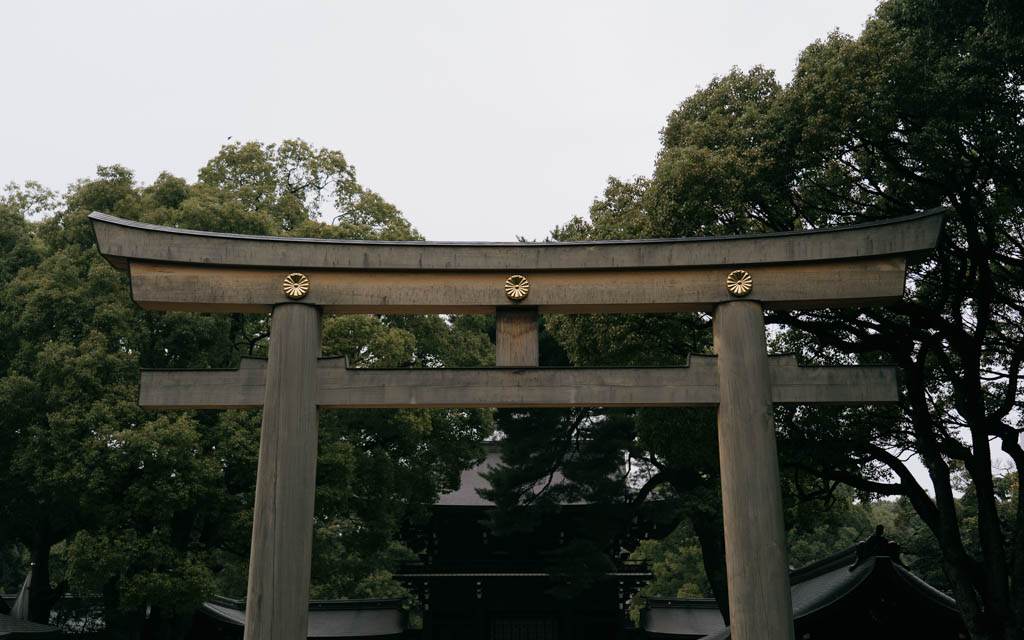
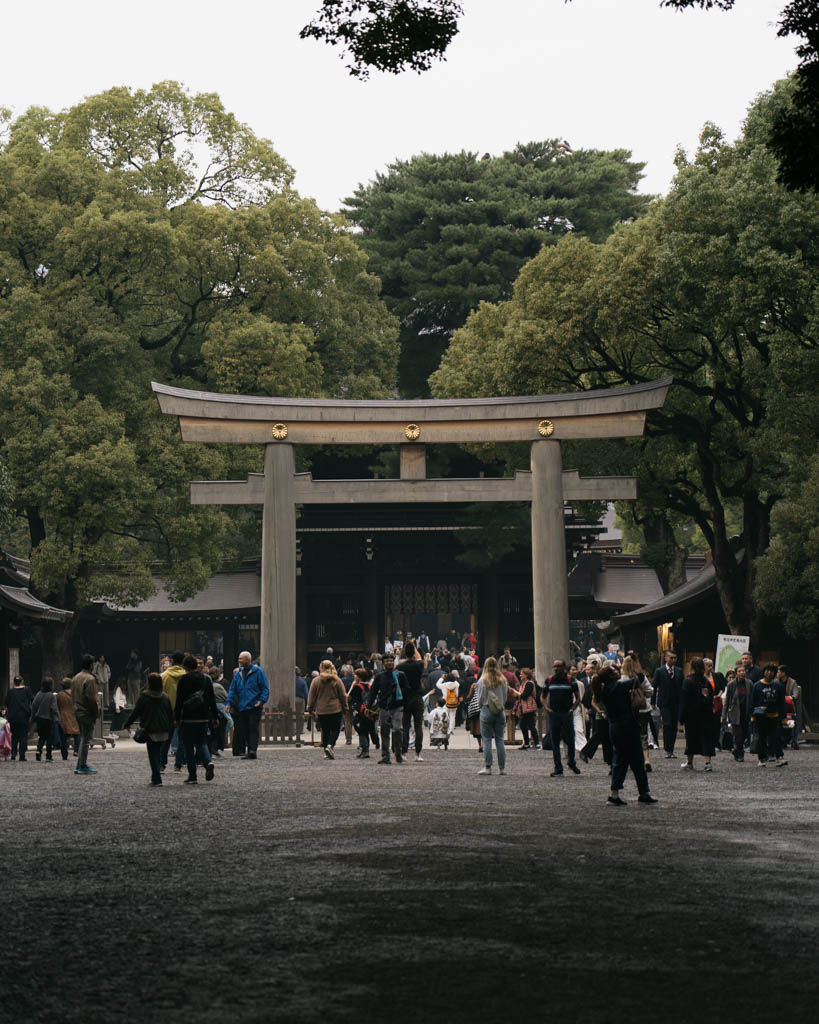
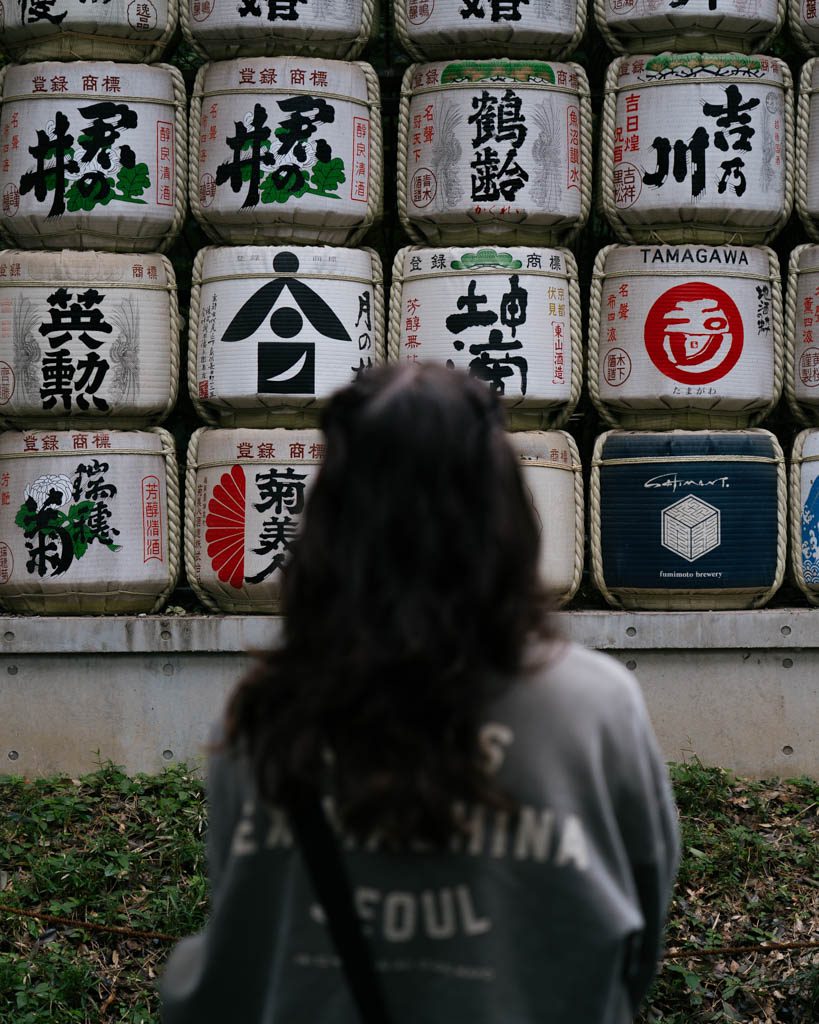
From there you’re just around the corner from the forested approach to Meiji Jingu. Take your time walking around here and enjoy the transition from busy city street to dense urban forest to ancient shrine. It’s one of those Tokyo moments that genuinely creeps up on you as you start to feel the noise of the city melt away. Make sure you visit the shrine. It’s free to enter and one of the most atmospheric places on this entire itinerary.
Weird little fact but we once walked past Dua Lipa in Meiji Jingu!
Takeshita Street & Harajuku Shopping
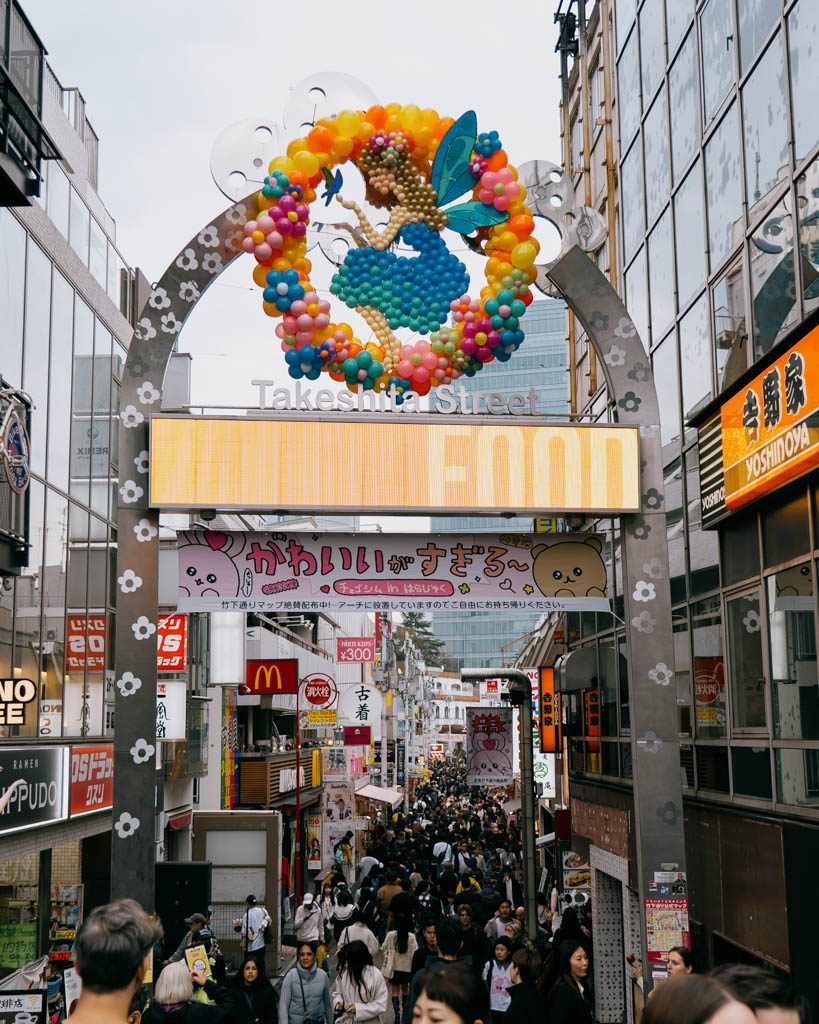
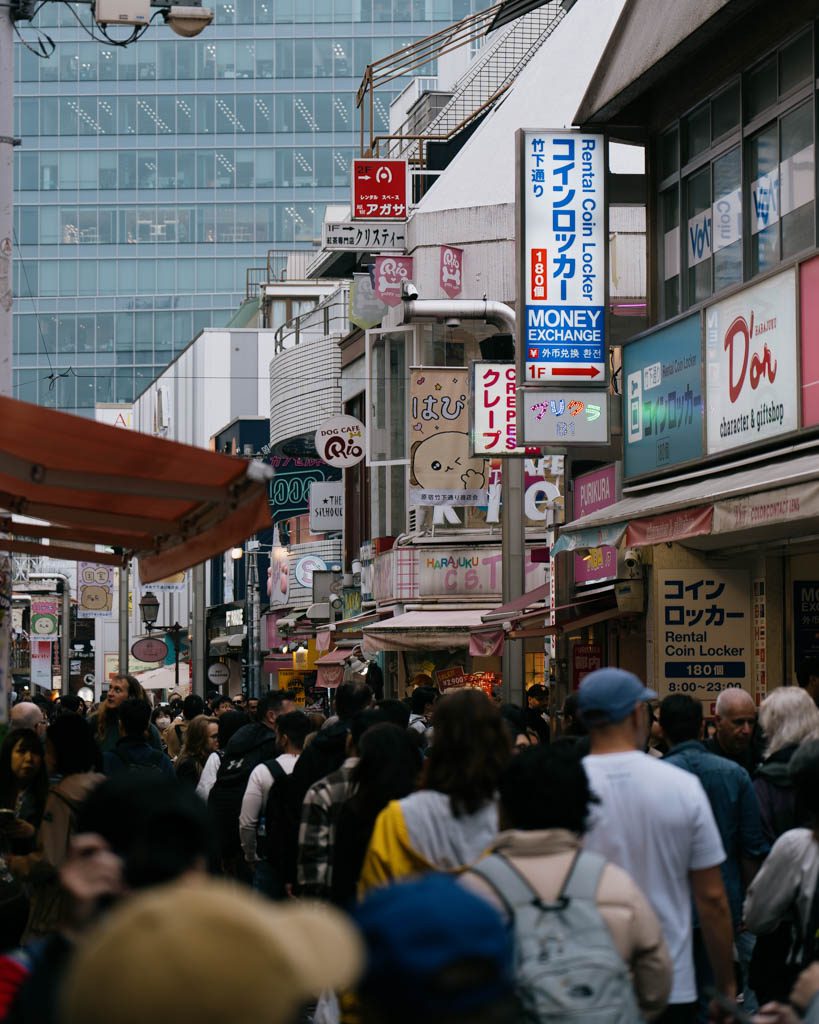
Exiting Meiji Jingu on the Harajuku side takes about 90 seconds to go from an ancient forest to one of the most chaotic shopping streets on the planet.
Before you tackle this you might want to fuel up first. Our go to ramen spot in Harajuku is Kyushu Jangara Ramen. It’s a Hakata-style tonkotsu spot a couple of minutes’ walk from Harajuku Station, somewhere we stumbled across whilst looking for veggie options for our friend. Expect a rich, creamy pork bone broth (or vegan broth), thick slices of marinated pork, and a queue that moves faster than you’d expect. There’s an English menu, so no guesswork required!
Do Takeshita Street for the spectacle. The crepe shops, character stores, vintage fashion. It’s definitely a unique subculture of Tokyo that’s worth checking out.
Instead we prefer to head to Cat Street for better coffee, independent boutiques, and a slightly more breathable atmosphere. Both are worth doing but we find Takeshita Street to be a bit too crowded and overdone.
The best shopping in Harajuku can be found away from Takeshita street.
If you’re wanting a quick break from the crowds. We’d recommend heading to the rooftop bar of the new Tokyu plaza. It’s a breath of fresh air away from the crowded streets of Harajuku. Completely free and you don’t even have to buy anything, just a nice place to chill.
Shibuya Scramble & Viewpoints
Keep walking down Cat Street from Harajuku towards Shibuya, aiming for the famous Shibuya Scramble. Try to time your arrival for about an hour before sunset. Don’t worry if you get there early, spend some time exploring the streets of Shibuya.
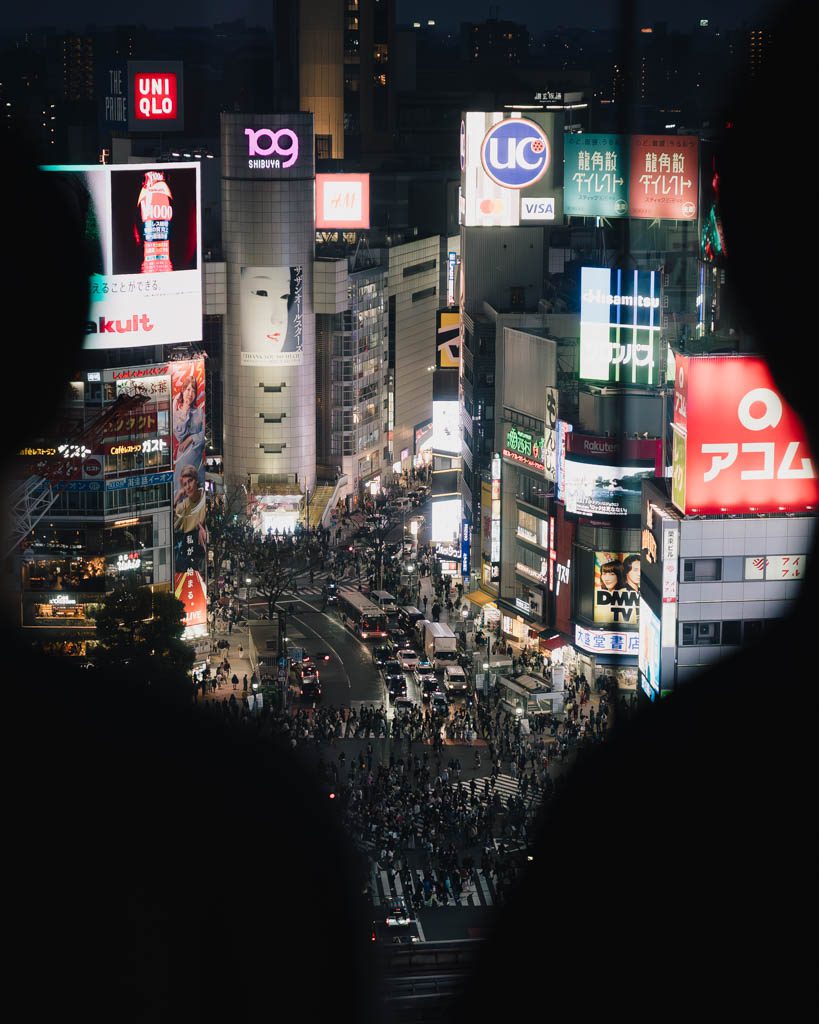
Walk the Scramble Crossing first. Stand in the middle of it as the lights change and just let it happen around you. It never gets less extraordinary no matter how many times you do it.
Just try not to be one of those tourists that blocks the crossing for people trying to use it. I was nearly kicked in the head once because some tourist decided to somersault across the crossing… Don’t be that guy.
The best way to end the day is to head up for sunset views over the crossing. There are three options we’d recommend depending on your budget:
Shibuya Sky - Best Views
The best of the three, Shibuya Sky is an open-air observation deck 229 metres directly above the scramble. Giving incredible views over the entirety of Shibuya. You can even see Mt Fuji on a clear day! Worth every yen. Timed entry, sunset slots sell out weeks in advance, book through Klook before you leave home. Tickets cost around ¥3000 (£14).
Magnet by Shibuya109
The Shibuya Magnet building has a rooftop bar sitting right above the crossing with a great elevated view for a fraction of the price. We’re talking around ¥1,800 (drink included) for incredible views over the crossing. We haven’t actually gone up this one yet as we usually opt for the third option.
Shibuya Hikarie 11th floor
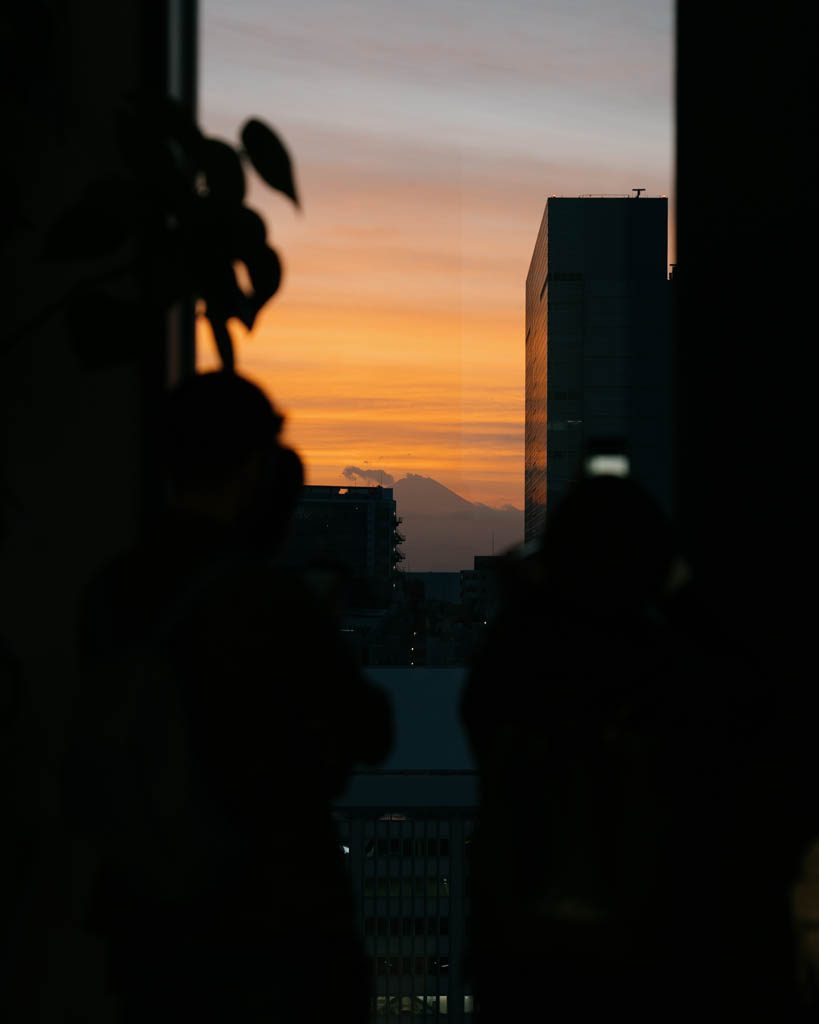
The observation deck on the 11th floor of the Hikarie building has free, decent westward views over Shibuya scramble crossing. The views aren’t as dramatic as the first two options but it’s a great free alternative if you’re on a tight budget.
There’s no need to book a slot and no queue, just rock up and enjoy views of Shibuya crossing whilst the sunsets behind Mt Fuji.
Where to Eat in Shibuya: Third Night
If you didn’t have ramen for lunch then this is your next best opportunity. For dinner, head to Oreryu Shio Ramen, there’s a few branches dotted around the Shibuya area.
It’s a small chain specialising in shio (salt broth) ramen which is lighter and more delicate than the tonkotsu you’ll find everywhere else. You order on a small screen outside before being shown to your table.
For the entire duration of your visit, the restaurant plays nothing but Beatles music. We have never received an explanation for this. Although have we ever needed one?
If ramen isn’t taking your fancy then head to Gyukatsu Motomura, our go to when we want something a bit more interactive. Gyukatsu is breaded, deep-fried beef cutlet, flash-fried so it’s still rare in the middle, served with your own personal hot stone so you can cook each slice however you like it. It comes with rice, miso soup, cabbage, and a little tray of dipping sauces (wasabi and soy is the move). There are branches scattered across Shibuya, but expect a queue at almost every one, especially at dinner. Absolutely worth it though!
Day 4 - Tokyo Tower, Ginza, Akihabara & Ueno
Day 4 Quick Summary
Tokyo Tower + Photo Spot
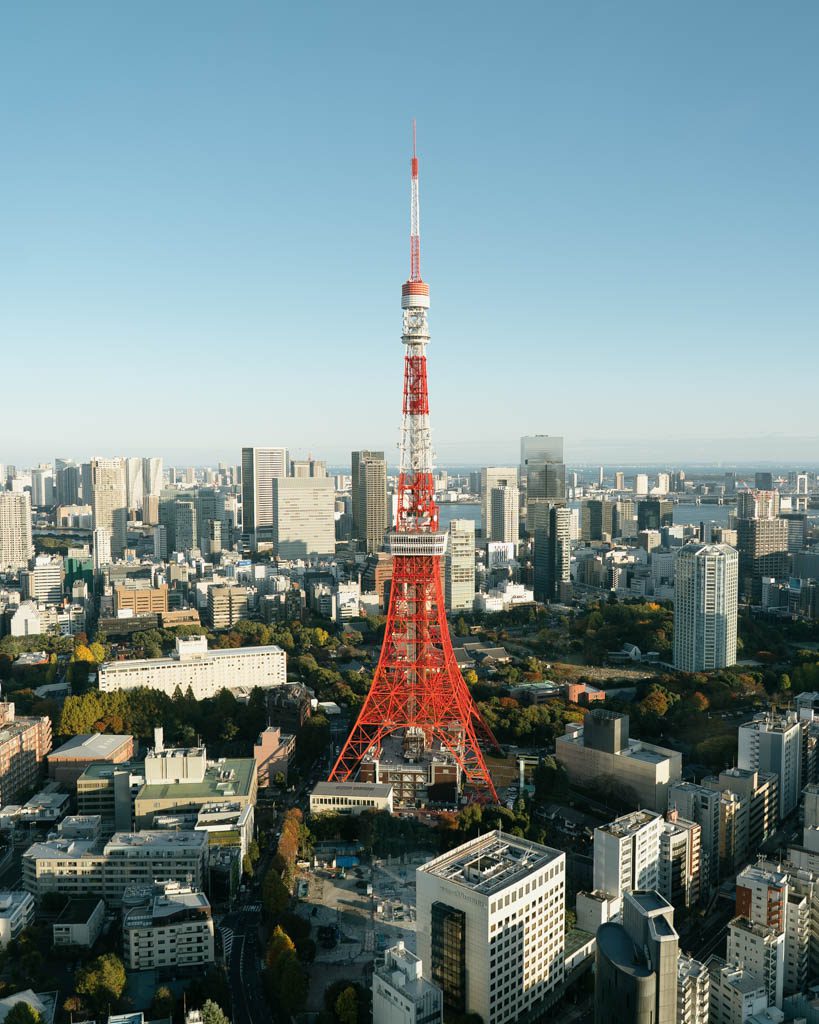
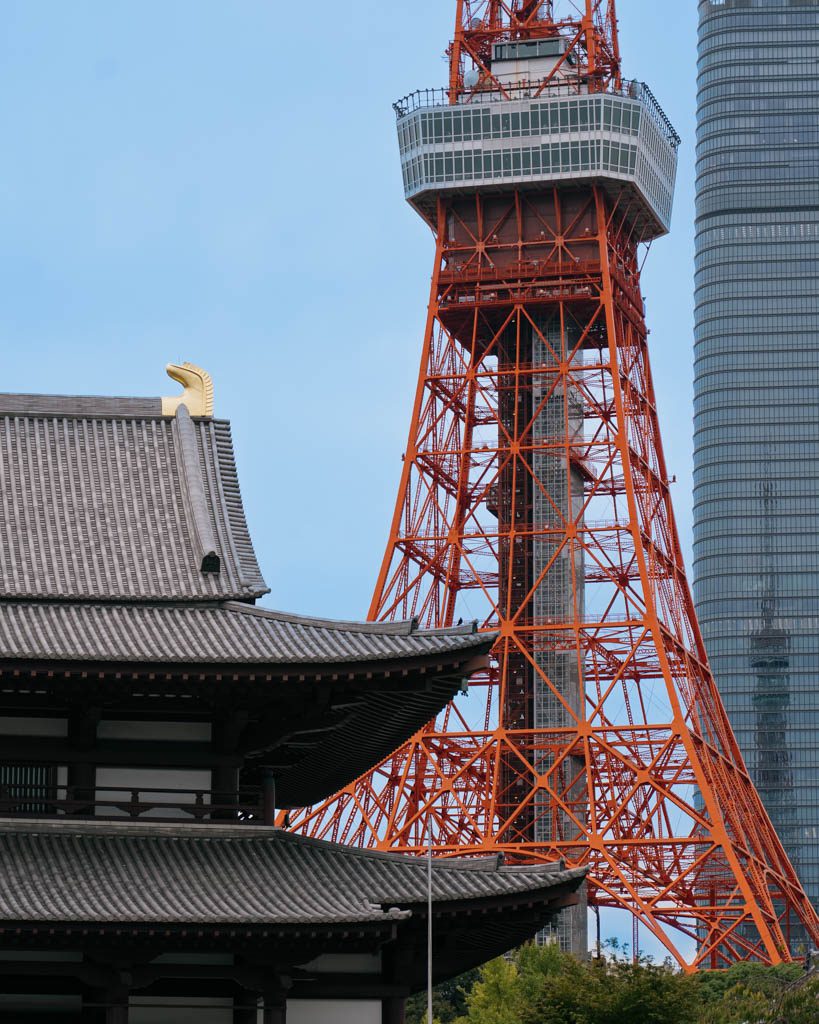
Start the morning at Tokyo Tower. Even if you don’t go up and honestly after Skytree, it feels slightly redundant. The tower is more impressive just standing beneath it. There’s something about the red lattice structure that feels like classic Tokyo in a way that’s hard to articulate but immediately felt when you’re there. Charming in a way its taller, newer neighbour simply isn’t.
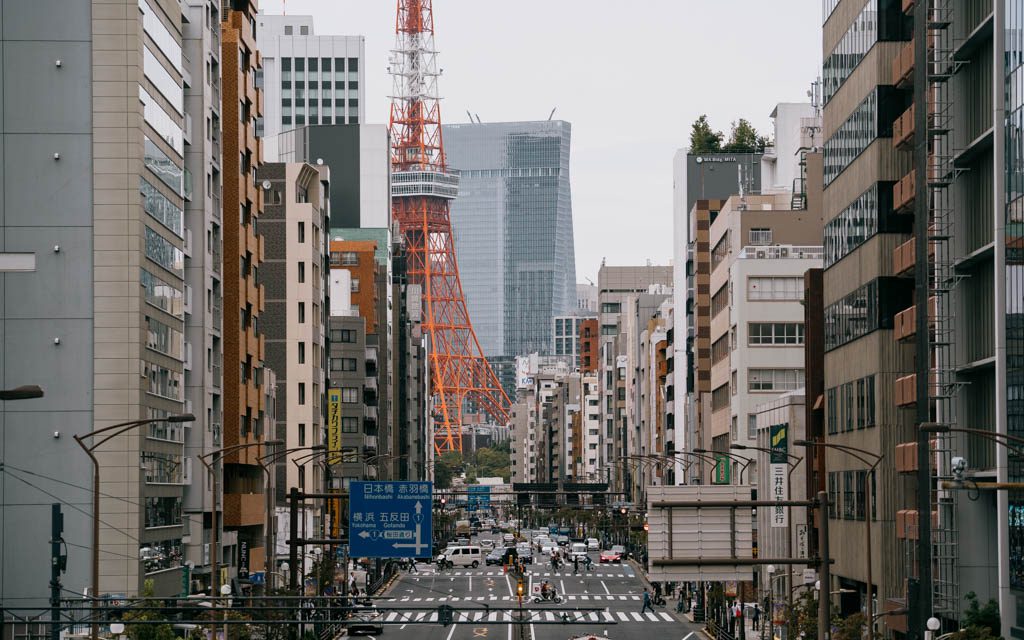
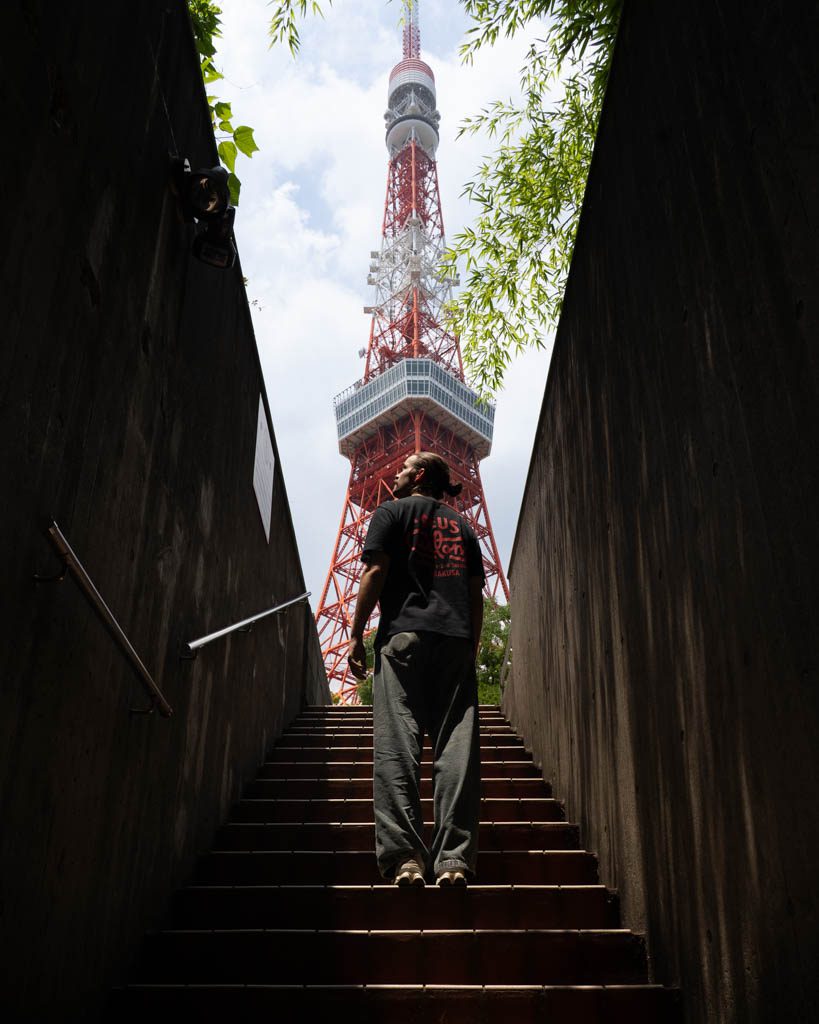
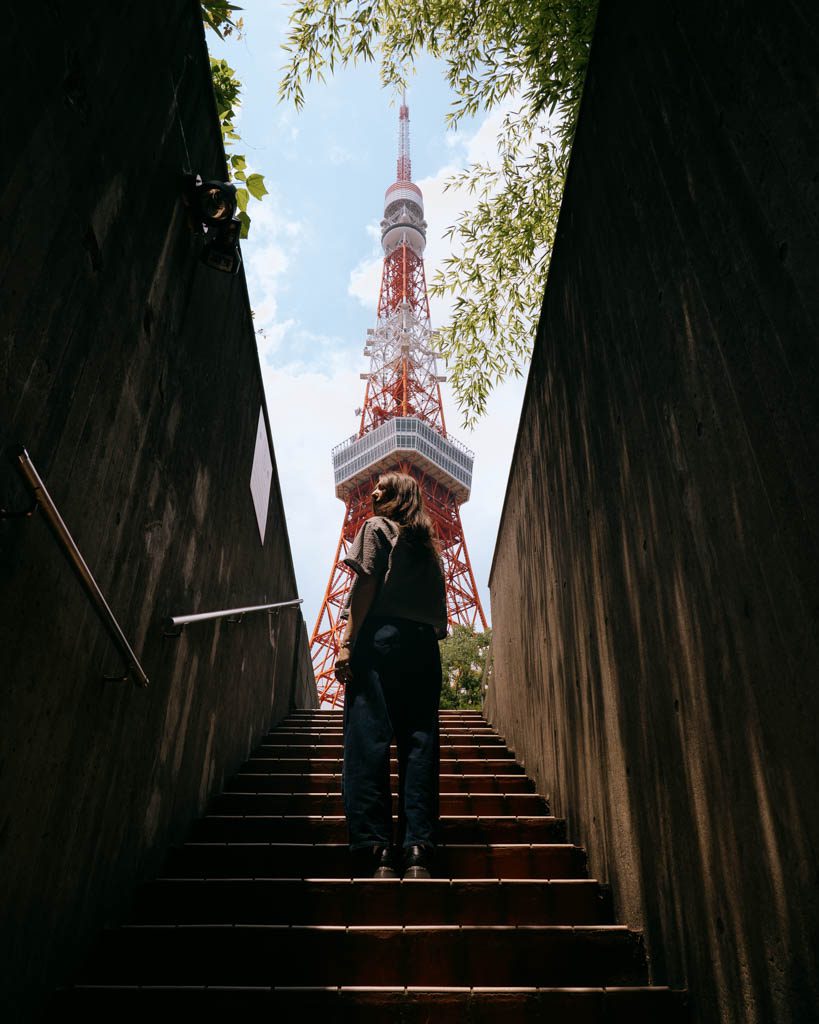
If you’re after an iconic Tokyo photo to take home with you then this spot at Tokyo Tower is the one. It’s probably the only photo we’ve had to queue for in Tokyo and it wasn’t until our last week in Japan that we decided to actually go check this spot out. The photo is actually taken on a staircase that leads to an underground car park. Conveniently creating the perfect leading lines pointing straight at Tokyo Tower.
Zojo-Ji Temple
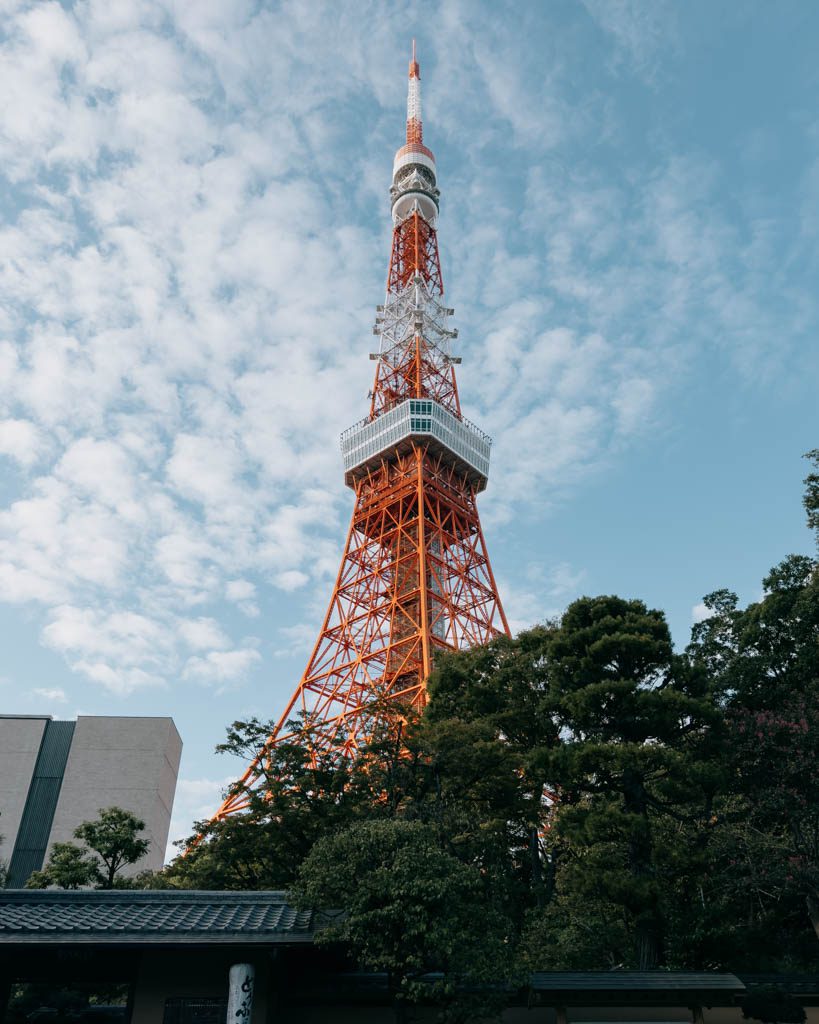
Directly beside Tokyo Tower and almost always overlooked by visitors fixated on the structure above, is Zojo-ji Temple. The main gate of the temple dates back to 1622, and the juxtaposition of ancient temple architecture with Tokyo Tower rising directly behind it is one of the most striking visuals in the city. Walk the grounds, take your time, and enjoy the fact that most people are across the road pointing cameras upward and missing all of this completely.
Ginza Shopping
From Tokyo Tower, Ginza is a short hop east and a natural addition to the morning. Even if shopping isn’t on the agenda, a wander through Tokyo’s most prestigious district is worth it. The architecture is impressive, the window displays are immaculate, and the atmosphere is a completely different register to anywhere else on this itinerary. It’s also home to the famous 12 storey Uniqlo that has filled everyone’s social feeds.
One thing worth knowing if you’re visiting on a Sunday: Chuo-dori, Ginza’s main street, closes to traffic entirely and becomes a pedestrian boulevard. It’s one of those small details that makes the whole area feel completely different, and considerably more enjoyable to wander.
Ginza can be a great place to grab a brunch from places like Bill’s. Although we have to admit this isn’t something we do very often as Ginza is a bit more upmarket, whereas we usually go for cheaper eats. We tried Eggs & Things in Ginza once and weren’t overly impressed, so we’d point you toward Bill’s instead if branch is something you fancy.
Bonus Suggestion: If you find yourself coming back to Ginza in the evening or perhaps your accommodation is in the area. Then check out Ginza Lion Beer Hall. It’s a huge art deco dining hall styled after a German bierkeller. It’s loud, sociable and brilliant. The kind of place that feels like it shouldn’t work in Tokyo but surprisingly does.
Akihabara Arcades
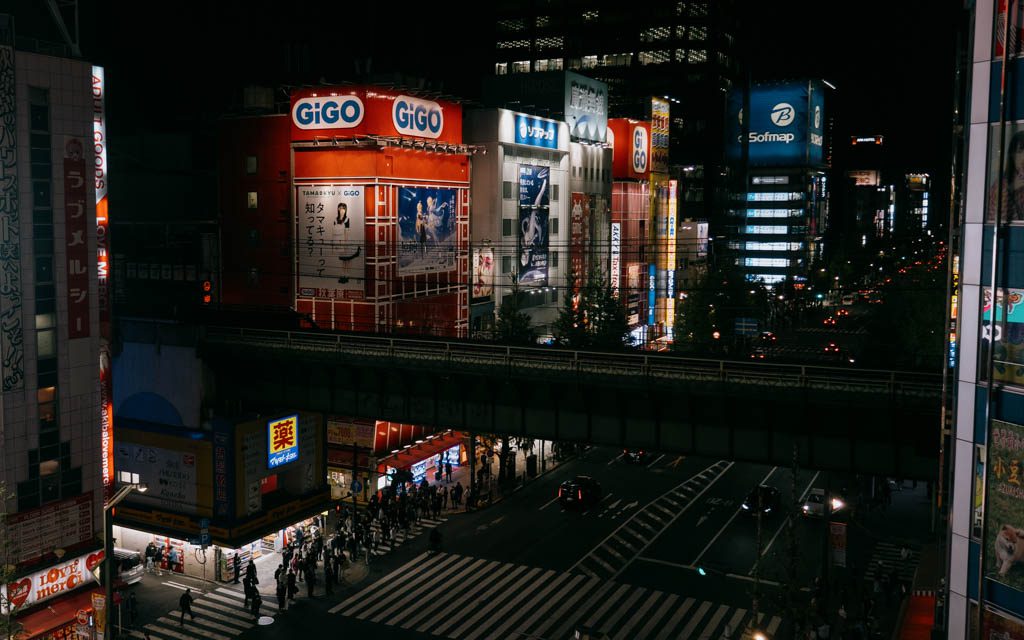
In the afternoon, jump on the JR line north to Akihabara. Fair warning though, Akihabara is a lot even for Tokyo.
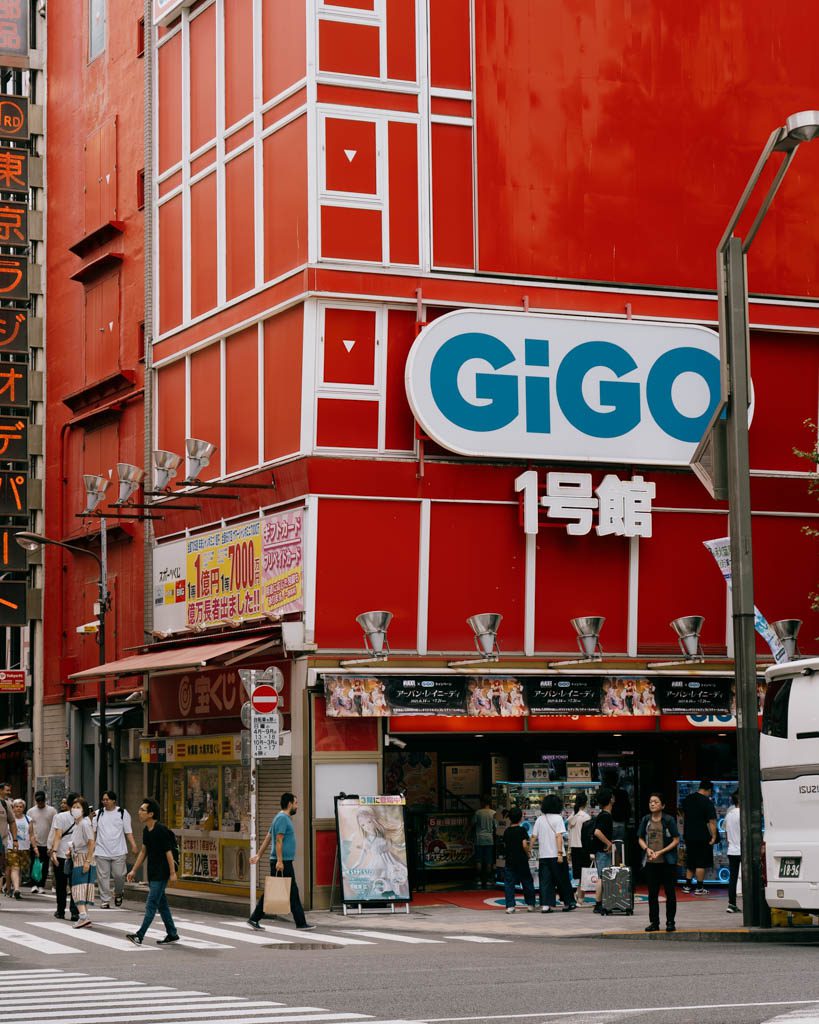
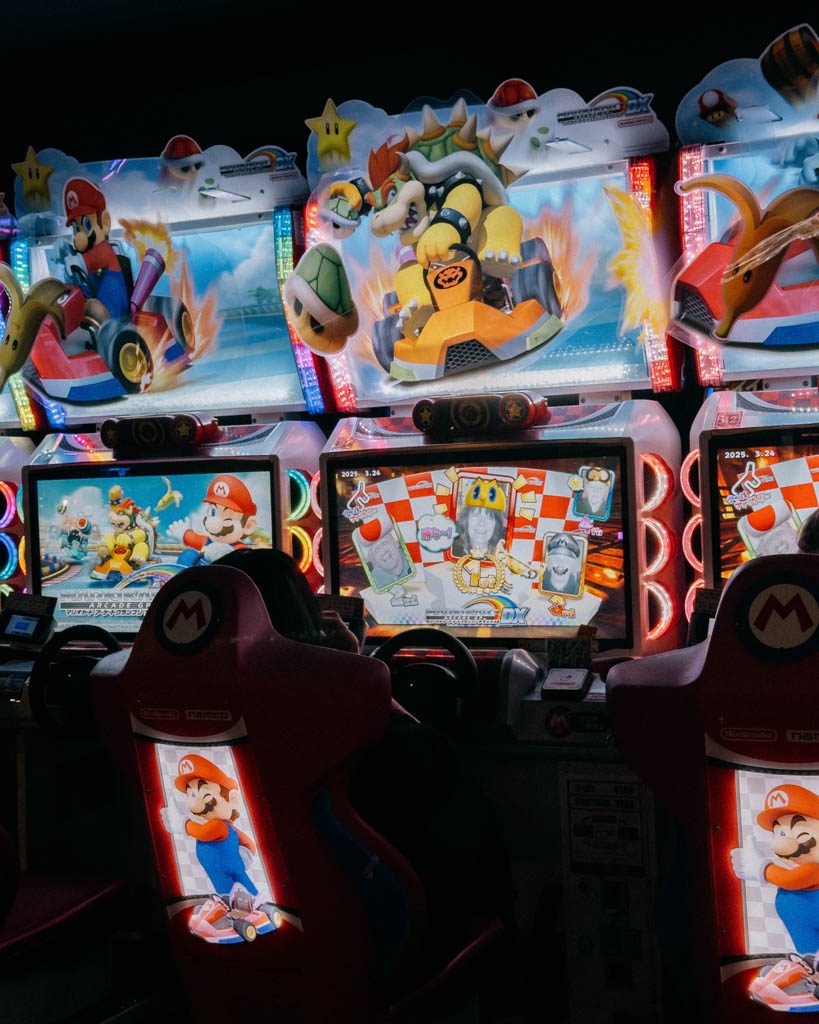
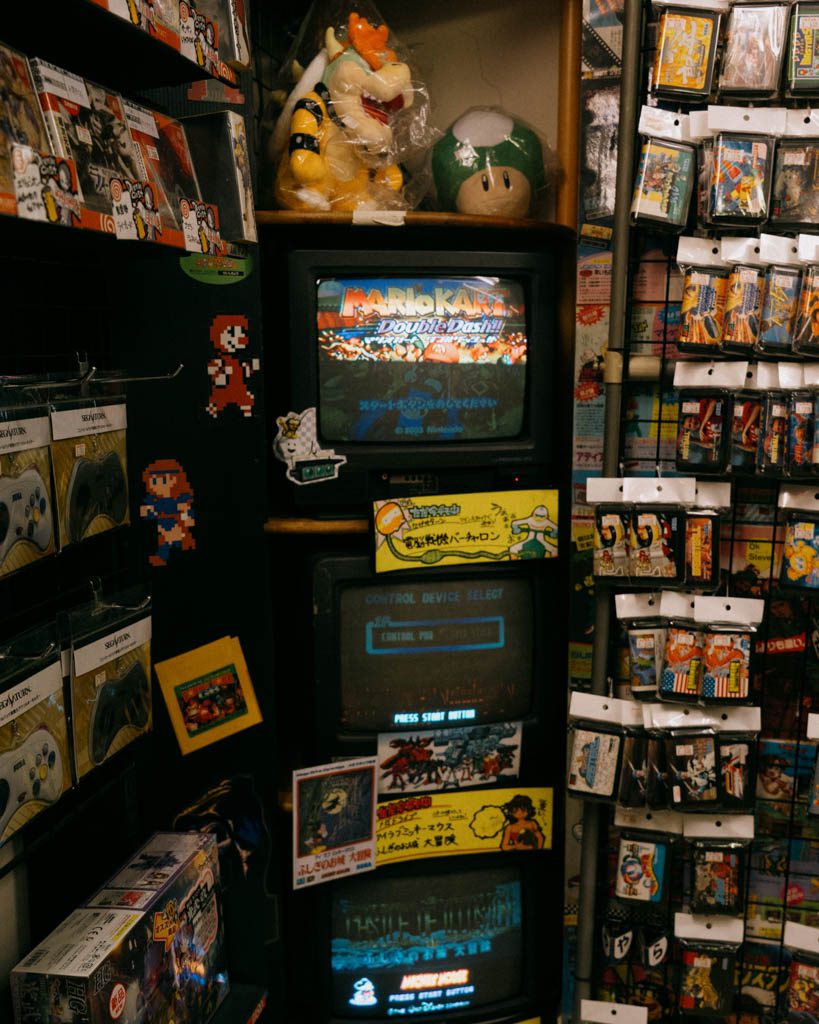
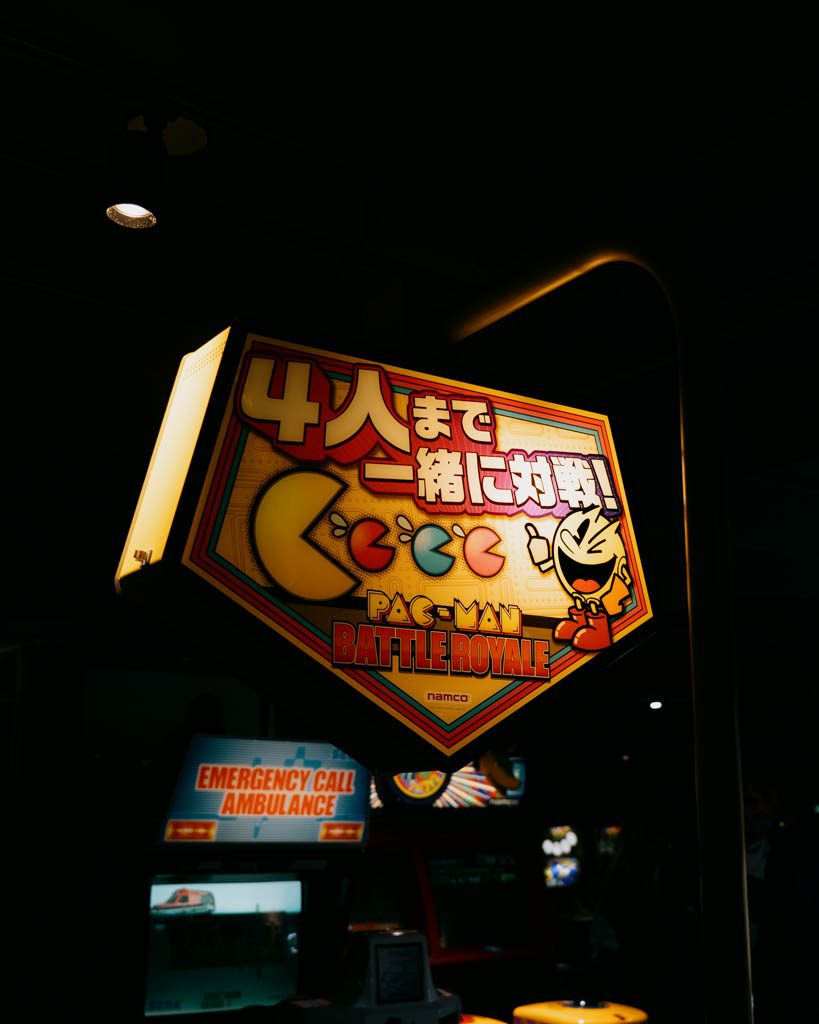
We’re talking multi-storey arcades, retro game shops with walls of cartridges, anime figures, electronics, and enough neon to light a small city. Even if gaming and anime aren’t your thing, the sheer intensity of the place is fascinating in its own right. If you only go to one arcade then go to Akihabara Gigo Building 3, this became our go to when we wanted a fun night playing games, thrown in with a few drinks and darts at Bee Darts.
If you’re still in the market for electronics, this is also where you’ll find the big stores. Bic Camera and Yodobashi are both here and considerably better stocked than anything you’ll have seen elsewhere. And if you somehow have the energy for another Don Quijote after Asakusa, there’s one here too.
The retro game shops in the backstreets off Chuo-Dori are where the real gems live. Old Famicom cartridges, Game Boy collections, things you genuinely cannot find anywhere else. It’s worth noting that prices in these areas will be inflated so be prepared to splash the cash (looking at you Super Potato). If this is your kind of scene, budget significantly more time than you think you need and accept that you will leave with something you didn’t plan to buy.
Tip for Skiers: If you’re heading to the slopes after your 5 days in Tokyo then now’s a great time to head to Kanda-Ogawamachi or as we’ve started calling it, ‘Ski Street’. This is the best place in Tokyo to get new ski gear before heading to the slopes. It’s where we bought new jackets and helmets for our ski season in Japan.
Ueno & Ameyoko Market: Fourth Night
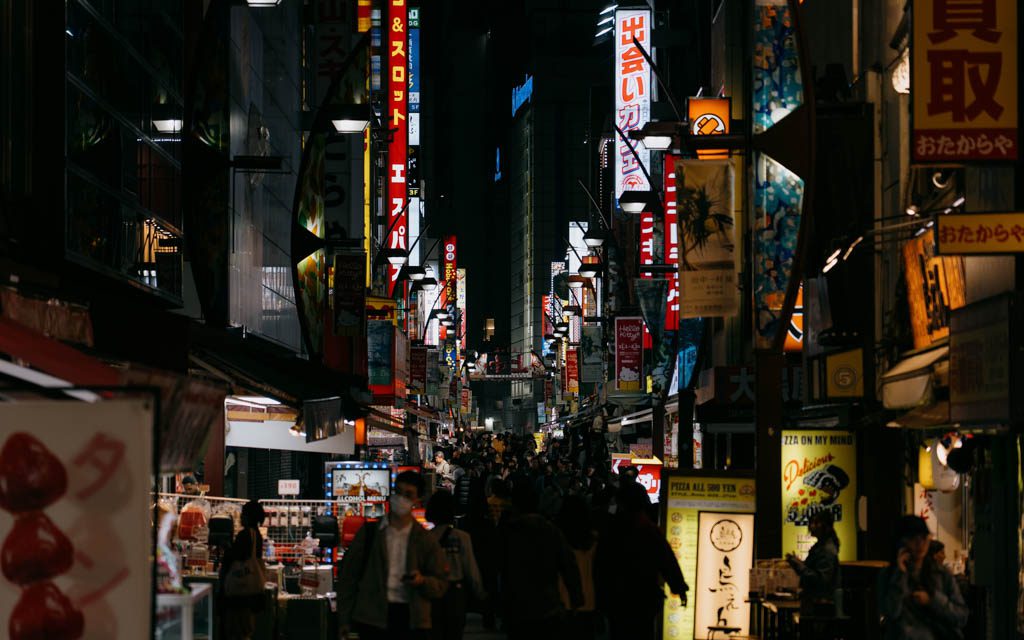
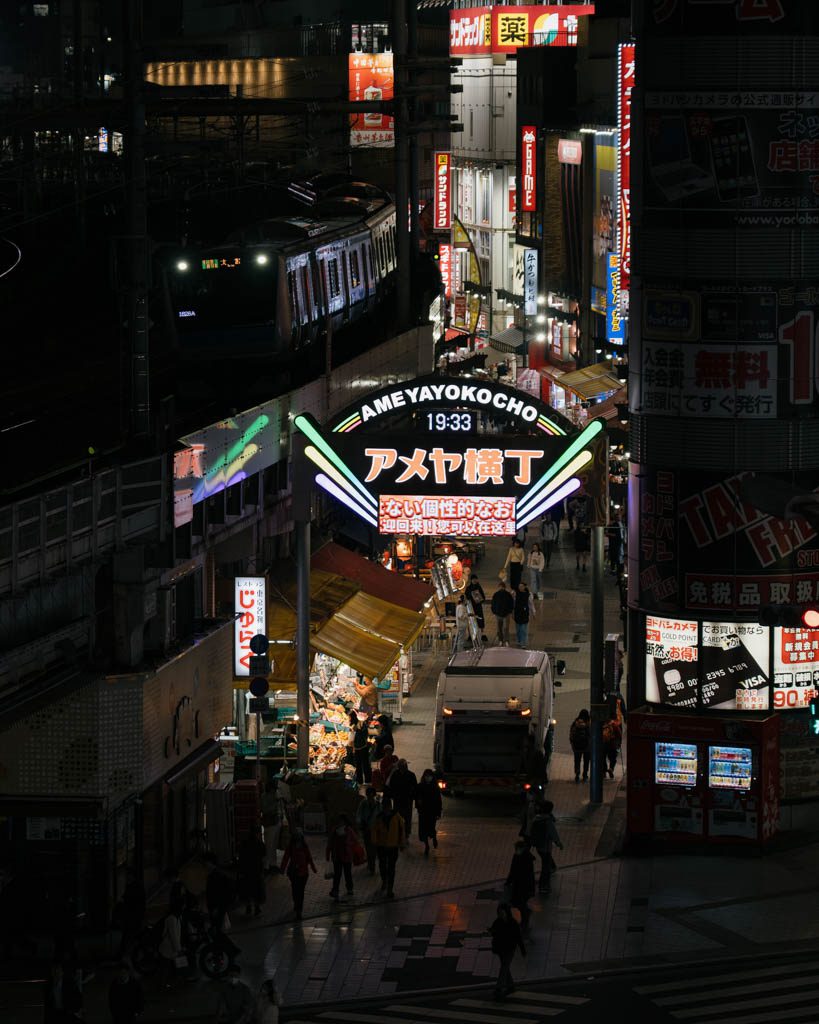
Akihabara to Ueno is two JR stops (four minutes) away. Aim to get there for the evening and head straight for Ameyoko Market, the narrow covered street running under the elevated train tracks between Ueno and Okachimachi stations. In the evening it transforms into one of the most atmospheric spots in the city.
Food stalls spilling into the street, izakayas overflowing, the whole area running on an energy that feels entirely local. Grab whatever looks good from the food stalls, find somewhere to sit, order a beer, and let the evening take care of itself.
If you get to Ueno earlier in the day, take the time to stroll around Ueno park, which doubles as a great spot to view cherry blossoms in spring.
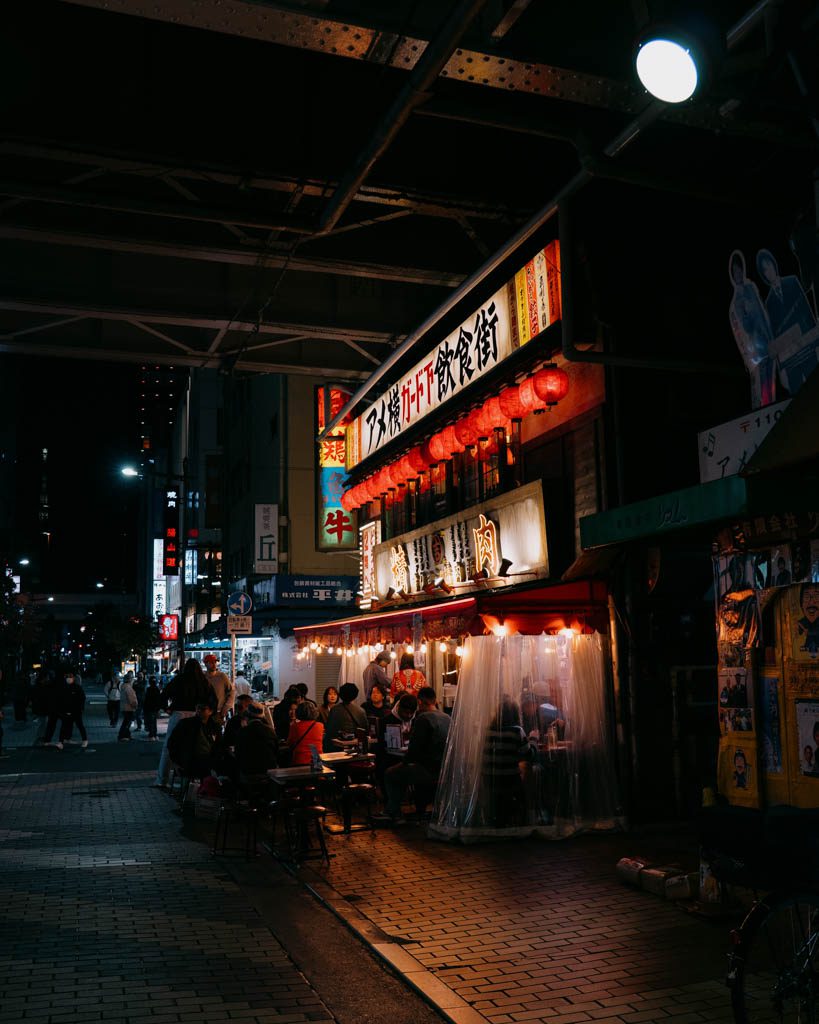
If you want somewhere a bit less crazy (only a bit), then head to a nearby Torikizoku. They’re a chain of yakitori restaurants all over Japan. They serve delicious chicken skewers and Mega pints of beer at a fixed price. Where every item on the menu is ¥390 or around £1.85! In typical Japanese convenience, you don’t need to speak to a person to order. Just simply order on the tablet at the table and the food is brought to you.
It’s our go-to spot whenever we have friends visiting and want a big, cheap, brilliant night out as a group. Order a beer, order some chicken skewers and then order another beer. Fair warning though, the ¥390 Mega pints make it very easy to lose track of how many rounds you’ve ordered. We speak from experience…
Day 5 in Tokyo: TeamLab Planets and a Farewell Omakase Dinner
Day 5 Quick Summary
TeamLab Planets
After four days of early alarms and packed schedules, Day 5 has one rule. Slow down.
Start the morning at TeamLab Planets in Toyosu. If you’ve seen it on Instagram and wondered whether it lives up to the hype, it really does. We’ve done it twice now and it’s one of those experiences that sounds gimmicky when you try to describe it to someone who hasn’t been. You just have to experience it to understand it.
Walk barefoot through rooms of projected light, wade through shallow water covered in floating digital flowers, stand inside infinity mirror installations that make you feel like you’ve dissolved into the universe. Set aside two to three hours and be present for all of it.
Book your tickets well in advance. It sells out weeks ahead, particularly on weekends, and there is no walk-in alternative worth banking on. Prices start at around ¥3,700 (£17) for adults.
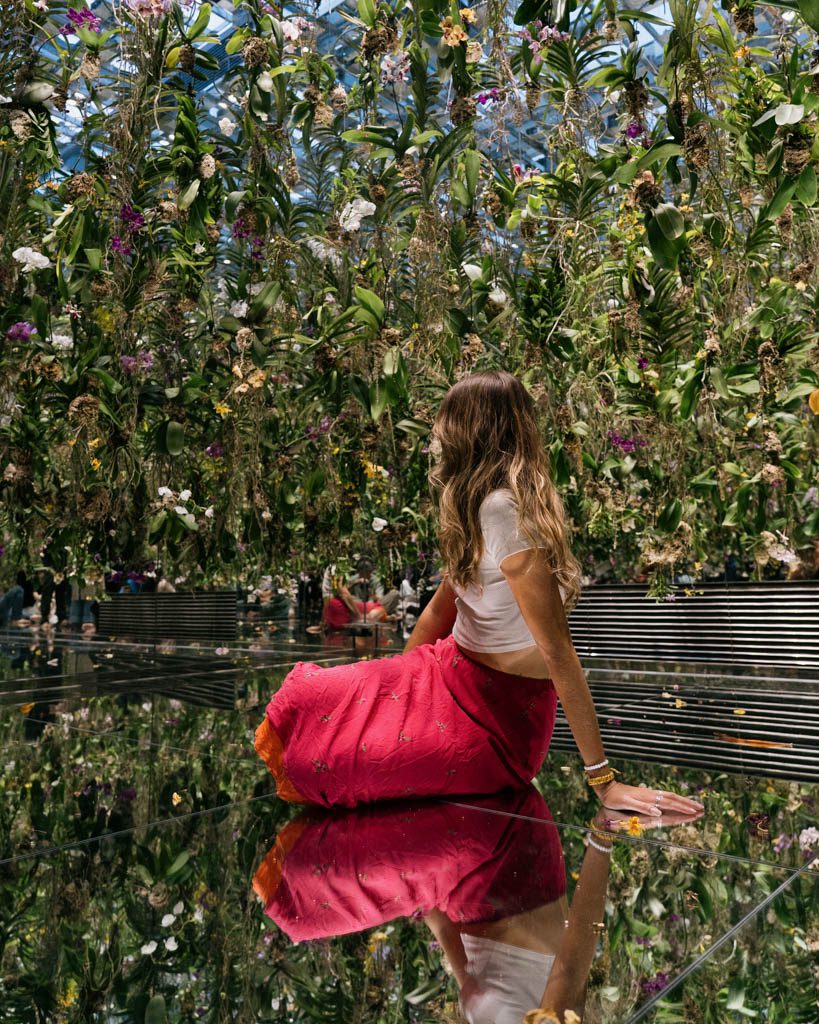

TeamLab expanded in January 2025 with a huge new area including an Athletics Forest, Future Park, and Catching and Collecting Extinct Forest. So even if you’ve been before, there’s new exhibitions to explore.
Explore Tokyo on Your Own
Spend the entire morning or afternoon (depending on your TeamLab booking) with no agenda, no must sees and no alarm set.
Tokyo rewards wandering without purpose more than almost any city we’ve visited. Go back to whichever neighbourhood felt unfinished. Spend an hour in a konbini you haven’t tried yet, grabbing all the snacks.. Pick up last-minute souvenirs from Don Quijote. Sit in a park with a canned coffee and watch the city move around you. After four days of go, go, go, this is the part where Tokyo actually sinks in.
Farewell Omakase Dinner
For the final evening, we’d strongly recommend booking a sushi omakase experience. If you’ve never heard of it, here’s the short version:
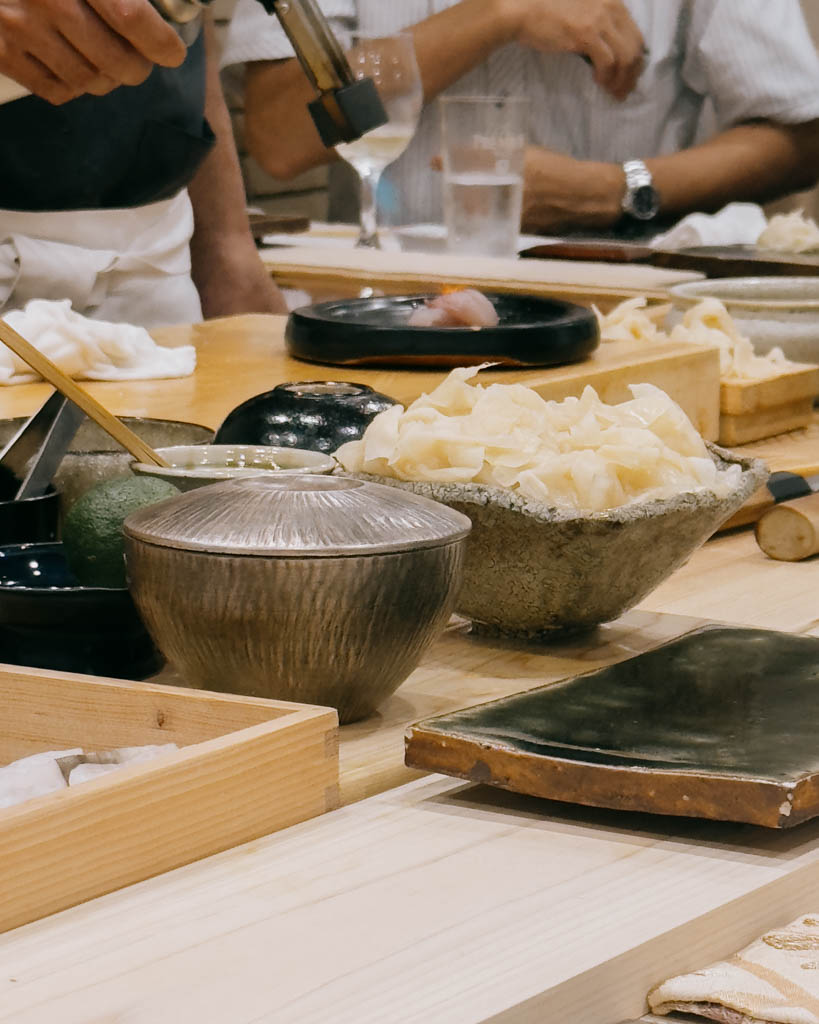
You sit at the counter, the chef decides what you eat, you eat it. That’s it. One of the best decisions you’ll ever let someone else make.
Full disclosure, I’d class myself as a fussy eater when it comes to seafood. It’s not something I’d naturally reach for, and even after 10 months of living in Japan and having my palette well and truly expanded, I was genuinely nervous walking into my first omakase. I almost talked myself out of it twice on the way there. I’m so glad I didn’t though!
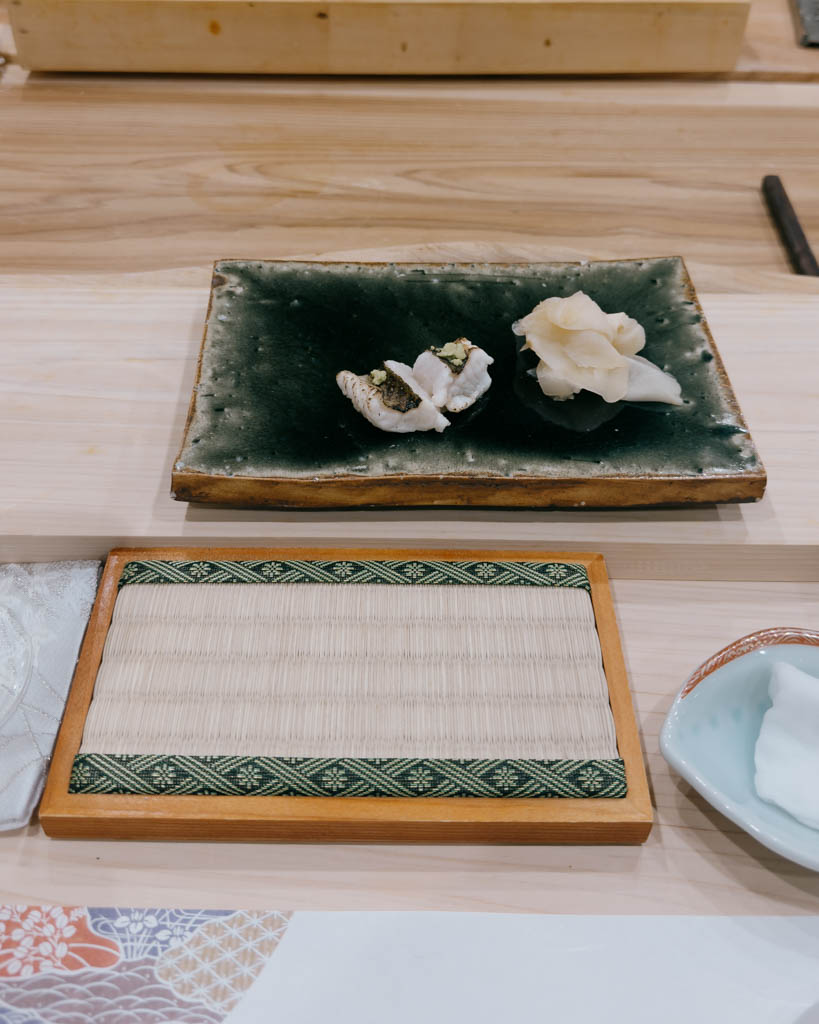
Course after course of fresh nigiri, each piece explained by the chef and eaten the moment it’s placed in front of you. Flavours I didn’t know existed, from fish I couldn’t have named before that evening.
Intimate, unhurried, and quietly one of the best meals of my life. If a self-confessed seafood sceptic is telling you it’s a must-do, it’s a must-do.
The restaurant we went to was Tsukuji Sushi Omakase. With courses from around ¥5,000–¥10,000 (£23-£46) per person.
Book in advance, go smart-casual, and go hungry. If that specific spot is fully booked, Tableall and Omakase.com are both great for finding alternatives across the city at various price points.
Have An Extra Day in Tokyo? 👉 Best Day Trips From Tokyo
Departure Day - Getting to the Airport
If you’re checking out of your hotel on Day 5, most Tokyo hotels offer luggage storage after checkout. Leave your bags at reception, do TeamLab and your final afternoon completely hands free, then collect your bags on your way to the airport. TeamLab Planets also offers luggage storage on site if you’d prefer to check out early and head straight there first.
Otherwise if you’re checking out on day 6 you can have a nice chill travel day where all you need to focus on is getting home!
For Haneda Airport – around 50 minutes via the Yurikamome Line to Shimbashi, then the Keikyu Line to the airport. Straightforward and stress-free.
For Narita Airport – head to Tokyo Station and get on the Narita Express. Around 60 minutes and worth booking in advance during busy periods.
Safe travels. Tokyo has a way of getting under your skin, and if this trip is anything to go by, you’ll already be planning the return trip before you’ve cleared customs.
Tokyo Travel Tips You Need to Know
Get a Suica Card
We can’t imagine a life in Japan without a Suica Card (or other IC card). It becomes the life blood of getting around any city in Japan. A Suica card is a type of rechargeable card that you can use to pay for trains, buses, vending machines and konbini purchases up and down the country. You simply tap on at the train station with your Suica and tap out when you get to your destination. We’ve written a full guide on how to set up your Suica on your mobile.
Get an eSIM
Staying connected is essential in Tokyo. Google Maps is your best friend and we find it works best when you have a good connection (offline maps have failed us in the past). You’ll also find google translate a must have for translating menus and communicating with staff. We’ve written a full guide on the best SIM card for Japan.
Withdraw from ATMs (0% International Fee Card)
Before you come to Japan, make sure you have a debit card with 0% fees on international withdrawals. We use Chase as our primary card when travelling.. This way you can withdraw cash at 7-11 ATMs and not have to worry about carrying large amounts of cash with you.
Make Sure You Have Travel Insurance
Travel insurance is one thing we never travel without. While Japan is an incredibly safe country, unexpected things like illness, injuries or cancelled flights can quickly turn into expensive problems. We always recommend taking out a policy before you travel, especially if you’re planning to hike, ski or stay for an extended period. We’ve compared the best options in our guide to the best travel insurance for backpackers.
How to Ride the Escalator
A classic quirk of travelling Japan. Everyone in Tokyo stands on the left side of the escalator, allowing people who want to walk or are in a rush to use the right hand side. In Osaka & Kyoto, it’s the other way around.
Get Your Steps In
Be prepared to walk A LOT! We averaged 20,000+ steps a day in Tokyo. So make sure you have comfortable shoes to walk in.
Embrace Getting Lost
Part of the journey is having absolutely no clue where you are. Even after spending 3 months in Tokyo we still have to rely on google maps to find our way out of the stations. You’re going to get lost at times, but that’s part of the fun! Who knows what you might stumble across.
Best Tokyo Tours
Final Thoughts on This 5 Day Tokyo Itinerary
Tokyo is one of those cities that gets under your skin in a way that’s genuinely hard to explain until it happens to you. Five days feels like plenty when you’re planning it and nowhere near enough when you’re standing in the airport on the way home.
We’ve shared this itinerary with more friends and family than we can count. Every single one of them has come back wanting more.
Still in the planning stages of your Japan trip? Check out our guides below.
Tokyo – Where to Stay in Tokyo
Tokyo – Best Day Trips from Tokyo
Nozawa Onsen – Guide to Nozawa Onsen
Nozawa Onsen – Where to Stay in Nozawa Onsen
Kyoto – 3-Day Kyoto Itinerary
Kyoto – Where to Stay in Kyoto
If you are thinking of spending more time in Japan and fancy an adventure then you should definitely check out our guide on applying for a Japanese Working Holiday Visa. We’ve done it and never looked back!
If you found this guide useful, we’d love to see how your trip goes. Come find us on Instagram and share your Tokyo moments with us!
またね, Tokyo.
Until next time.
Frequently Asked Questions About Tokyo
Do I need to speak Japanese to visit Tokyo?
Not at all. English signage is widespread across the metro, major attractions, and most restaurants. Google Translate's camera function handles any menus that aren't in English. Learning a bit of Japanese beforehand will be useful and polite.
Is Tokyo safe?
One of the safest cities we've ever visited, full stop. Petty crime is extremely rare, scams are virtually unheard of, and solo travellers, particularly solo female travellers, consistently rate it as one of the most comfortable cities in the world to navigate alone.
How much cash should I carry?
Not as much as you think. Whilst in some aspects Japan is still largely cash based, particularly at smaller restaurants, there are still lots of places that accept card. ATMs at 7-Eleven and Japan Post are the most reliable for foreign cards if you need to withdraw more cash. We'd recommend keeping at least ¥10,000–¥20,000 on you at any given time.
What is the tipping culture in Tokyo?
There isn't one. Tipping is not part of Japanese culture and can cause genuine confusion. The price you see is the price you pay. One of the many things we love about this city.
When do the trains stop running?
Just before midnight on most lines. Miss the last train and you're looking at an expensive taxi or a very long wait until the first train at around 5am. Keep an eye on the time after 10pm. Or find yourself in a club until the early hours of the morning. Whichever floats your boat.
Is Tokyo expensive?
Less than its reputation suggests. Getting around is cheap, eating well doesn't have to cost much, and a huge amount of the best experiences cost nothing at all. A konbini breakfast runs ¥300–¥500. A bowl of ramen rarely tops ¥1,200. Budget carefully on the big activities and the rest takes care of itself.
Can I use my phone as a Suica card?
iPhone users can add Suica directly to Apple Wallet before leaving home. Set it up in advance and you'll never need to queue at a ticket machine. Android users will need to pick up a physical card at any major station on arrival.
What should I not do in Tokyo?
Don't talk on the phone on the metro, don't eat on the metro, don't tip, and always take your shoes off when you see them lined up at an entrance. Queue properly, speak quietly, and follow the lead of the people around you. Tokyo has an unspoken code of conduct, it's not hard to follow once you're aware of it.
Related Posts
Hi! We’re Mark & Sarah.
We’ve been travelling the world together for the past 4 years. Exploring destinations such as Europe, South America, South East Asia, Japan and Australia. Now we’re sharing everything we’ve learned on our travels, to help you get out there and have your own adventures!