1 Day Tokyo Itinerary: The Best Way to See Tokyo in One Day
- Last Updated On August 25, 2026
Disclaimer: Some of the links on this site are affiliate links. This means I may earn a small commission if you make a purchase through them at no extra cost to you. I only recommend things I genuinely use or believe in.
So, you’ve only got one day to spend in Tokyo.
Tokyo is a huge city and it can feel very overwhelming trying to decide what to see in such a short space of time. That’s where our 1 day Tokyo itinerary comes in. We’ve packed our favourite sights, neighbourhoods and experiences into one busy but achievable day.
Fortunately, we’ve spent 3 months living in Tokyo and think that 1 day in Tokyo still gives you enough time to see a lot of the big hitters.
Tokyo is a city that has something for everyone. Even as people that don’t generally find a draw to big cities, we absolutely fell in love with Tokyo.
This guide will take you on the best 1-day journey through Tokyo. Starting in the east and slowly making your way west, you’ll tick off the biggest and best attractions in the city.
It’s going to be a busy day. So get an early night, do some stretches, and get your walking shoes on!
In a Rush? Here Are Our Favourite Hotels in Tokyo
Our 1 Day Tokyo Itinerary at a Glance
A quick guide for you check your timings throughout the day.
- 8:00am: Senso-ji, Asakusa
- 10:00am: Tokyo Skytree
- 1:00pm: Akihabara
- 4:00pm: Shibuya
- 5:00pm: Harajuku & Meiji Jingu (optional)
- 7:00pm: Shinjuku
Can You See Tokyo in One Day?
Yes, we actually think you can see a lot of Tokyo in just one day! That’s part of the beauty of Tokyo, it’s so easy to get around.
But first, let’s set some parameters for this guide.
We’re going to assume that you have a full day in Tokyo. So you’ve arrived the day before or very early in the morning, and you’re leaving the day after this guide or very late at night. Ideally you’ll have around 12 hours minimum.
You can chop and change this itinerary to suit your needs, so if you’re on a short layover, maybe just do one or two nearby areas instead.
This guide is designed to allow you to experience as many sides of Tokyo as possible in a short space of time, you’ll just have to be ready to get some steps in!
The Best Way to See Tokyo in 1 Day
First Stop (8am-10am) – Our first stop of the day is going to be in Asakusa, the cultural heart of Tokyo. Aim to get here as early as you can, we prefer to get here around 8am before all the crowds arrive.
Second Stop (10am-1pm) – After exploring Senso-Ji in Asakusa we’re going to make our way to Tokyo Skytree. We love a viewpoint in Tokyo and this has to be one of the best, catch views from 450m!
Third Stop (1pm – 4pm) – Take some time to grab lunch in the Skytree food court before making your way to Akihabara. Explore the electric town of Tokyo full of otaku culture. Even if it’s not your cup of tea, it’s worth it for the spectacle.
Fourth Stop (4pm – 7pm) – Shibuya, a trip to Tokyo would feel incomplete without walking across the iconic Shibuya Crossing. Explore the shops and sights of Shibuya before making your way to the neon lights of Shinjuku.
This is where you have a couple of options depending on your timings:
Option A – Hop on the Yamanote line from Shibuya to Shinjuku if you’re short on time.
Option B – Walk from Shibuya to Shinjuku via Cat Street, Harajuku, and Meiji Jingu. This is an activity in itself and can take a couple of hours depending on how many shops you stop by. Just be prepared to roll into Shinjuku a bit later.
Fifth Stop (7pm-9pm) – We’ve timed this so that you’ll hit Shinjuku as the sunsets and the neon lights start to come on. Shinjuku comes alive at night and the best way to experience it is on foot.
Let’s get into the nitty gritty details on what you should do for 1-day in Tokyo.
Things to Know Before Spending One Day in Tokyo
🚃 Suica Card: Tokyo runs on rail, so a Suica card is essential. We’ve written a full guide on setting up a Suica card.
📱 Get an eSIM: Reliable data makes Google Maps and Translate so much easier. Even after 10 months in Japan, we still relied on it daily. Check our guide to the best eSIM options in Japan.
💴 Cash is Still King: Cards work almost everywhere now, but keep some cash for smaller shops and stalls. Bring a fee-free debit card (we like Chase or Revolut) and withdraw at a 7-Eleven ATM for a fair rate.
🚶 Stand on the Left: On Tokyo escalators, stand left and walk right. Osaka does the opposite (don’t ask us why).
🛡️ Get Travel Insurance: Japan is safe, but insurance also covers lost luggage, cancelled flights, and theft. Sort it before you fly. Here’s our guide to the best travel insurance for long-term trips.
🗣️ Learn a Few Phrases: You don’t need fluency. Konnichiwa (hello), sumimasen (excuse me), and arigatou (thank you) go a long way. Bonus points for gochisousamadeshita after a meal.
Where You Should Stay for 1-Day in Tokyo
To optimise your time in the city we recommend staying in vicinity to either the start or end of this itinerary. That way you’re travelling in one direction before heading back to your hotel for the night.
That means staying in either Shinjuku or Asakusa.
Staying in Shinjuku means you have an easy journey back to your hotel after a full day of sightseeing. If your travel plans allow it, you could even squeeze in an evening in Shinjuku the night before this itinerary, meaning you have more time to explore other areas.
Staying in Asakusa is great if you’re not a morning person. Being able to roll out of bed and walk around the corner to a quiet Senso-Ji is the best way to start this itinerary. The journey from Shinjuku to Asakusa can take 1 hour so if you value a lie-in, staying in Asakusa might be the one for you.
If you’d like to split the difference(ish), Shibuya can also be a great location to base yourself. Only three stops away from Shinjuku on the Yamanote line.
Asakusa - The Cultural Heart of Tokyo
Getting There: 30 minutes from Shinjuku.
Main Attractions: Senso-Ji, Kaminarimon Gate, Nakamise shopping street, Sumida park,
How Long to Spend There: 2 Hours
Getting here will vary depending on where you’re staying. If staying in Shinjuku, catch the Shinjuku line to Bakuroyokoyama station then the Asakusa line to Asakusa station. Journey time: 30 minutes. If staying in Shibuya, catch the Ginza line to Asakusa station. If you’re staying in Asakusa, well, just walk out the door.
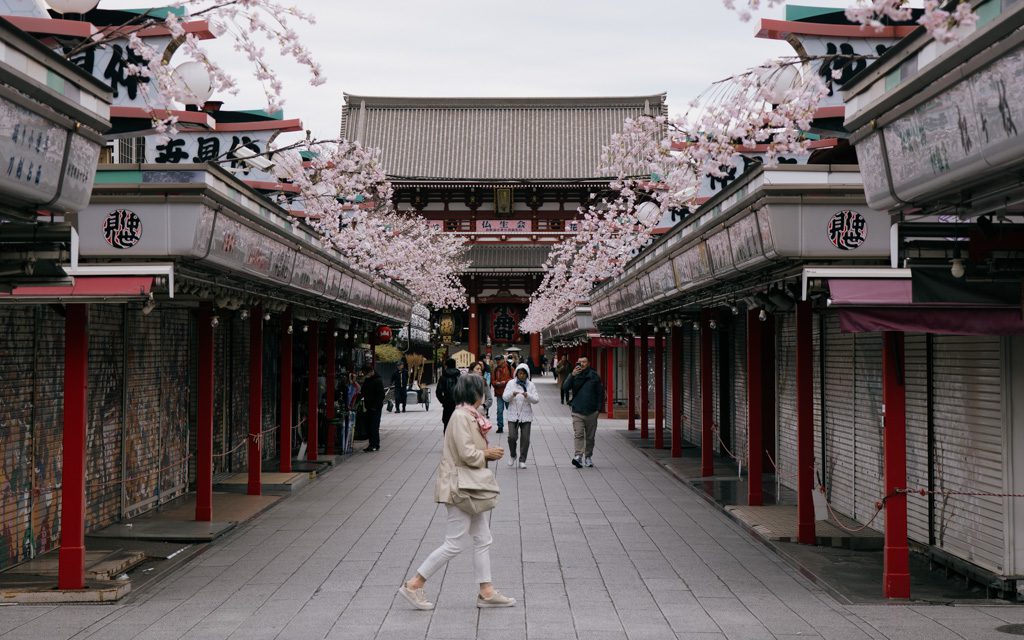
Nakamise shopping street in the early morning.
Starting the day with an early morning (~8-9am) in one of our favourite areas in Tokyo.
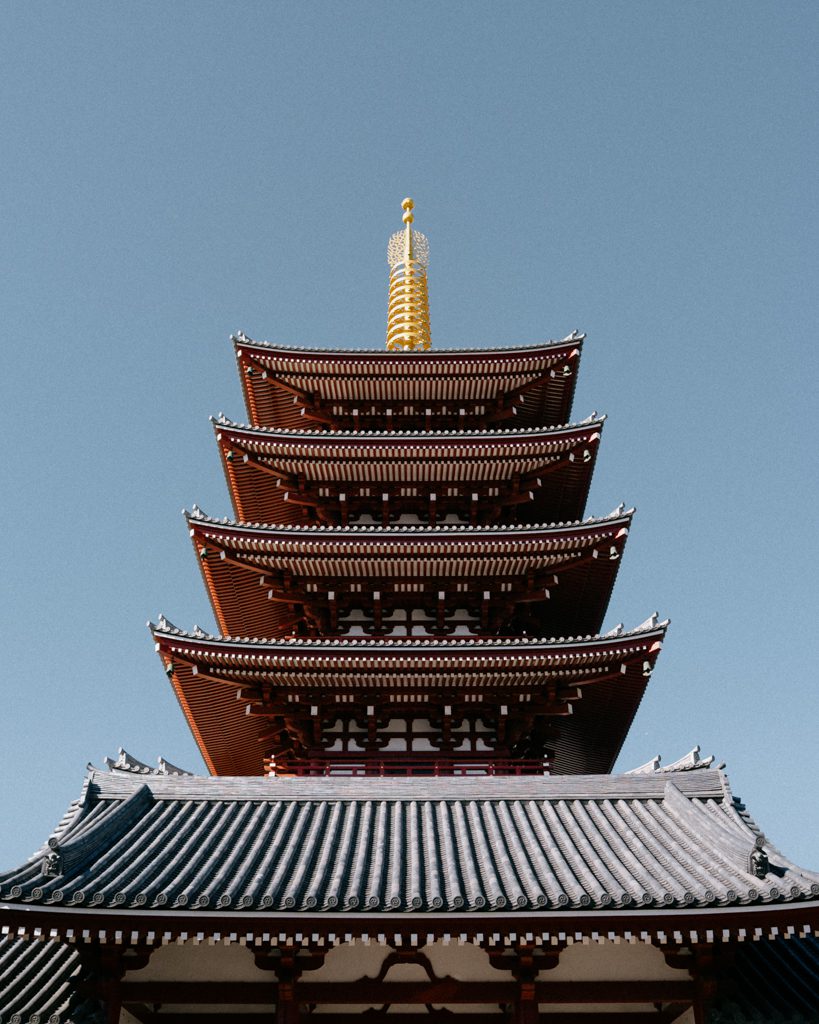
The main attraction on our itinerary this morning is visiting Senso-Ji, Tokyo’s largest temple. Your first introduction to this iconic Tokyo site is Kaminarimon gate, starting here is the best way to get the full experience of the temple.
From Kaminarimon gate you can walk the full length of Nakamise shopping street leading up to Senso-Ji temple. Watch as local vendors that have been there for 300 years set up shop and prepare for a busy day ahead.
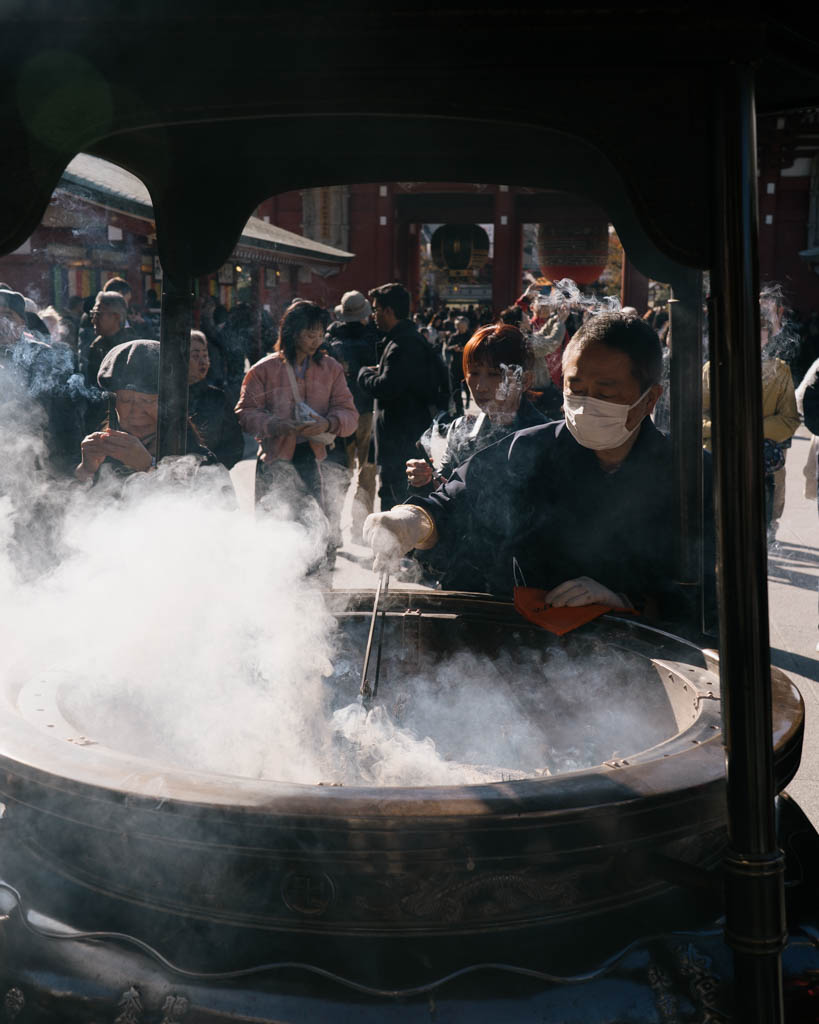
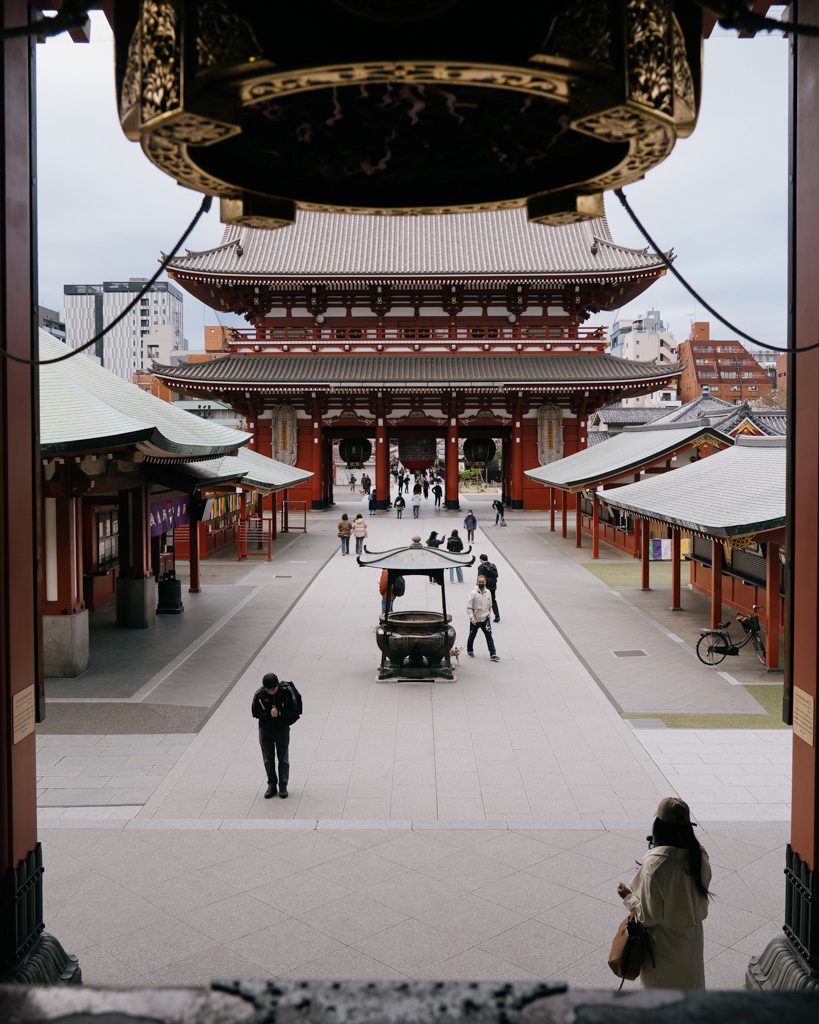
Senso-Ji sits at the top of Nakamise and it’s a sight to behold. Make sure to check your fortune at the stations in front of the temple.
If you get a good fortune, take it home with you! Bad fortunes should be tied up and left behind at the temple on the little stands next to the fortune stations.
If you’re looking for an in depth exploration of Senso-Ji then we recommend a 2 hour guided tour.
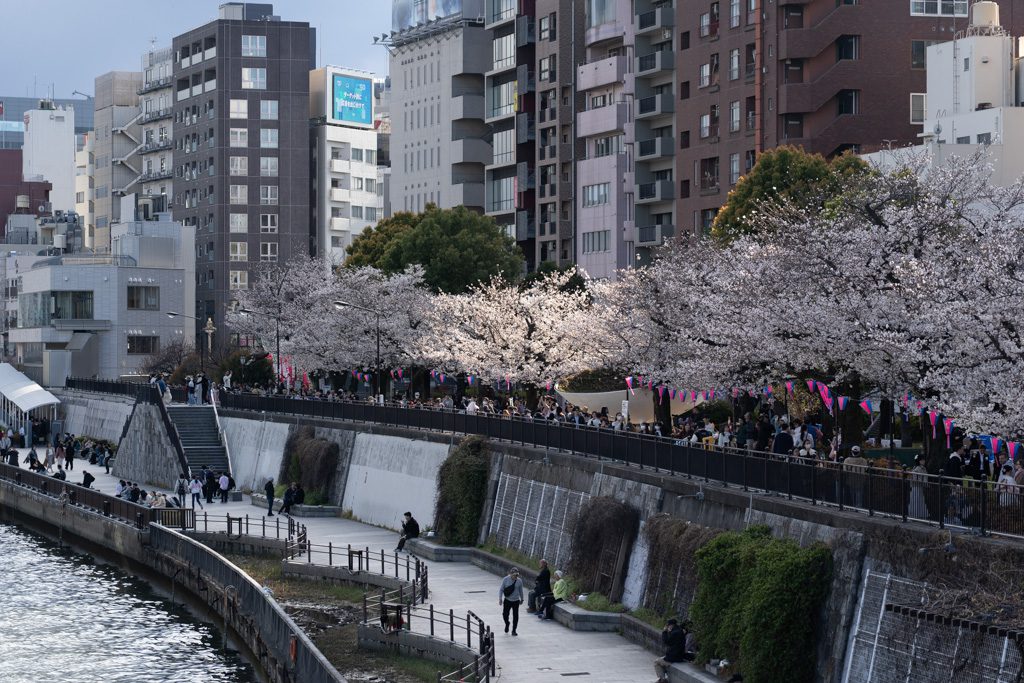
Cherry blossom along the river in Sumida Park
At the end of your Senso-Ji visit make the trip to Sumida Park for views of our next destination Tokyo Skytree, across the river.
If you’re visiting around late March/early April Sumida Park is a great place to see cherry blossoms in Tokyo!
Check out our mini guide to Senso-Ji temple for a more in-depth look. 👈
Tokyo Skytree - Views of Mt. Fuji
Getting There: 20 minute walk from Senso-Ji
Main Attractions: Tokyo Skytree, Pokemon Centre, views over Tokyo
How Long to Spend There: 2 hours
From Senso-Ji/Sumida Park you can walk along the Sumida River Walk to Tokyo Skytree in around 20 minutes. This is an activity in itself, especially in cherry blossom season!
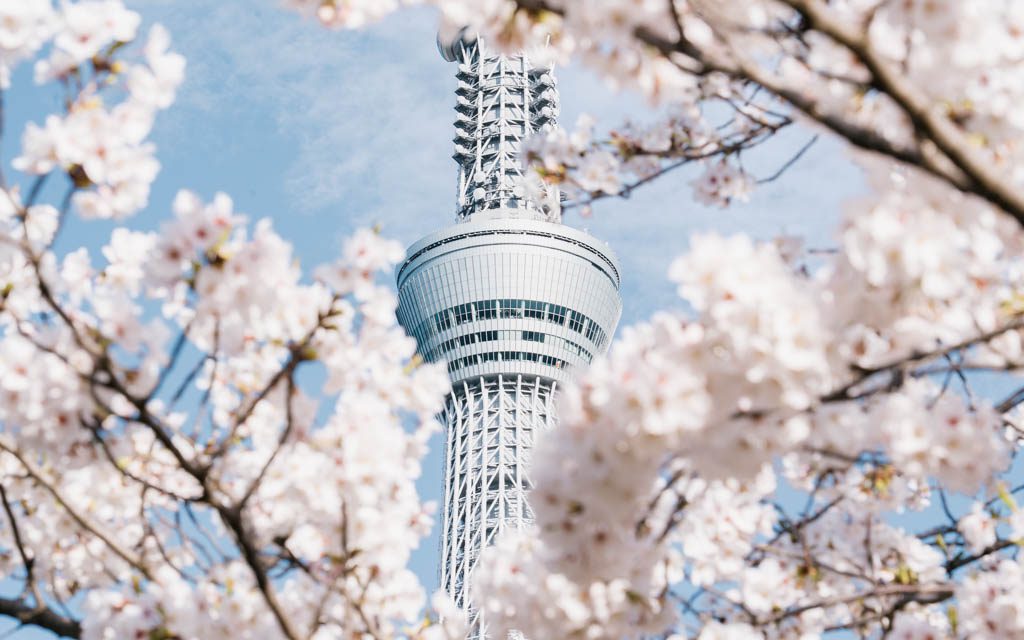
The journey to Skytree is one of our favourite strolls in Tokyo. A scenic walk through the park with boutique shops and coffee spots along the way.
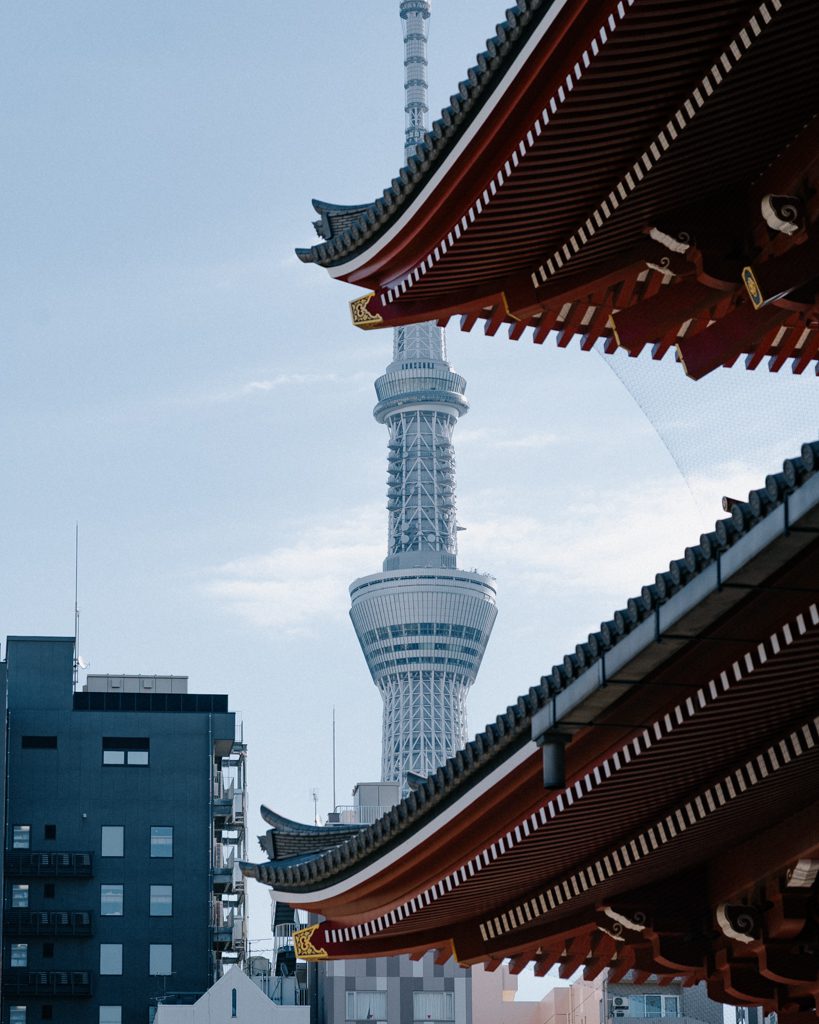
We always think a visit to Tokyo isn’t complete without a trip up to a viewpoint. The monolith that is Tokyo Skytree is a great way to look out over the entire city, you can even see Mt. Fuji on a clear day! To make the most of your time and avoid the queues, book your Tokyo Skytree ticket in advance.
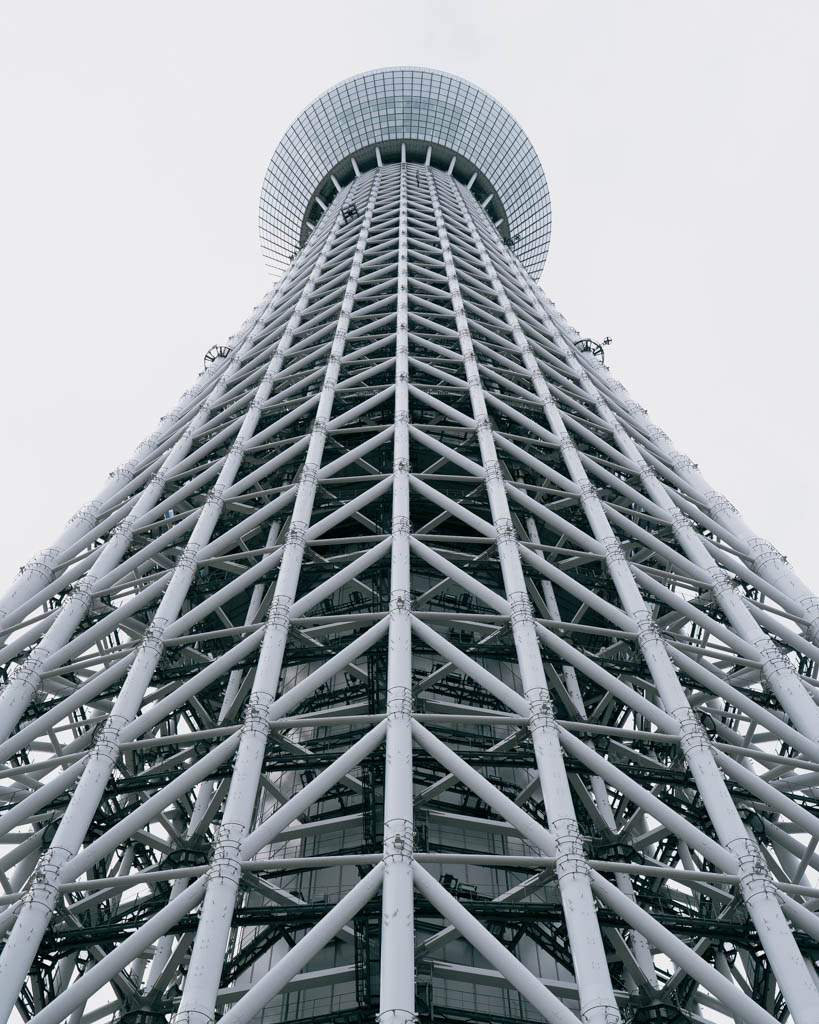
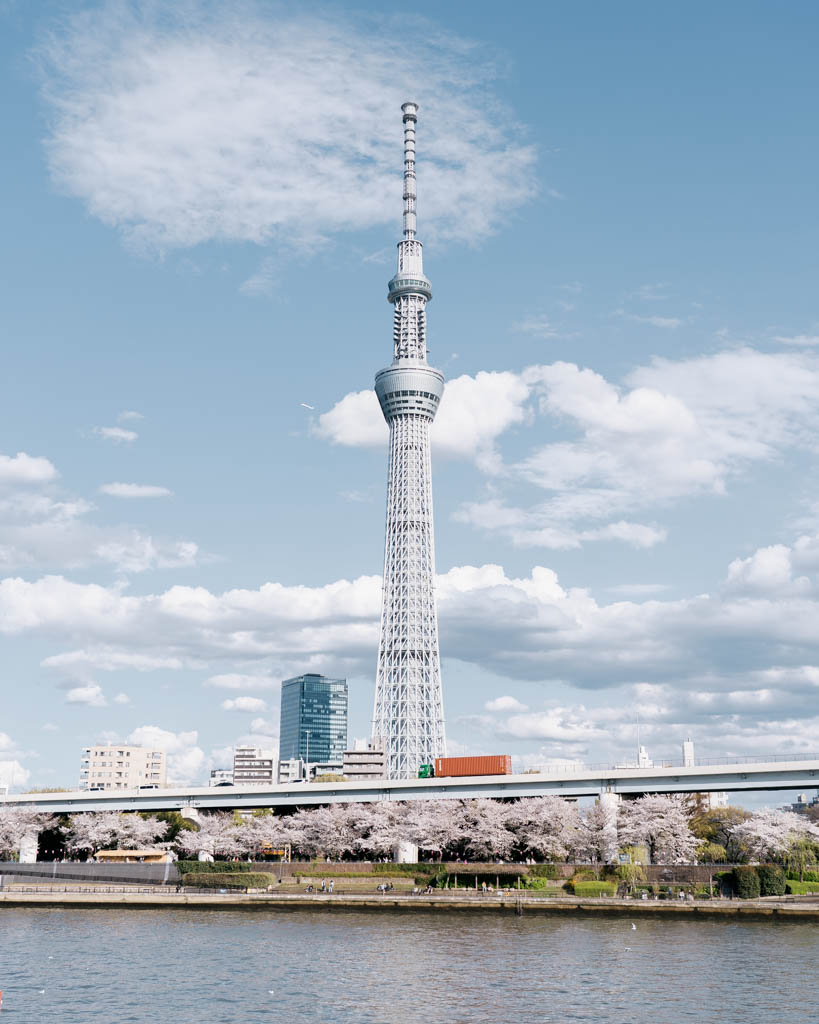
Tokyo Skytree is also a great opportunity to do some souvenir shopping. The Solamachi mall attached to Skytree is full of clothing stores, knife shops and a Pokemon centre that you could only find in Japan.
Before leaving Tokyo Skytree you have the opportunity to grab a bite to eat to fuel the rest of the day.
The 3rd floor of the mall has a food court with plenty of food options available. If none of them take your fancy you could visit the supermarket on the 2nd floor and grab a bento or sushi plate to enjoy.
If you’d rather eat somewhere else, keep reading to see our ramen recommendation at the next stop.
Akihabara - Tokyo’s Electric City
Getting There: 20 minute train from Tokyo Skytree Station
Main Attractions: Arcades, otaku culture, electronic stores
How Long to Spend There: 2-3 hours
From Tokyo Skytree take the Asakusa or Tobu Skytree line to Asakusa station, then switch to the Ginza line to Akihabara. Journey time: ~20 minutes.
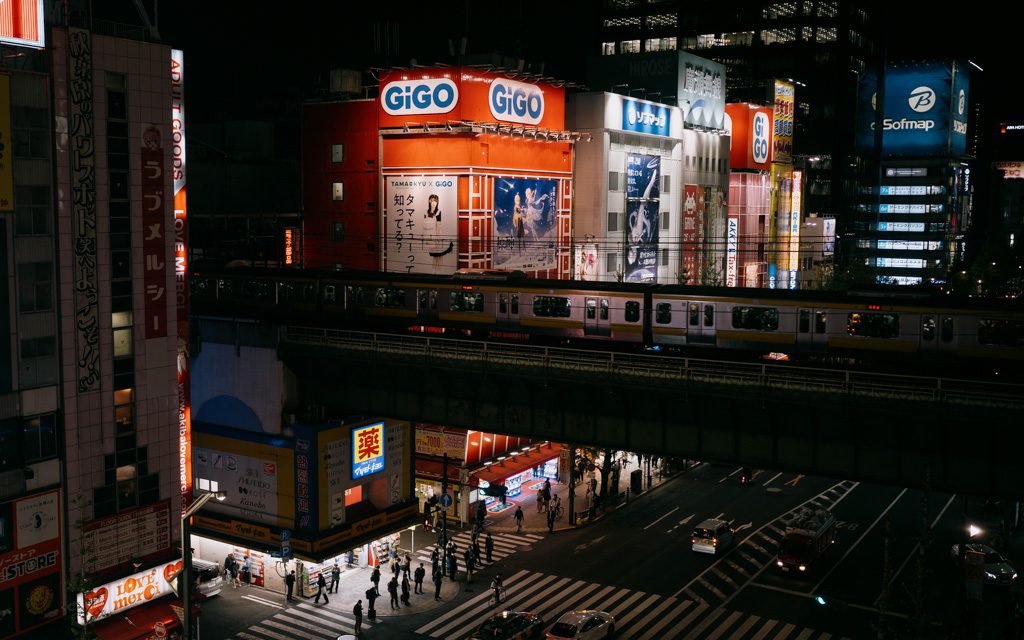
Gigo building in Akihabara
If you’re still feeling hungry then head straight to our favourite ramen place in Akihabara, Hakata Furyu for a bowl of yummy tonkotsu ramen.
All fuelled up now? Let’s crack on with the itinerary!
Akihabara is Tokyo’s electric city and attracts visitors from all over the world with its distinct otaku culture.
Otaku refers to people who have a love for Japanese anime, manga, and video games. But you don’t have to be interested to get an appreciation for just how impressive Akihabara is. Sarah isn’t but she loves Akihabara for one main reason. Arcades.
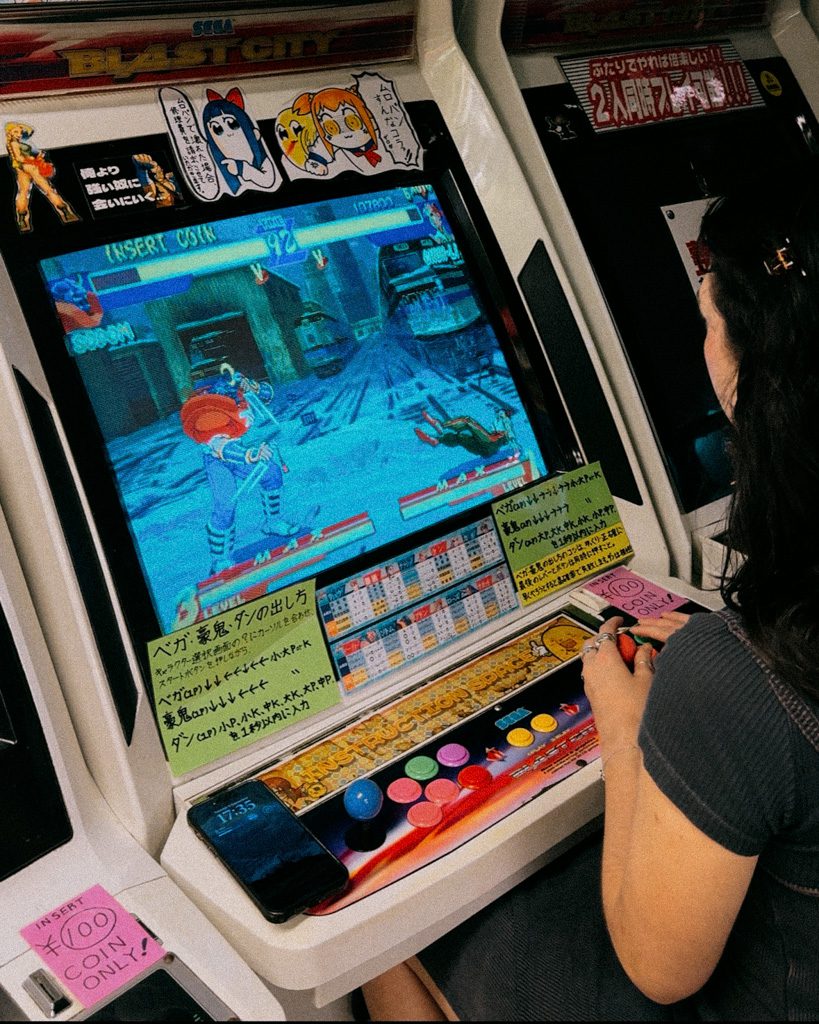
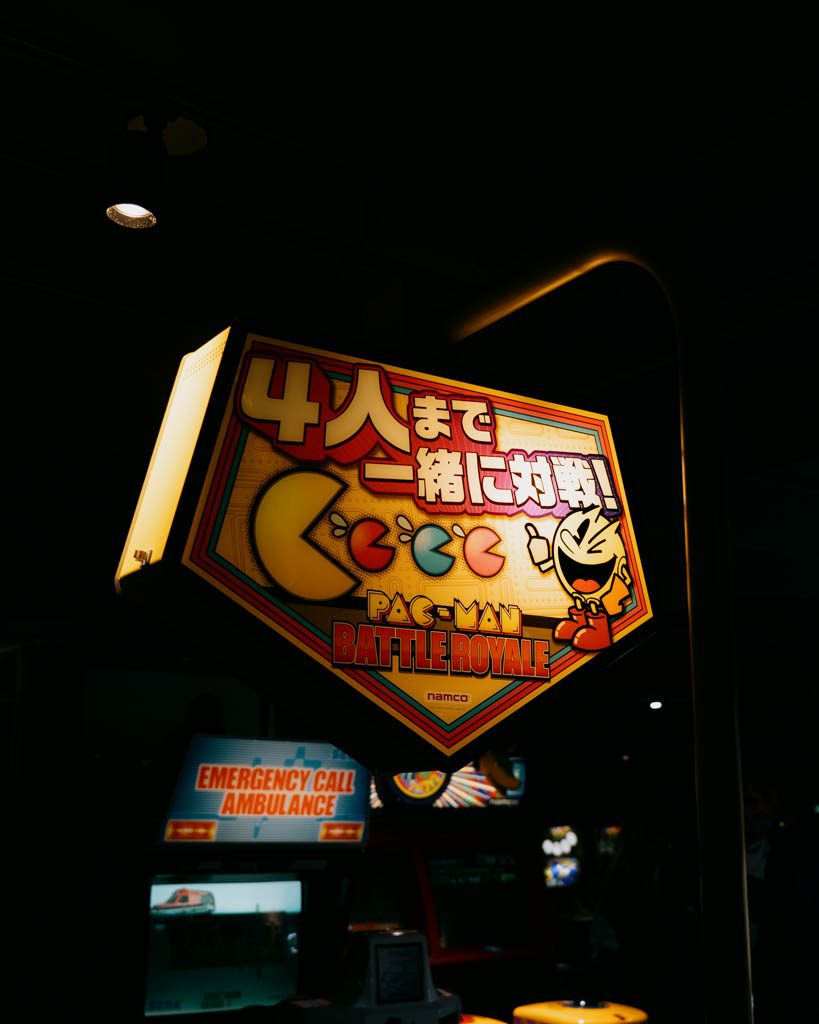
You’ll find arcades all over Japan but not quite as many as you will in Akihabara. So treat yourself to some old school gaming in our favourite one, Gigo Building 3. We love the group Mario Kart on the 4th floor and the retro arcade machines on the 6th floor.
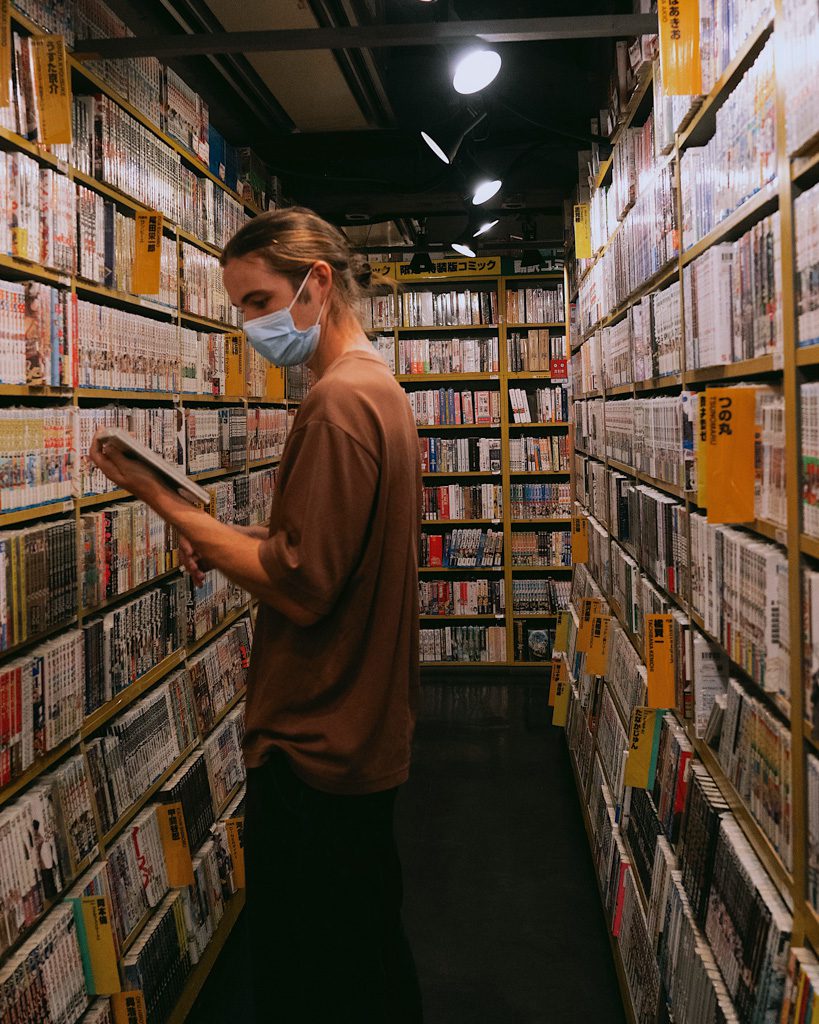
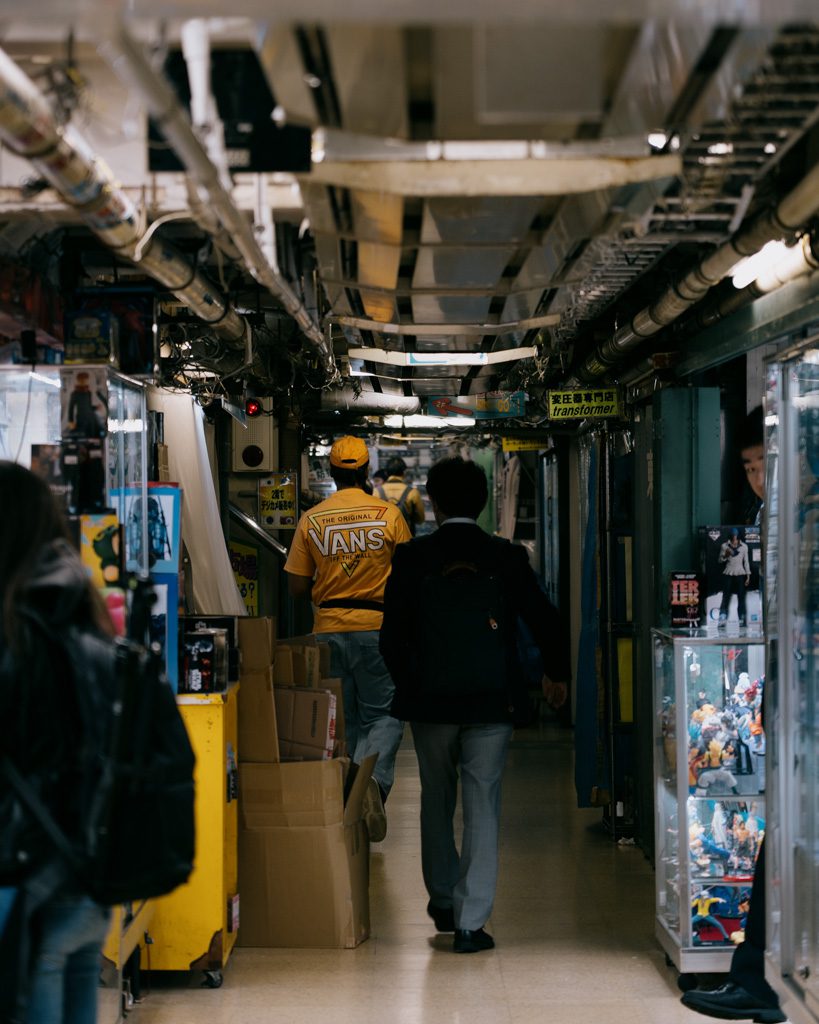
If you’re interested in collecting some retro video games yourself then check out Book Off and Super Potato in Akihabara where you can find old school Nintendo and Playstation games that you can’t find outside of Japan.
The last major attraction that we recommend in Akihabara is the Yodobashi Camera. Don’t let the name fool you, this place doesn’t just sell cameras.
Yodobashi Camera is a monolith of a department store that can be found in various cities across Japan. These places are so huge they have their own food courts, batting cages and bowling alleys. They’re a spectacle of Japanese appliances.
Why not buy yourself the self-cleaning, heated bidet toilet seat of your dreams?
Make your way back to Akihabara station to head to the next location.
Shibuya - Scrambling the Crossing
Getting There: 30 minute train from Akihabara Station
Main Attractions: Shibuya crossing, Hikarie skylobby
How Long to Spend There: 2-3 hours
From Akihabara station take the Yamanote Line directly to Shibuya station. Journey time: ~30 minutes.
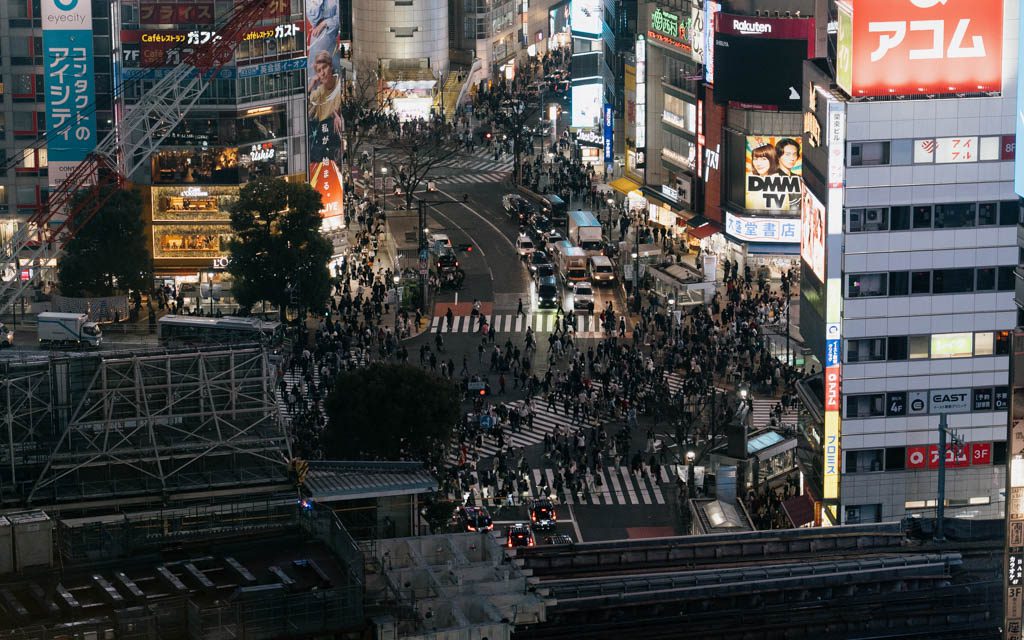
View of Shibuya crossing from Hikarie building.
If you don’t walk across Shibuya crossing, did you even visit Tokyo?
The busiest street crossing in the world is a spectacle that draws crowds from all over, and it’s definitely something everyone should do at least once. But we think the best way to experience the crossing is from above.
Now you’ve already done one viewpoint of Tokyo, but the next one is more of a mini-viewpoint.
Head to the 11th floor of the Hikarie building in Shibuya and you’ll find a free observation deck that overlooks the iconic Shibuya crossing. It’s also another great opportunity for a view of Mt. Fuji from Tokyo!
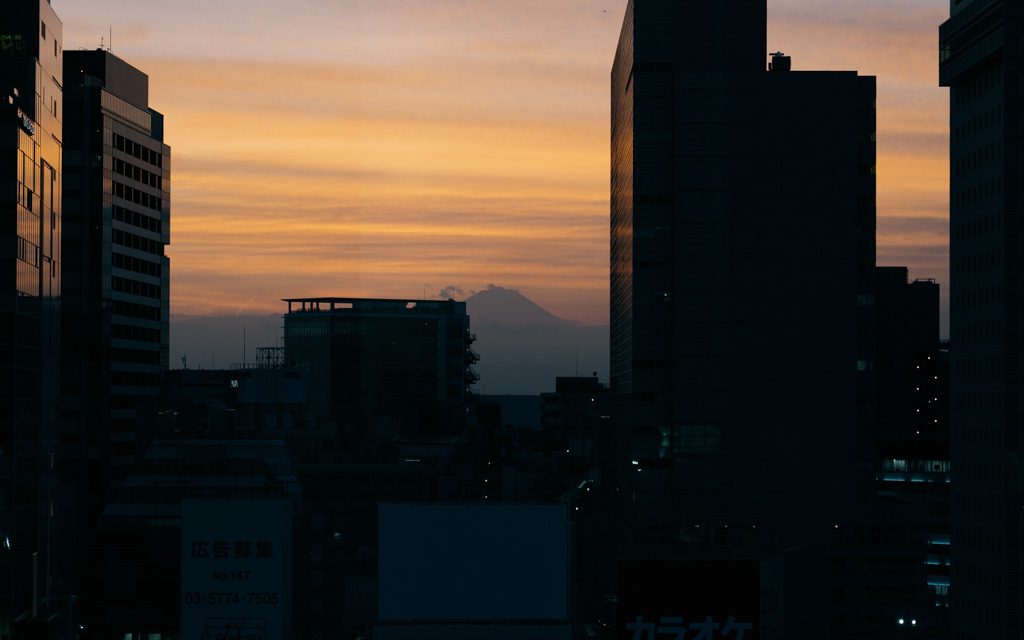
Free sunset view of Fuji from Hikarie Skylobby.
How fast or slow your day’s gone so far will determine what you do next:
Short on time? Catch the train from Shibuya to Shinjuku and move onto the next step in this guide.
Got plenty of time? Say you’re finished with Shibuya crossing by 5pm. Then we recommend taking the slow and interesting route to Shinjuku.
This involves a stroll through one of Tokyo’s most popular neighbourhoods and historic jungle.
Starting from the end of Cat Street in Shibuya this route takes you through Tokyo’s best shopping district full of boutique shops and flagship stores, before ending in Harajuku’s Takeshita street.
You’re bound to get lost in all the cool coffee shops and vintage stores along the way.
Takeshita street is another insane side of Shibuya that will overload the senses. More boutique shops that are unique to this area, Gatchapon heaven, and plenty of sweet snacks to keep your energy up.
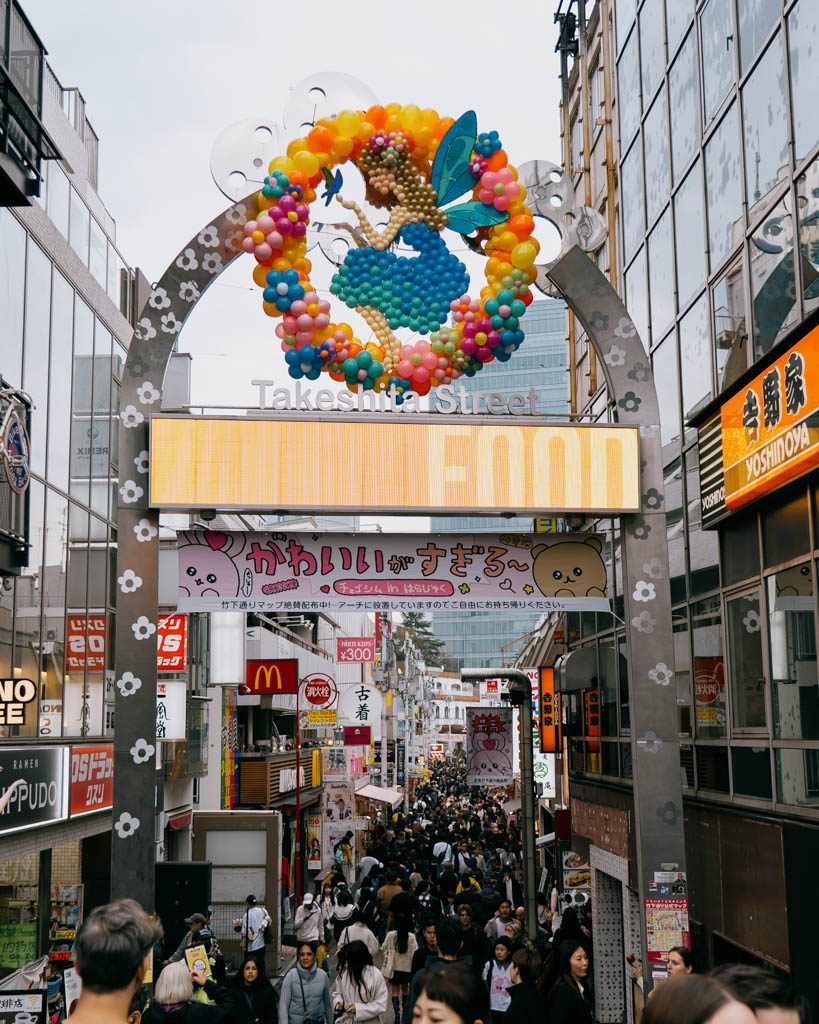
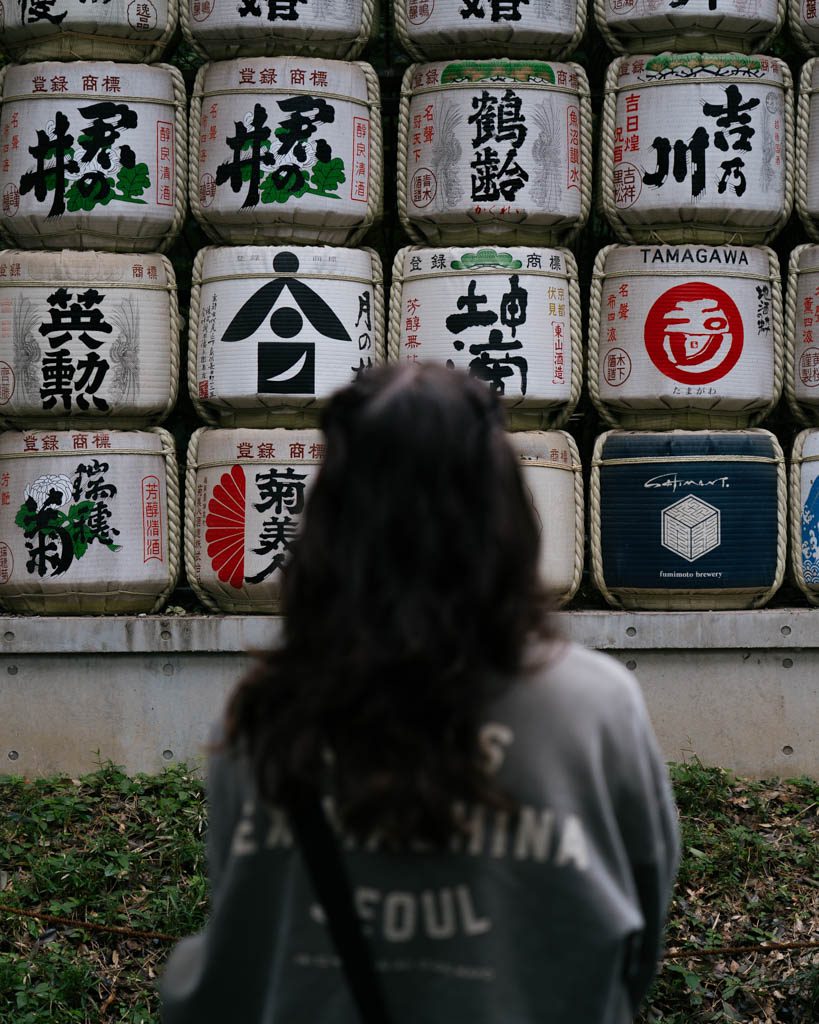
Our journey through Shibuya ends at Meiji Jingu shrine.
On the far side of Harajuku station sits a lush green jungle within the sprawling concrete that makes up Tokyo.
Meiji Jingu feels like a breath of fresh air within the city, a true escape from the sound and chaos. The sun should be setting as you walk through the forest but swing by Meiji Jingu shrine to catch a glimpse of it as the crowds start to leave at closing time.
Make sure you exit Meiji Jingu on the opposite side you entered, in the direction of Yoyogi station. Then just keep swimming (walking) to Shinjuku.
If time is getting short you can skip Meiji Jingu and catch the train from Harajuku to Shinjuku station.
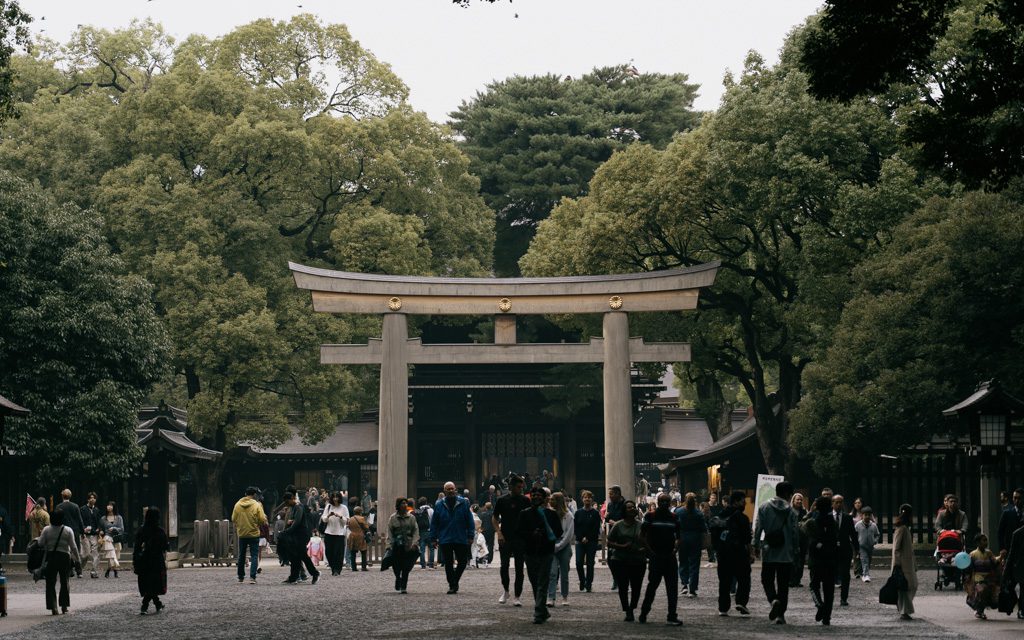
Temple gate at Meiji Jingu shrine.
Shinjuku - Tokyo’s Neon Nightlife
Getting There: 8 minute train from Shibuya Station, or 1 hour walk from Shibuya.
Main Attractions: 3D billboard, Omoide Yokocho, Kabukicho, Godzilla Statue, Don Quijote.
How Long to Spend There: 2 hours
If you didn’t have time to walk to Shinjuku, then catch the Yamanote line from Shibuya Station to Shinjuku Station. Journey time: ~8 minutes.
If you walked through Harajuku & Meiji Jingu then keep walking to Shinjuku or catch the train from Yoyogi station to Shinjuku station to give the legs a short rest.
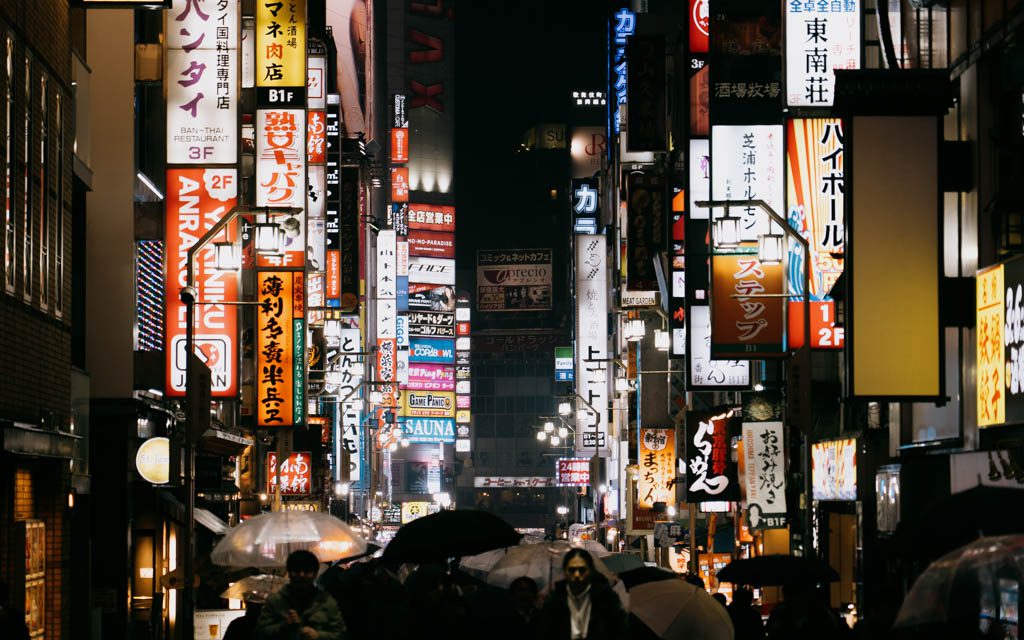
Getting into Shinjuku at night is no happy accident, we’re taking you there late on for a good reason.
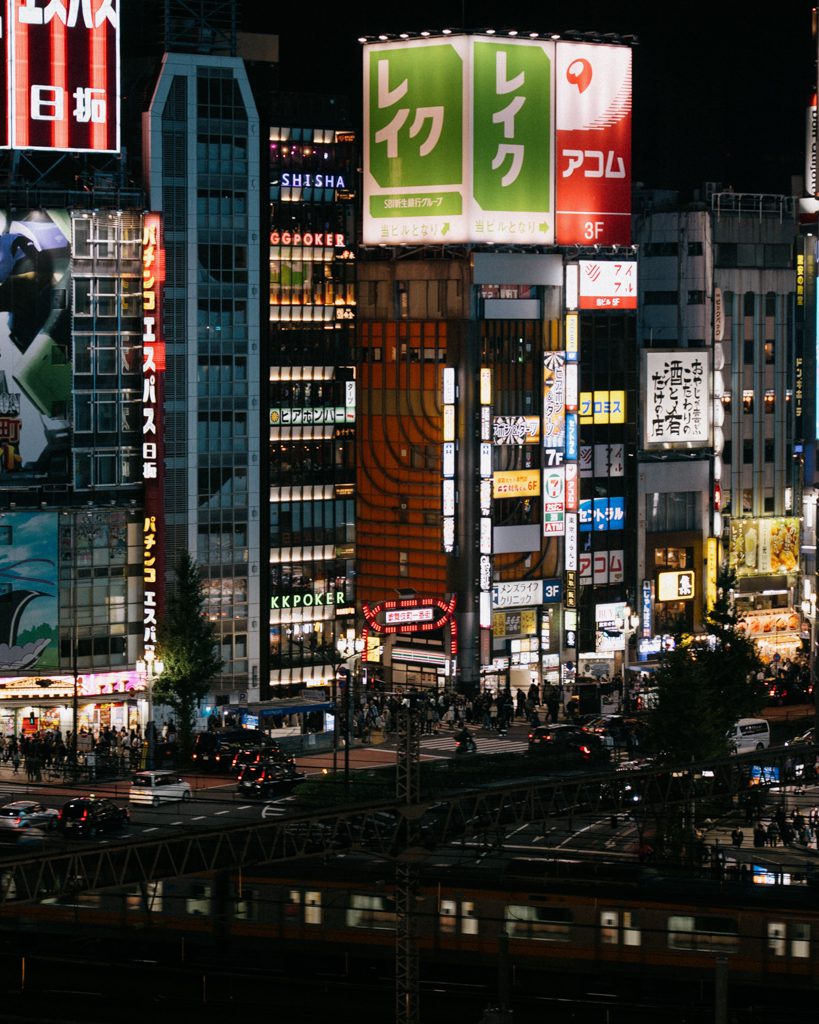
After all our travels in Japan we can safely say that Shinjuku is the neon home of Japan. At night the city really comes alive, it’s the perfect way to wrap up a jam packed day in Tokyo.
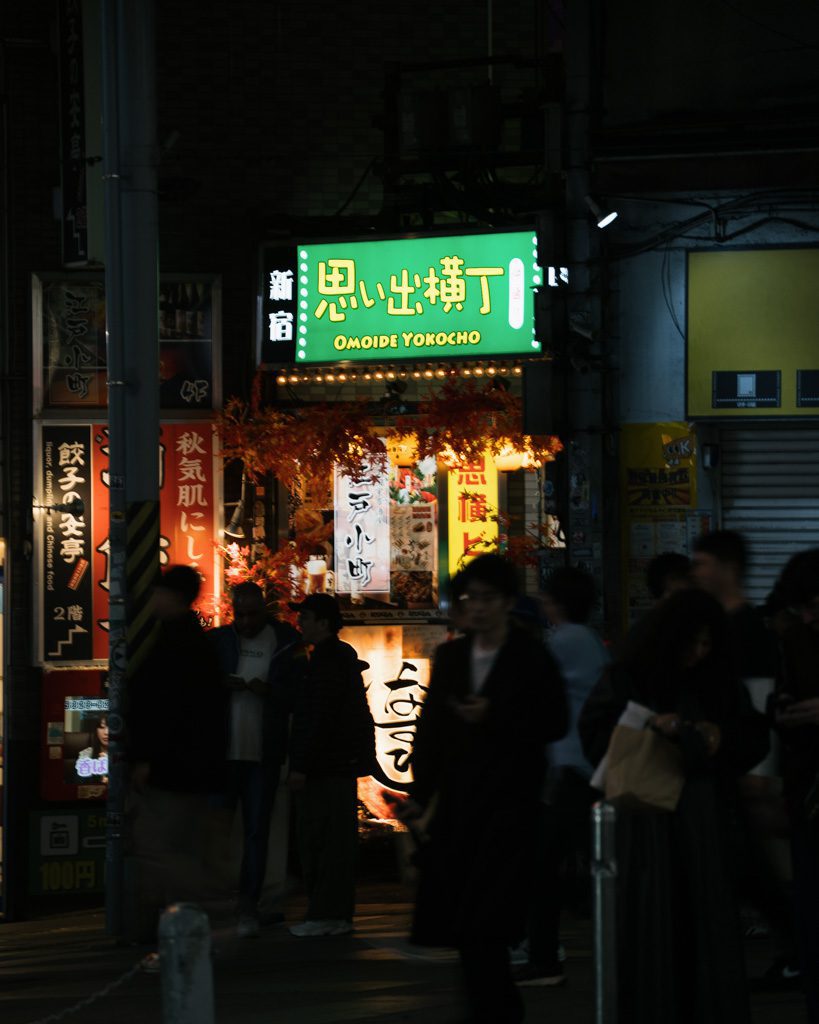
If hunger is striking then head to Omoide Yokocho, otherwise known as piss alley, don’t let the name put you off. Omoide Yokocho is a narrow alleyway full of tiny izakayas that fit 5-6 people each. Find a seat at any restaurant, order a beer (you’ve earned it), and order whatever looks good.
After a refuel, go out and absorb the chaos that is Shinjuku.
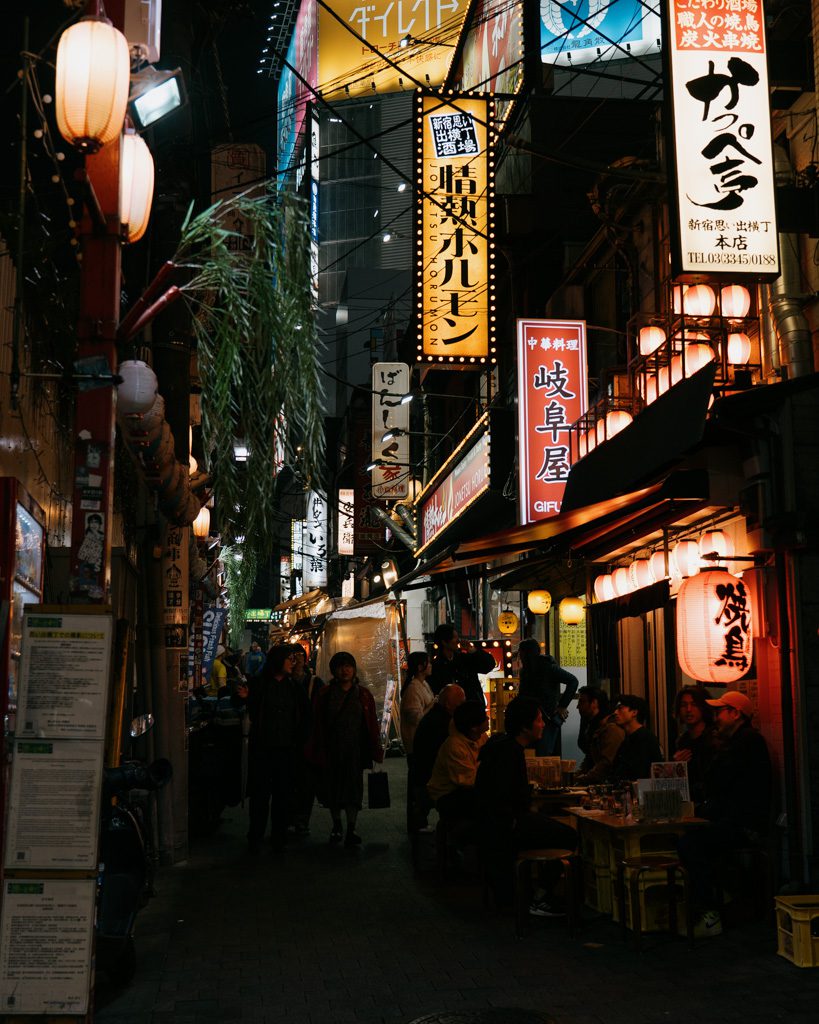
Check out the famous red light district Kabukicho. Pass under the iconic torii gate and be swamped with colourful lights and neon signs. Just do your best to ignore all the touts trying to get you into bars.
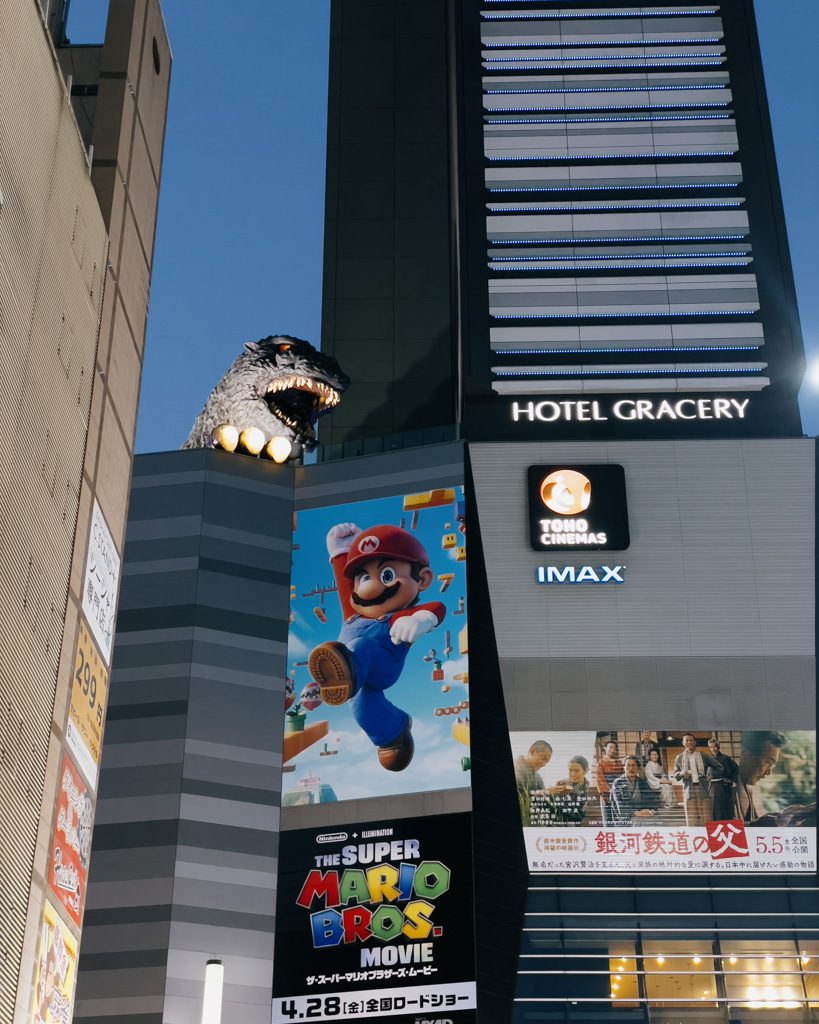
After a loop of Kabukicho, seek out the Godzilla statue above the Toho cinema. Don’t worry, thanks to international copyright laws, this one actually is Godzilla!
The beauty of Shinjuku is that you can wander around for hours just taking it all in.
If you have the time and aren’t completely exhausted yet then swinging by a Don Quijote is always worth it. Just know that if you aren’t overstimulated already, this place will do it.
Don Quijote is a wild department store in Japan that sells all kinds of whacky and wonderful things, best to just experience it yourself.
If you have time before your flight in the morning it’s the best place to go for some last minute souvenirs. There’s a Don Quijote in Shinjuku, Asakusa, and Shibuya.
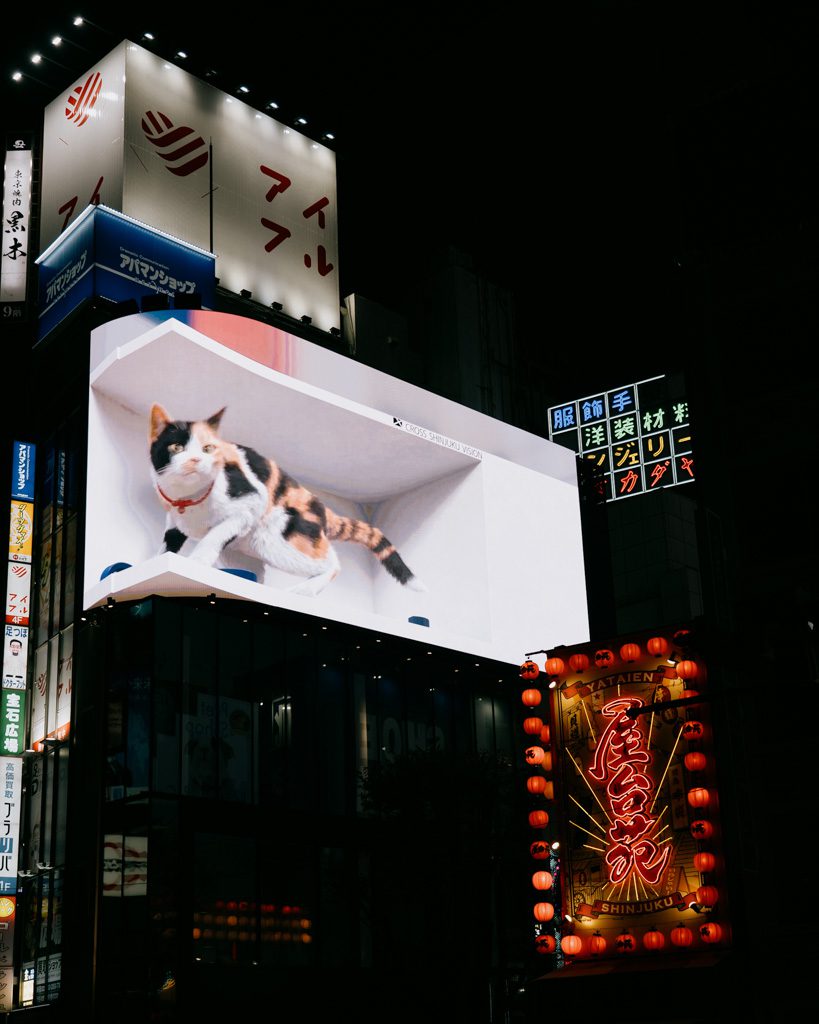
If you’re staying in Asakusa and catching the train from Shinjuku station at the end of the night, make sure you swing by the 3D cat billboard near the east exit of the station. This was the first thing we saw when we stepped off the train in Tokyo and it was very much a ‘we made it’ moment.
Final Thoughts About This 1-Day Tokyo Itinerary
That was a lot!
Hopefully this guide gives you a good taste of Tokyo in 1-day, and at the same time, leaves you wanting more! We usually recommend at least 5 days in Tokyo to truly appreciate the city, but if you only have 1 day then this is the best way to spend it.
Still planning your trip? Check out our guide on the best time to visit Tokyo. As well as where to stay in Tokyo.
Related Posts
Hi! We’re Mark & Sarah.
We’ve been travelling the world together for the past 4 years. Exploring destinations such as Europe, South America, South East Asia, Japan and Australia. Now we’re sharing everything we’ve learned on our travels, to help you get out there and have your own adventures!