Best SIM Card for Japan in 2026: eSIM, Physical SIM & Pocket WiFi Compared
- Last Updated On July 22, 2026
Disclaimer: Some of the links on this site are affiliate links. This means I may earn a small commission if you make a purchase through them at no extra cost to you. I only recommend things I genuinely use or believe in.
Moshi Moshi (もしもし)!!
The first thing we do when we land in a new country is trawl through the airport looking for a SIM card kiosk. For most countries in South America and Southeast Asia this is the cheapest option, but for Japan it’s a bit different.
The first time we visited Japan we went the pocket Wi-Fi route that we had heard so much about on social media, and to be honest, we regretted it. Carrying an extra device, having to keep it charged, and needing to stay as a group so we could access the internet was bothersome.
That’s why when we moved to Japan on a Working Holiday Visa, we decided to go with an eSIM. And boy was it the right decision.
Before the trip we were vaguely familiar with eSIMs but still weren’t sure which was the right one for us.
So, in this guide we’ll walk you through why using an eSIM made our life so much easier in Japan and why Airalo has become our go to eSIM for our travels in Japan. We’ll also compare the other SIM card and pocket Wi-Fi options available, so you can make sure you’re geared up and ready for your trip to Japan!
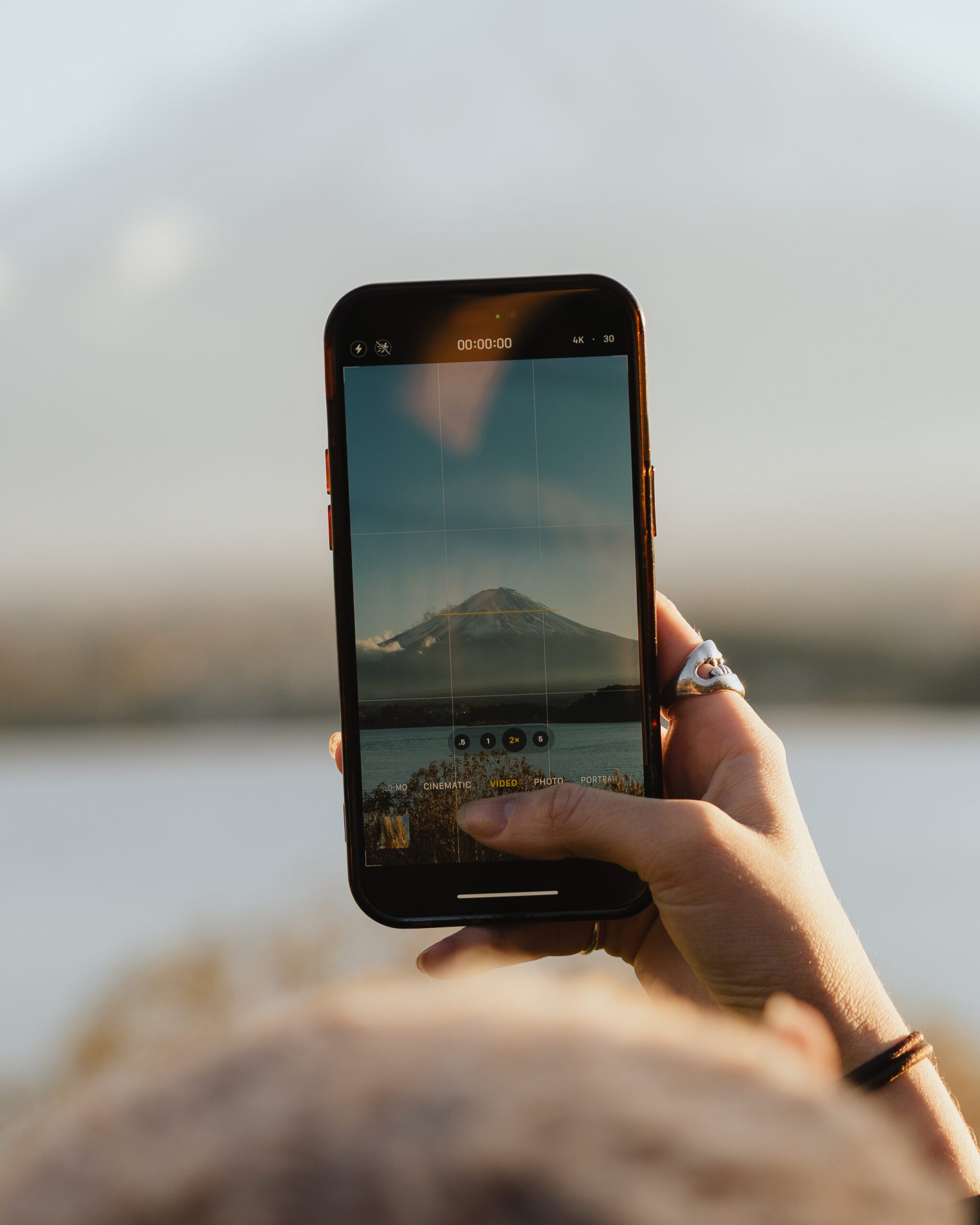
First, Check If Your Phone Is Unlocked
Before anything else, check if your phone is unlocked.
If your phone is locked to your home carrier, a physical SIM or eSIM from a Japanese provider won’t work. Your only option in that case is pocket WiFi.
Most phones bought outright or used for a while are unlocked, but if you’re not sure, contact your carrier before you fly. It takes five minutes and saves a lot of frustration at the airport.
Contents
ToggleeSIM for Japan (Best for Most Travellers)
For the vast majority of people visiting Japan, an eSIM is the easiest, most convenient, and often most affordable option. It connects you to the same networks that people in Japan use, which means fast speeds, reliable coverage, and zero stress when you’re navigating trains or translating the menu.
When we first landed in Japan, we were woefully unprepared. Perhaps we were too pre-occupied moving our entire life to Japan for a year. One thing we forgot to arrange in advance was our eSIM.
Cue me using the Narita airport Wi-Fi whilst going through immigration, frantically downloading the first eSIM I came across.
We made the mistake of using Ubigi as our eSIM provider when we landed in Japan. After scanning through a few reviews and reddit posts it seemed like the best option. However, over the next few weeks we were frequently met with outages and issues accessing our data.
By month two in Japan, we had already made the switch to Airalo and never looked back. We’ve written this guide so you get it right first time!
In Japan it’s such a god send having plenty of reliable data. We rely heavily on being connected when we travel, whether it’s using google maps to navigate the extensive train system in Tokyo, looking for somewhere to eat, or using google translate to figure out what’s on the menu. Being connected just makes travelling that bit easier.

Who it works for: Anyone with a relatively modern smartphone (most phones from 2019 onwards support eSIM, though check yours specifically) and an unlocked device.
What is an eSIM and Should I use an eSIM for Japan?
eSIM stands for electronic sim card. Instead of buying a physical SIM at the airport or a phone shop, most modern phones now have eSIM functionality built in.
You buy it online before you leave, install it on your phone, and the moment you land and switch on data, you’re connected. No queues, no kiosks, no fumbling with a tiny plastic card.
Japan was our first experience using an eSIM and we’ve never looked back. Having an eSIM meant we could do everything we needed to when out and about, like:
- Navigating around Japan: We loved having a Japan eSIM because we rely heavily on Google Maps, especially for public transport in Tokyo & Osaka. Trying to navigate the vast network of trains and buses without internet sounds like a nightmare. Google Maps has accurate routes and times, which just make the trip so much easier!
- Finding food spots: Hunting for the best restaurants in Japan should be a top priority on everyone’s list. We love trying local places and the best way to find them, especially in Japan, is on Google Maps. Not wanting to waste a meal on a bad experience, we heavily relied on the Google reviews to decide where to eat.
- Translating things: Ok, so we tried out best to learn some Japanese before visiting but it’s hard… Having a translation app such as Google Translate was a necessity to navigate menus. Whilst many places have English menus, there are still lots of bars and restaurants that have Japanese only menus.
We assumed Japan being the technological marvel that it is, would have free Wi-Fi on every street, but that really wasn’t the case. To save ourselves from popping into a McDonalds every 10 minutes for free Wi-Fi an eSIM was essential.
Best eSIM for Japan in 2026:
We’ve already mentioned that the majority of our trip was spent using Airalo. We’ve stuck with them ever since because it just works. No issues with service, good coverage across Japan and other countries (we’ve since used them in China, Greece, Mexico & Chile). It’s super easy to setup, with detailed step-by-step instructions on their app. And you can even earn credits through our referral code!
We had one tiny issue with Sarah’s phone and customer service was top notch, they talked her though the troubleshooting steps and in the end it was because her phone was on an old iOS. Easy fix!
Overall Airalo has been a stress free, reliable, and convenient experience that we’ll probably stick with for all our future travels.
Sign up for Airalo and use code MARK18310 when signing up or checking out to get £2.50 off your first Airalo eSIM.
Airalo vs Holafly vs Ubigi
| Duration / eSIM provider | Airalo | Holafly | Ubigi |
|---|---|---|---|
| Unlimited plan (7 days) | £21 ($28 USD) | £24 ($32 USD) | £22 ($29 USD) |
| Unlimited plan (15 days) | £38 ($51 USD) | £41 ($55 USD) | £34 ($45 USD) |
| Unlimited plan (30 days) | £55.50 ($74 USD) | £60 ($80 USD) | £56 ($75 USD) |
Airalo eSim Japan Pricing Plan (How Much Data do you Need for Japan)
Airalo Japan eSIM Plan (Our Recommendation)
Data: 20GB
Duration: Valid for 15 or 30 days
Pricing: £18.50 – £19.50
As we were in Japan for 10 months we decided to just top up a single country plan every month. Because we were in plenty of places with Wi-Fi, and were living a slower life than those on a 2-3 week Japan trip, we went with a 20GB plan rather than the unlimited (trying to save those pennies). The connection was amazing and we had reliable 5G speeds pretty much everywhere we went.
If you’re only travelling Japan we’d definitely recommend sticking with the single country plan!
But if Japan is just a stop on your worldly travels then you should definitely consider a multi-country pack. That’s the great thing about Airalo. There are so many options to choose from you can search through their catalogue and see which works best for you!
Click here for the 20GB Japan Plan! And use code MARK18310 at checkout to get £2.50 off your first Airalo eSIM.
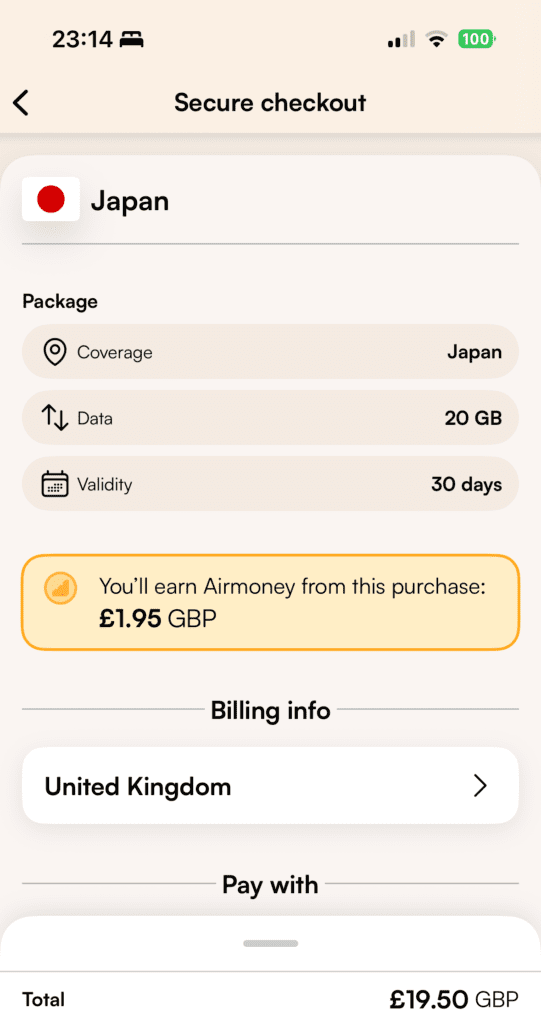
How much data do you need? For a two-week trip using maps, translation apps and a bit of social media, 10-20GB is usually enough.
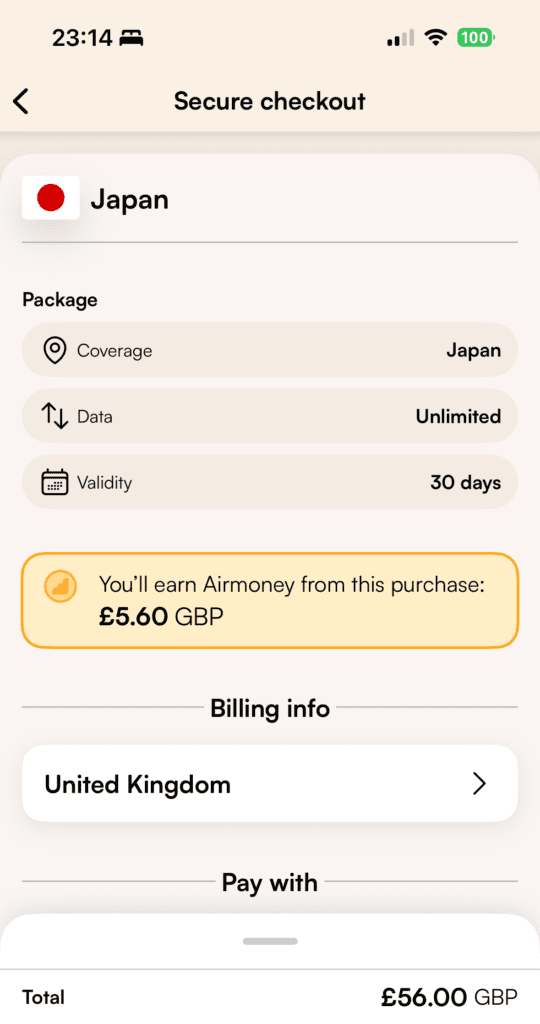
Airalo Japan eSIM Plan (Unlimited)
Data: Unlimited
Duration: Valid for 3 to 30 days
Pricing: £9 – £56
If you’re a heavy data user and expect to work from your eSIM hotspot then unlimited data is the best way to go.
During our two month road trip in Japan we actually switched to a single unlimited plan on one of our phones, whilst the other just hot spotted to it. This helped us make sure we had a reliable connection in some of the most remote parts of Japan, without the risk of it running out. Only using it on one device was another case of us trying to keep costs down, and we were spending everyday together living in a tiny little van.
Sign up for Airalo and use code MARK18310 when signing up or checking out to get £2.50 off your first Airalo eSIM.


Exploring remote locations in Japan whilst staying connected.
Japan eSIM Coverage and Reliability
We’re fortunate to have travelled to some of the most remote corners of Japan, and from our experience we’ve never had any issues with staying connected.
From travelling through Tokyo, Kyoto & Osaka to exploring the beaches in Okinawa and the volcanoes of Kyushu. We’ve tested data coverage all over Japan, and Airalo has kept us connected the whole time, we never had to worry or think about whether we’d have data. Which is a stress we like not having to deal with.
Best SIM Card for Japan
If you’re using an older model phone or you just prefer to go old school, then your next best option is a physical SIM.
A physical SIM is the best option for those wanting to open a bank account in Japan. So, if you’re on a Work Visa, Student Visa, or Working Holiday Visa. You might need a physical sim to receive a salary. There’s a reason this is an important step on our moving to Japan checklist.
If you’re just visiting on holiday but still want to get a physical SIM them the best SIM card for Japan is Sakura Mobile’s Travel SIM
Their physical SIMs can be ordered in advance online and either shipped to you or collected at major airports on arrival. They offer both fixed data and unlimited plans, run on Docomo, and come with English support, which makes them a favourite among first time Japan visitors.
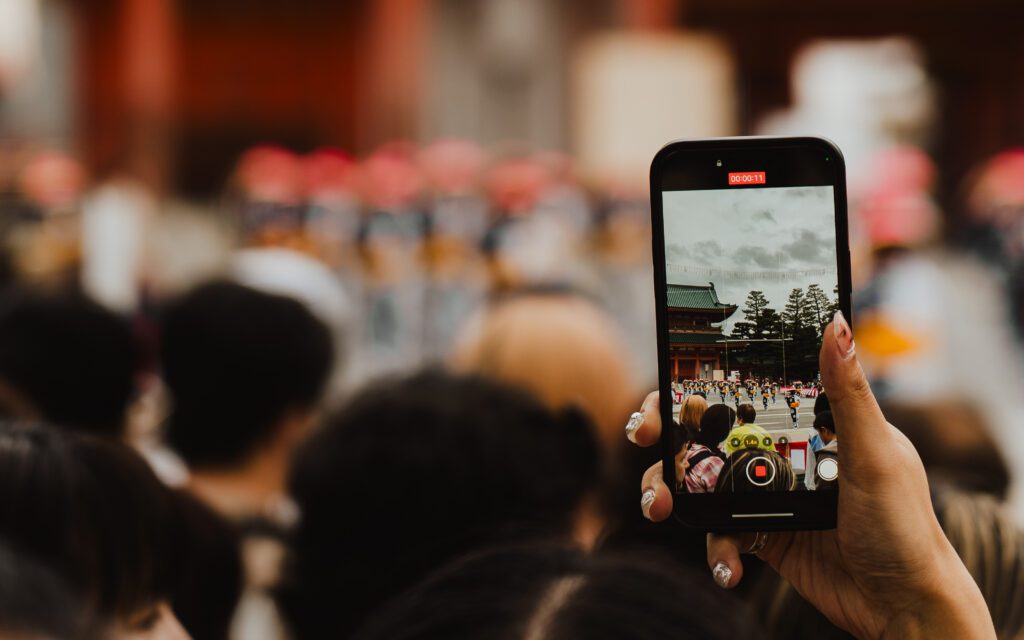
Filming the Jidai Matsuri in Kyoto.
The best SIM for Japan if you’re looking for a Japanese phone number is Sakura Mobile’s Voice + Data SIM.
It’s the best option for new residents because it comes with a real Japanese phone number (070/080/090 format) that is accepted for bank account applications, apartment rentals and any official registration that requires a local number.
If you’re looking for a Japanese phone number – Make sure to get their Mobile + Data SIM
If you’re wanting to go old school and use a physical sim for your trip to Japan just stick with their data only SIM.
Best Pocket Wi-Fi for Japan
Pocket Wi-Fi used to be pedalled a lot by travel bloggers and vloggers alike. It seemed the best option a few years ago. Which is why we used it on our first trip to Japan in 2023. Perhaps the rise and accessibility of eSIMs have pushed this option down the rankings but we still think it’s a viable option for people in 2026.
When pocket Wi-Fi is worth it:
- You’re travelling as a group or family and want one connection everyone can share.
- Your phone doesn’t support eSIM and is locked to your home carrier.
- You have multiple devices (laptop, tablet, camera) that need a connection.
The downsides:
- You’re carrying an extra device that needs charging (battery usually lasts around five to six hours)
- You have to return it before you leave.
- It’s one more thing to worry about losing.
If a pocket Wi-Fi still sounds like the best option for you. We’d recommend this one from Klook. It’s what we used on our first trip to Japan as a group of four. It was great, worked reliably and had really good coverage. Just be prepared to carry around an extra device!
Quick Comparison: Which Option Is Right for You?
| eSIM | Physical SIM | Pocket WiFi | |
|---|---|---|---|
| Best for | Most solo travellers | Those without eSIM-compatible phones | Groups, multiple devices |
| Setup | Before you fly | Airport / online | Airport pickup |
| Phone number included | Rarely (data-only) | Usually data-only; voice plans available | N/A |
| Extra device needed | No | No | Yes |
Planning Your Trip to Japan
Still in the planning stages of your Japan trip? Check out our guides below.
- Tokyo – 5-Day Itinerary
- Tokyo – Where to Stay in Tokyo
- Tokyo – Best Day Trips from Tokyo
- Nozawa Onsen – Guide to Nozawa Onsen
- Nozawa Onsen – Where to Stay in Nozawa Onsen
- Kyoto – 3-Day Kyoto Itinerary
- Kyoto – Where to Stay in Kyoto
More to come!
Frequently Asked Questions
Do I need a SIM card for Japan?
Practically speaking, yes. Japan's free public Wi-Fi is spottier than most visitors expect — limited to hotels, chain cafes, and some train stations. A SIM card gives you reliable access to Google Maps, translation apps, and booking platforms wherever you are.
Can I use my phone in Japan?
Yes, if your phone is unlocked and supports 4G LTE. Most modern smartphones do. If you're unsure whether your phone is unlocked, contact your carrier before you fly, they can usually sort it in a few days.
Is eSIM better than a physical SIM card for Japan?
For most travellers, yes. An eSIM is bought and installed before you fly, so you're connected the moment you land. The exception is if your phone doesn't support eSIM, or you need a Japanese phone number for a long-term stay.
Do tourist SIM cards in Japan include a phone number?
Almost never. Tourist SIMs, physical or eSIM, are data-only. That's fine for most visitors since calls go through WhatsApp. If you need an actual Japanese number (for a bank account or long-term stay), you'll need a specific voice + data plan.
What SIM card do I need to open a bank account in Japan?
You need a voice + data SIM that comes with a real Japanese phone number (070, 080, or 090 format). Tourist data SIMs won't work. Sakura Mobile and Mobal both offer voice + data plans accepted for bank account applications.
How much data do I need for Japan?
For a two-week trip using maps and translation apps, 10-15GB is usually enough. Go for 20GB+ if you're a heavier user, or an unlimited plan if you're working remotely or hotspotting a laptop.
Is there good mobile coverage outside Tokyo?
Yes, Japan's mobile infrastructure is excellent. Coverage thins slightly in rural areas and on hiking trails. If that's part of your trip, choose a provider on the NTT Docomo network, which has the widest reach outside cities.
Can I buy a SIM card when I arrive in Japan?
Yes, airport kiosks at Narita, Haneda, and Kansai all sell tourist SIMs, as do electronics stores like Bic Camera and Yodobashi Camera. That said, buying in advance is cheaper and means you're connected the moment you clear customs.
Related Posts


Hi! We’re Mark & Sarah.
We’ve been travelling the world together for the past 4 years. Exploring destinations such as Europe, South America, South East Asia, Japan and Australia. Now we’re sharing everything we’ve learned on our travels, to help you get out there and have your own adventures!