Moving to Japan: The Complete Arrival Checklist (Working Holiday Visa 2026)
- Last Updated On July 22, 2026
Disclaimer: Some of the links on this site are affiliate links. This means I may earn a small commission if you make a purchase through them at no extra cost to you. I only recommend things I genuinely use or believe in.
When we found out that we would be packing our life away in England and moving to Japan we didn’t know what to do with ourselves. Filled with excitement and nerves we eagerly planned out everything we wanted to see in Japan, where we wanted to ski, even what ramen restaurants we wanted to visit. One thing we didn’t plan out perfectly was everything we had to do to actually move to Japan.
We might have got a bit carried away with the exciting stuff!
And moving to Japan is exciting! Right up until the moment you realise there’s a very specific order in which you have to do things in order to move there, and if you get it wrong, you can end up stuck in an admin loop. We’ve written this guide for people actually moving to Japan. Working holiday visas, student visas, long-term stays.
So if like us, you’ve just arrived with a residence card and a vague plan, keep reading!
Want to live and work in Japan? We’ve got you covered! We’ve written a whole guide on how to apply for a Working Holiday Visa in Japan.
Moving to Japan Checklist (The Short Version)
- Register your address at your local ward office within 14 days of settling — bring your residence card and passport. Your address gets printed on the back of your card.
- Get a Japanese phone number — you need a voice + data SIM with a Japanese number (not a tourist data SIM). Sakura Mobile or Mobal are the best options for English support.
- Open a bank account — Japan Post Bank is the easiest starting point, especially outside cities.
- Enrol in national health insurance at the ward office.
- Sort pension registration — also at the ward office.
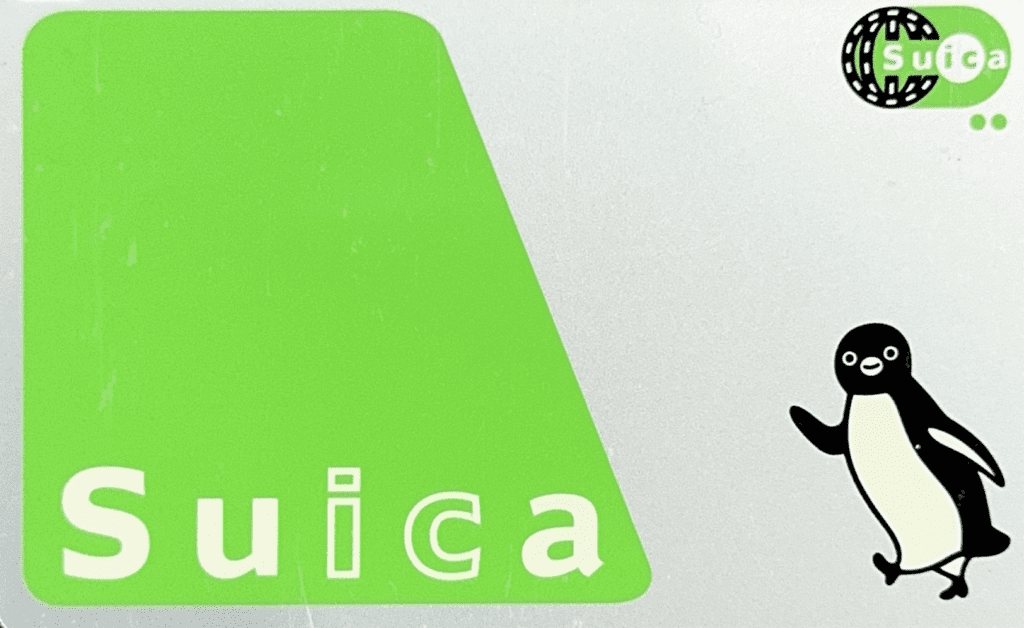
- Get a Suica or IC card and put some money on it.
- Update your address on your residence card every time you move to a different municipality.
It’s a lot for the first few weeks, but once it’s done, it’s done. And there’s something deeply satisfying about having all of it sorted and actually feeling like you live somewhere, rather than just passing through.
Contents
Toggle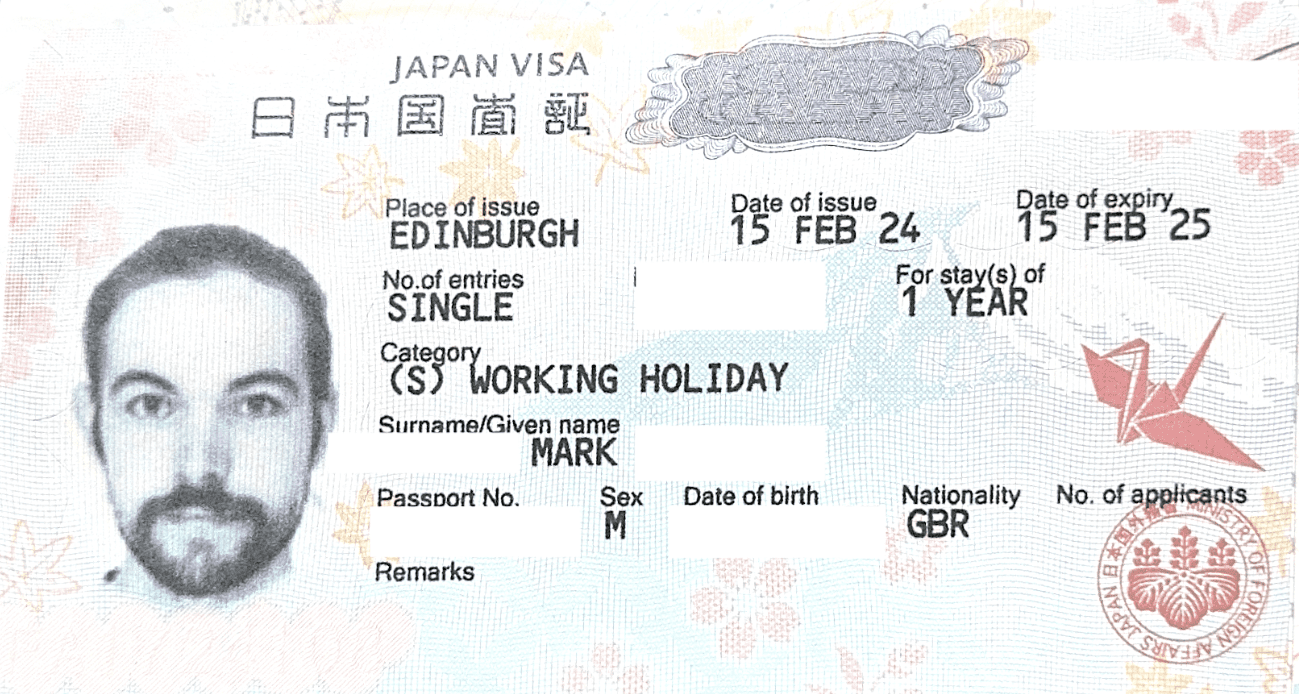
My Japanese Working Holiday Visa
What to do Before You Move to Japan
You don’t need much, but a few things are worth having confirmed before you land.
- A place to stay for at least your first week or two – you’ll need an address to register to.
- Travel insurance that covers your first few weeks before national health insurance kicks in. Although we’d recommend having long term travel insurance anyways to cover non-health related issues.
And if you’re heading straight to a ski resort or rural area, it’s worth reading the ski season section below before you go, because some things are genuinely harder to sort outside a major city.
What to Do When You Enter Japan on a Working Holiday Visa
When you land in Japan on a Working Holiday Visa, there’s a specific order you need to follow, and almost everything is interconnected.
You can’t open a bank account without a Japanese address on your residence card.
You can’t get a Japanese phone number (the kind banks actually accept) without that registered address.
And without a bank account, you can’t set up direct debit, receive a salary, or move on to the rest of your admin, like rent an apartment. Here’s exactly how to tackle it, step by step.
Step 1: Register Your Address (Do This First, Do It Quickly)
You’re finally in Japan!
Even though you’ve been through the whole application process for your Working Holiday Visa, and got your residence card (在留カード, zairyu card) at the airport, you’re not out of the woods yet!
The residence card is one of the most important documents you’ll carry for your entire time in Japan. You need it for almost everything and must carry it with you at all times. So don’t lose it!
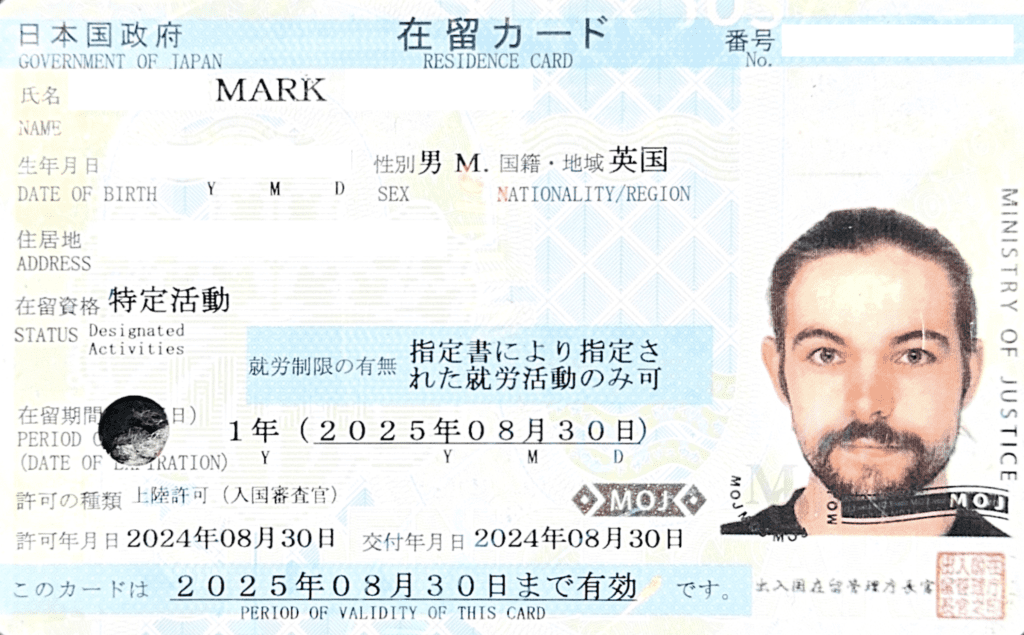
My Japanese Working Holiday Visa Residency Card
As a foreign resident, you have to register your address at your local municipal office within 14 days of settling at a residence in Japan. This is important! Once you do, your address gets printed on the back of the card, and that’s what unlocks basically everything else.
What you need to bring:
- Your residence card
- Your passport
- Your address in Japan (written down, English is fine)
The process itself is surprisingly painless. You fill in a form, hand it over, wait maybe 30 to 40 minutes, and walk out with your address printed on your card. The staff may speak limited English depending on where you are, but the form is straightforward.
Just don’t forget your passport like we did… oops!
A note on timing: When we were planning to move to Japan we assumed that you had to register within 14 days of arriving in the country, but this isn’t entirely true.
You’re actually supposed to do this within 14 days of having a settled address in Japan. If you’re bouncing between hostels when you first arrive, you technically don’t have a permanent address yet, which is where it gets a bit flexible.
We actually booked an apartment for a month in Tokyo when we landed, this gave us time to settle into the country, get all our affairs in order and adjust ourselves to living in the largest city in the world!

Our Tokyo Apartment. We loved this place! Although sadly isn’t available anymore.
If like us, you’re spending a bit of time in Tokyo or another major city with a fixed address, this is genuinely the best window for getting all your admin done.
Find your local ward office (区役所, kuyakusho). In Tokyo, this means whichever ward you’re living in: Shinjuku, Shibuya, Minato, Nakano, wherever. Each ward has its own office.
Take your passport, your residence card, and your address.
The form is in Japanese but the boxes are logical; name, date of birth, address, nationality, visa status, etc.
The whole process is manageable without Japanese, you just might be sitting there awkwardly not knowing what’s going on as they process your papers.
Once you’ve registered and your address is on your card, everything else becomes possible.
A heads-up about the 2026 ID changes: From June 2026, Japan is rolling out a new integrated residence card that combines the residence card and My Number Card into a single document — the Specified Residence Card (特定在留カード). If you arrive after June 2026, this may apply to you. The core process of registering your address at the ward office remains the same; the difference is mainly which card you’ll be issued. Check the latest guidance when you arrive.
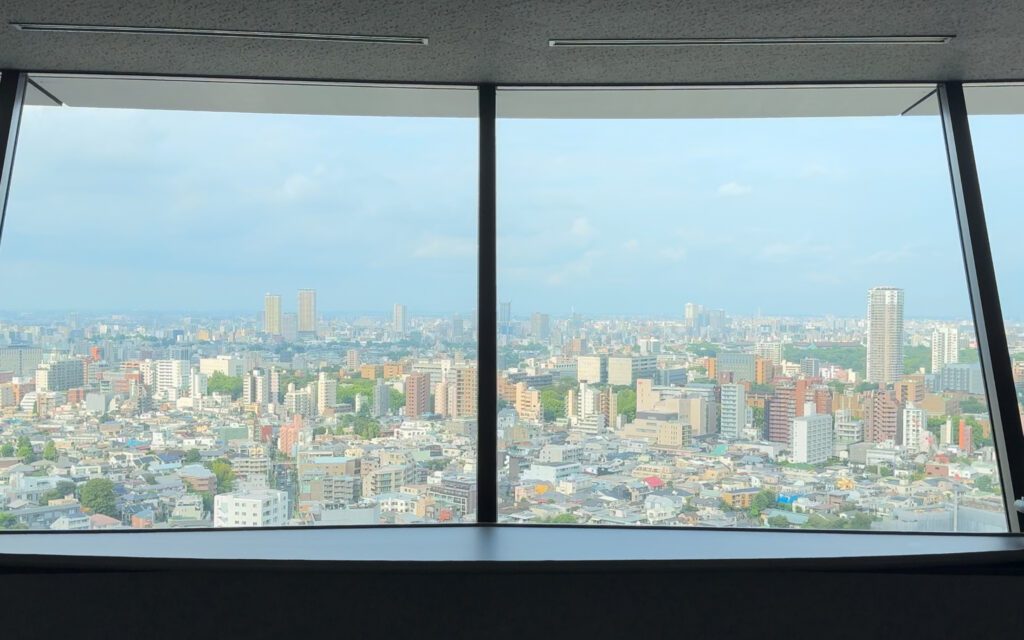
View from Bunkyo Ward Office Observation Deck
A Note for Ski Season Workers: Register at the Ski Town
If you’re heading straight from the airport to a ski resort to start the season, the good news is that you can absolutely register in your ski town. In fact it makes life a bit easier.
If you’re living and working in Niseko, Hakuba, Nozawa Onsen, or wherever your mountain base is, that’s where you should register.
Your employer or accommodation might even help with the registration process, and in popular ski areas with established working holiday communities, the local office staff are often familiar with processing foreign residents.
Getting a Japanese phone number and opening a bank account can be harder in remote areas. Bank branches in smaller ski towns may be limited.
If you’re planning to sort everything like your phone number and bank account from a remote location, it’s absolutely possible but might take more legwork.
We found in the end that we could survive in Japan without a bank account. We were paid in cash and had no intention of working anywhere else during our 12 months, so check if you can save yourself the headache and live without a Japanese bank account.
If getting a bank card and Japanese phone number is necessary for you, keep reading!

Christmas Morning in our Nozawa Onsen Staff House
We ended up spending part of our Working Holiday in Nozawa Onsen, where we worked a ski season and lived in a staff house.
Step 2: Get a Japanese Phone Number
Once your address is on your residence card, the next priority is getting a proper Japanese phone number. Not a tourist data SIM, but a voice + data SIM with an actual Japanese number (070, 080 or 090).
This matters because banks need a Japanese mobile number for SMS verification when you open an account. Some banks are strict about this. An overseas number simply won’t work.
The easiest option for new residents: Sakura Mobile’s Voice + Data SIM is one of the most frequently recommended options for foreigners in exactly this situation. Their phone numbers are normal Japanese numbers (070, 080, 090) that you can use to open a bank account. They also offer English language support to make the whole process easier.
If you’re doing everything in order, you’ll want to sort this after your ward office registration.
We’ve covered a full detailed breakdown of all your sim options in Japan. Including tourist eSIMs, data only SIMs and pocket WiFI for your first few days before you’re registered.
Step 3: Open a Japanese Bank Account
Even though we didn’t end up opening a bank account in the end. We still looked into it and had some friends that went through the pain staking process. Hopefully we can convey some of the lessons they learned to make your life easier.
Once you have your registered address on your residence card and a Japanese phone number, you’re ready to open a bank account. Without both of those, most banks will turn you away.
Almost every bank requires a Japanese mobile number for SMS verification and account security setup, an overseas number will not work for this purpose. And your residence card must show your current registered address before any bank will process your application.
What to bring to the bank:
- Residence card (with your address printed on the back)
- Passport
- Japanese phone number
- Possibly a personal seal (inkan/hanko), though many foreigner-friendly banks no longer require one and let you sign the western way.
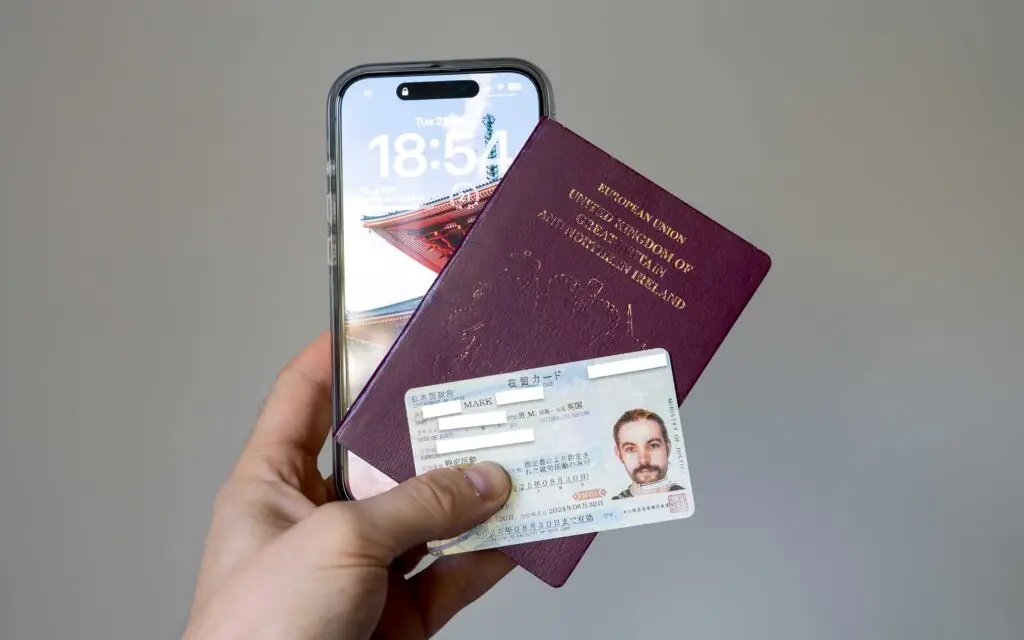
Best Banks for Foreign Residents in Japan
Japan Post Bank (ゆうちょ銀行) — Best for getting started quickly
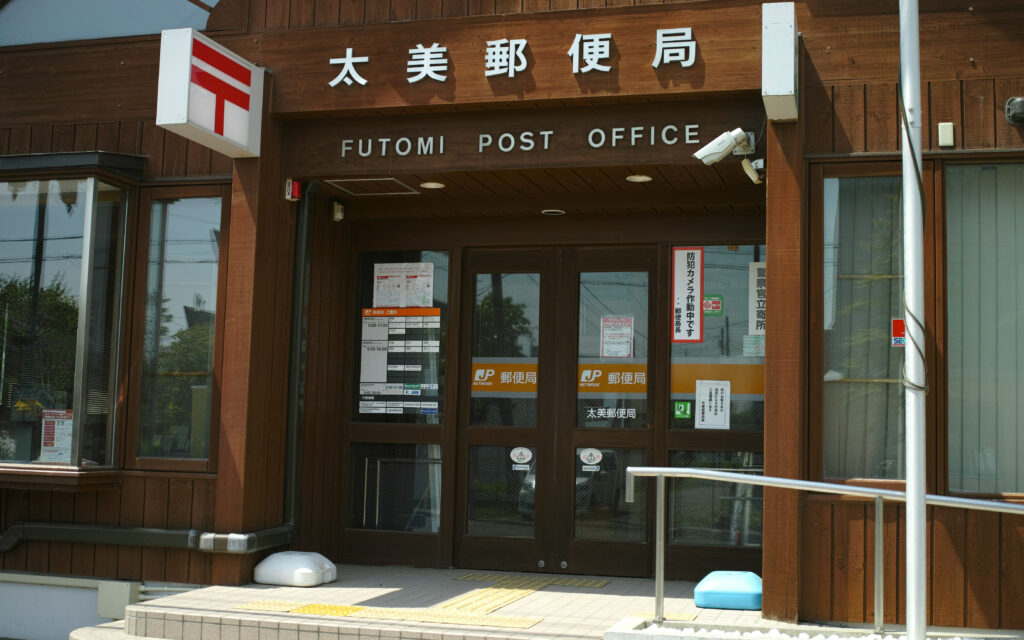
Most of the Working Holiday Visa holders we met chose Japan Post Bank for its accessibility. Opening an account is straightforward, without a hanko (stamp), and with forms available in English. You’ll find post offices everywhere in Japan, which means ATM access is rarely a problem.
Some services like international transfers can be restricted during your first six months, and the interest rates are low (welcome to Japan!). But as a first account to get your salary coming in and your admin sorted, it’s by far the most accessible starting point, especially outside of major cities.
Top tip: Go to your nearest post office, bring your residence card, passport and phone number, and ask to open a standard account (普通預金, futsuu yokin).
Sony Bank — Best for international transfers
Sony Bank is entirely online and offers all services in English, which makes it another great choice for foreigners. It’s particularly useful if you’re regularly sending money back home, as it handles multiple foreign currencies at competitive exchange rates.
You need a Japanese phone number and address to apply, and it’s worth doing online rather than trying to find a physical branch (because there aren’t any!)
Practical tip for ski season workers: If you’re in a rural area, Japan Post Bank is almost certainly your most realistic first option. There will be a post office, the process is manageable without much Japanese, and it gets you up and running fast.
Once You’re Registered and Banked: What’s Next?
With your address registered, your phone number active and your bank account open, you’ve cleared the hardest part of Japan’s newcomer process.
Congratulations! You’re now a proper resident of Japan.
Here’s what typically comes next:
Japanese National Health Insurance
Once registered as a resident, you’re legally required to enrol in Japan’s national health insurance (国民健康保険, kokumin kenko hoken). You sign up at your ward office, typically just after registering. The monthly premium works out to be fairly reasonable, and it covers 70% of most medical costs. This was a god send when skiing everyday, definitely came in handy when we experienced a few injuries.
Japanese Pension Scheme
So technically you are auto-enrolled into the pension system, and it’s all handled by your ward office. However, we did what everyone else in our staff house did and ignored the letters (for now). Figuring out whether we actually owed money or not was confusing. In the end we just took all our pension bills to the ward office at the end of the ski season, said we were leaving the country and didn’t want to pay. It was no problem because we were leaving the country and de-registering.
But if you’re working in Japan longer term, you can pay your pension bills at the konbini!
Worth flagging: we were only there short-term, so I’m genuinely not sure what the rules are if you’re staying longer and skip payments. Worth checking directly with your ward office if that’s your situation.
Moving City in Japan
Every time you change residency in Japan you have to go to your current ward office and be unregistered before you can register in a new place. It’s truly a testament to how admin heavy Japan really is. Thankfully this was explained to us when we registered in Tokyo or we would have been caught out.
Get a Suica Card
Not admin exactly, but do yourself a favour and get a Suica card sorted early on. It’s a rechargeable card that works on trains and buses across Japan and at loads of convenience stores and shops. It makes daily life considerably easier and can even be installed on your Apple wallet.
Have questions about any of this or gone through the process yourself recently? Drop a comment below.
Frequently Asked Questions
Do I need to register my address in Japan as a foreigner?
Yes. If you're on a long-term visa, you must register your address at your local ward office within 14 days of moving into a permanent residence. Your address is then added to your residence card, which you'll need for things like bank accounts, phone plans, and health insurance.
What is a residence card (在留カード) and do I need to carry it?
Your residence card is issued when you arrive in Japan on a long-term visa. It's your main form of ID and you're legally required to carry it at all times.
Can foreigners open a bank account in Japan?
Yes, but you'll usually need a registered address and a Japanese phone number. Japan Post Bank is one of the easiest options for new arrivals, while Sony Bank is a good choice if you need strong international transfer support, though it's online-only with no physical branches.
Do I need a hanko (personal seal) to open a bank account in Japan?
Not always. Many foreigner-friendly banks now accept a normal signature instead.
What SIM card should I get when moving to Japan?
You'll need a voice and data SIM with a Japanese phone number, not a tourist data SIM. Sakura Mobile and Mobal are popular options for new residents.
How does national health insurance work in Japan for foreigners?
Once registered as a resident, you must join Japan's national health insurance unless covered through work. It usually covers 70% of medical costs, with you paying the remaining 30%.
Can I get a pension refund when I leave Japan?
Yes. If you've paid into Japan's national pension system, you can apply for a lump-sum refund after leaving the country. You must apply within two years.
What is the 2026 residence card change about?
From June 2026, Japan is introducing a new combined residence and My Number card. Existing residence cards remain valid for those who arrived before the change.
Related Posts


Hi! We’re Mark & Sarah.
We’ve been travelling the world together for the past 4 years. Exploring destinations such as Europe, South America, South East Asia, Japan and Australia. Now we’re sharing everything we’ve learned on our travels, to help you get out there and have your own adventures!