Nozawa Onsen Ski Guide: Terrain, Passes, Rentals & Après
- Last Updated On September 13, 2026
Disclaimer: Some of the links on this site are affiliate links. This means I may earn a small commission if you make a purchase through them at no extra cost to you. I only recommend things I genuinely use or believe in.
We spent the 24/25 ski season living and working in one of the cutest Japanese ski towns there is.
Nozawa Onsen is a traditional Japanese village that operates as a small farming community during the summer months and turns into a haven for powder heads during the world-famous Japanese ski season. We were fortunate enough to get to spend 4 months living and skiing in this idyllic village, and absolutely fell in love with the cosiness, hospitality, and incredible snow.
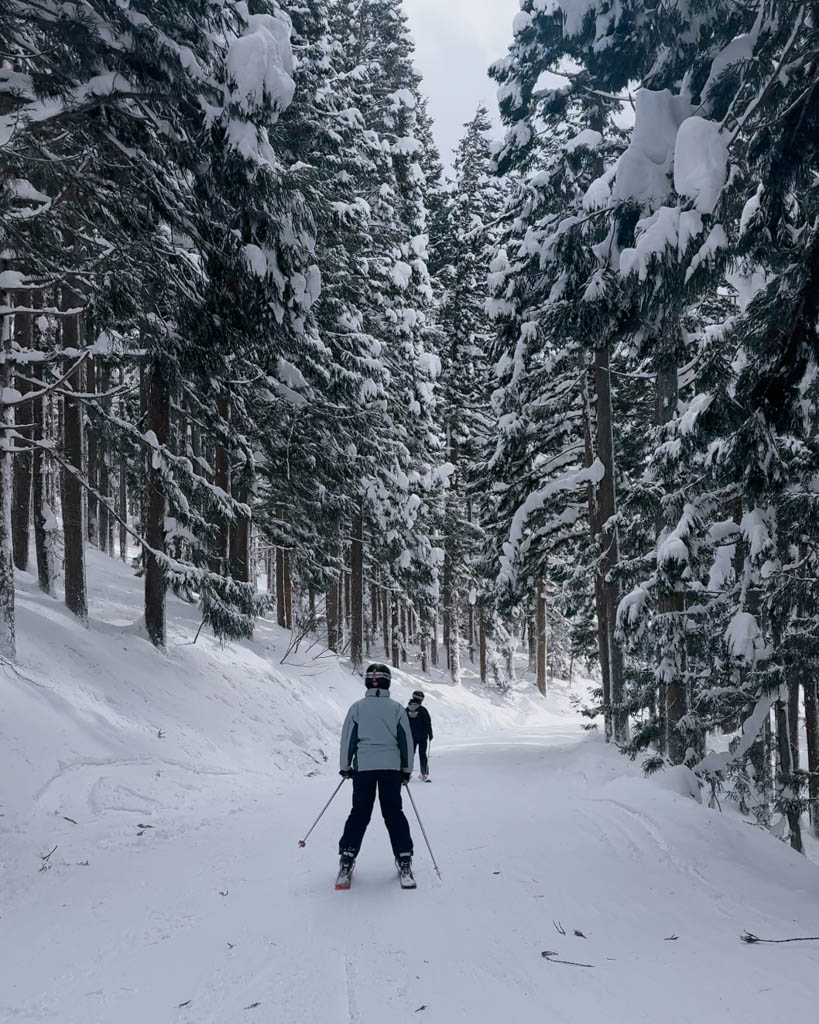
In this guide we’ll cover everything you need to know to plan your next ski trip to Nozawa Onsen, from the terrain and lift passes to where to rent your gear and what to do once the lifts close.
In a Rush? Here Are Our Favourite Hotels in Nozawa Onsen
Contents
ToggleNozawa Onsen Resort at a Glance
| Runs | 41 |
| Lifts | 20 |
| Difficulty split | 40% Beginner / 30% Intermediate / 30% Advanced |
| Longest run | 10 km (Yamabiko to village) |
| Top elevation | 1,650 m |
| Base elevation | 565 m |
| Ski season | Late November – Early May |
The Mountain: Terrain, Slopes & Off-Piste
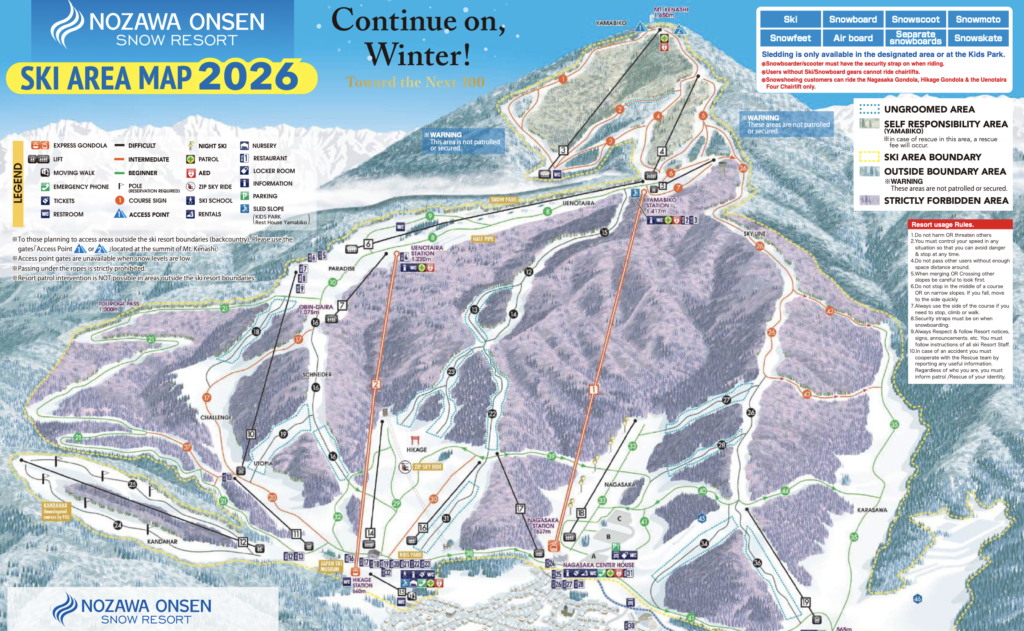
Nozawa Onsen Ski Resort Piste Map (source)
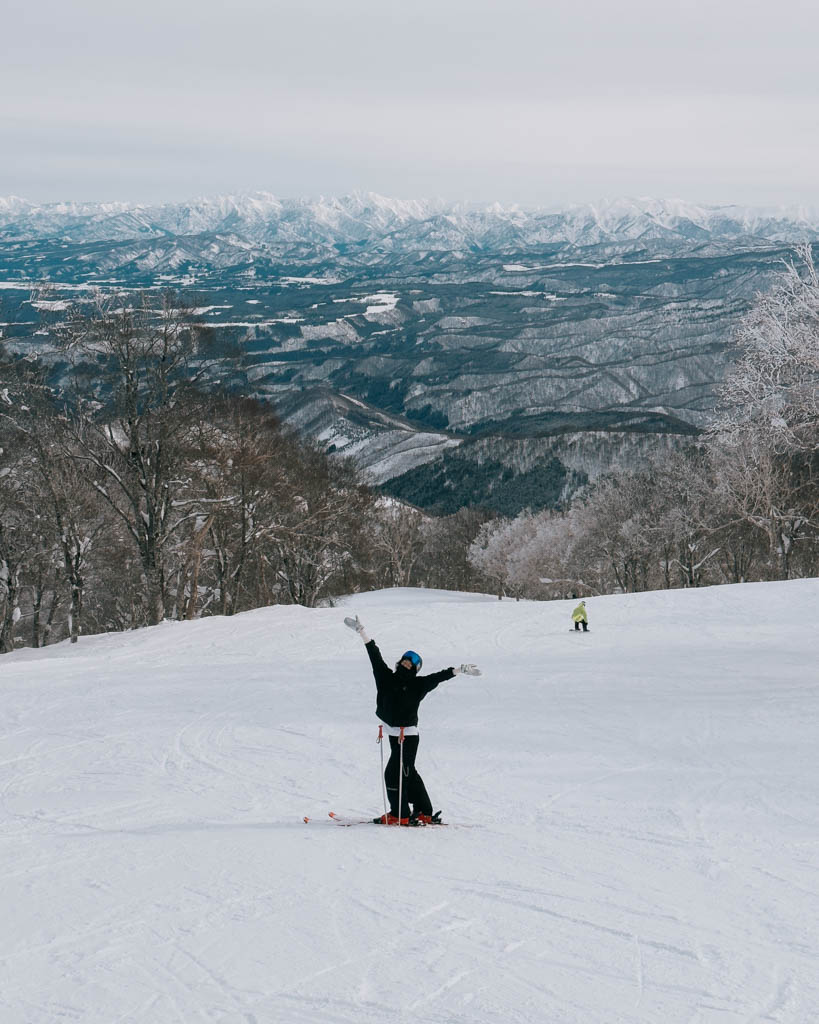
Nozawa Onsen is the traditional onsen village that sits at the bottom of Mt. Kenashi (1650m). From the village you have access to the 41 runs and 20 lifts that snake their way across the mountain. As European skiers we were shocked by just how small the mountains in Japan are, but what we came to appreciate is just how easy they are to access, and of course how incredible the snow is.
Nozawa Onsen might not be the largest or grandest ski resort in Japan, but the on-piste runs aren’t what make it special. It’s the easy access to incredible in-bounds and out-of-bounds Japanese powder skiing that draws snow heads from all over the world.
Nozawa's Slopes & In-bounds Skiing
The great thing about Nozawa Onsen is that it has a variety of slope conditions from beginner to expert. With 9 green runs, 16 red runs and 16 black runs, there is something for everyone.
Whether you want to cruise down groomers, learn to ski on shallow slopes, duck and dive between the trees, or chase insane powder, all can be done from the in-bounds area of Nozawa Onsen ski resort.
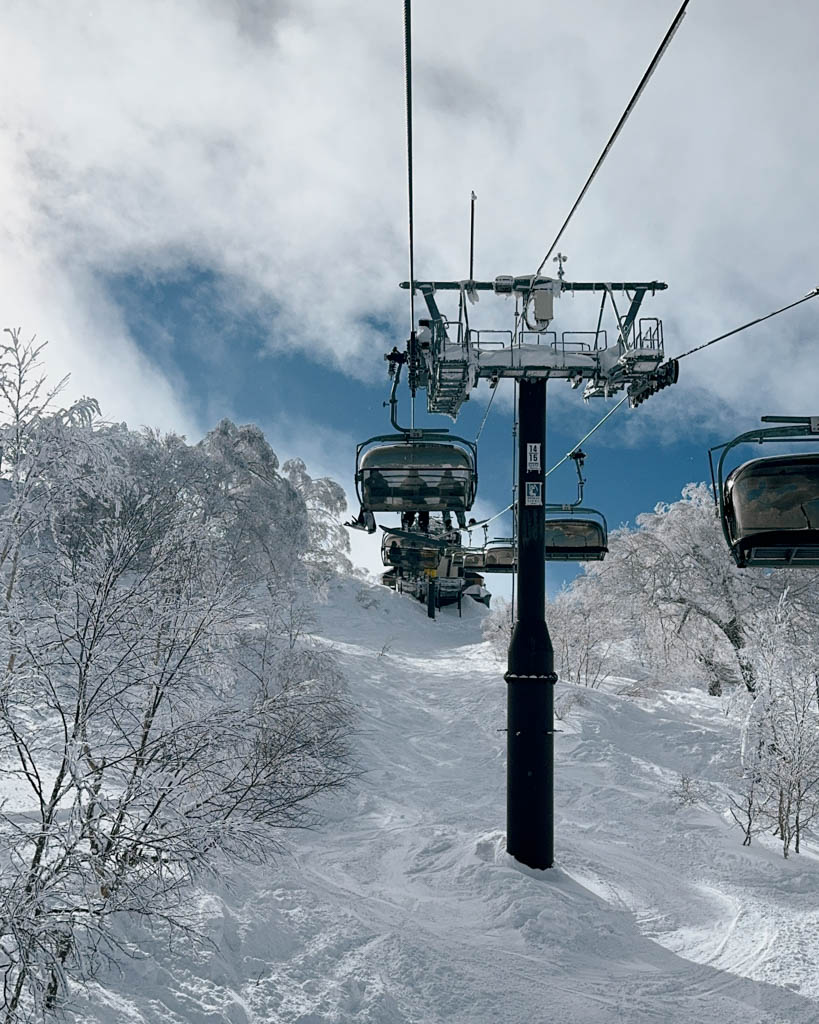
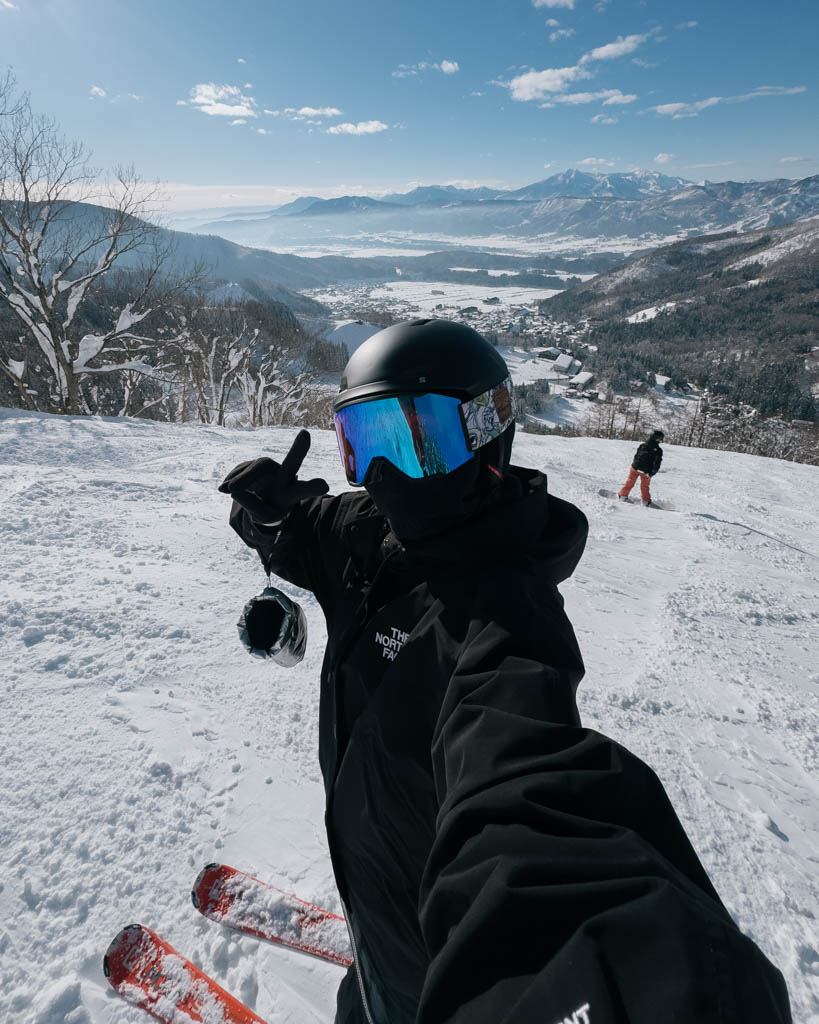
Most mornings start at the Nagasaka Gondola in order to reach most of the slopes on the mountain. From there we like to go up the Yamabiko 2nd Four lift and down Yamabiko B (intermediate run) to get to the Yamabiko Four lift. This brings you to the top of the resort at 1650m!
This is where the resort can truly open up and you have access to some incredible in-bounds off-piste tree runs as well as some intermediate level on-piste runs. We’ll cover the out-of-bounds gates shortly.
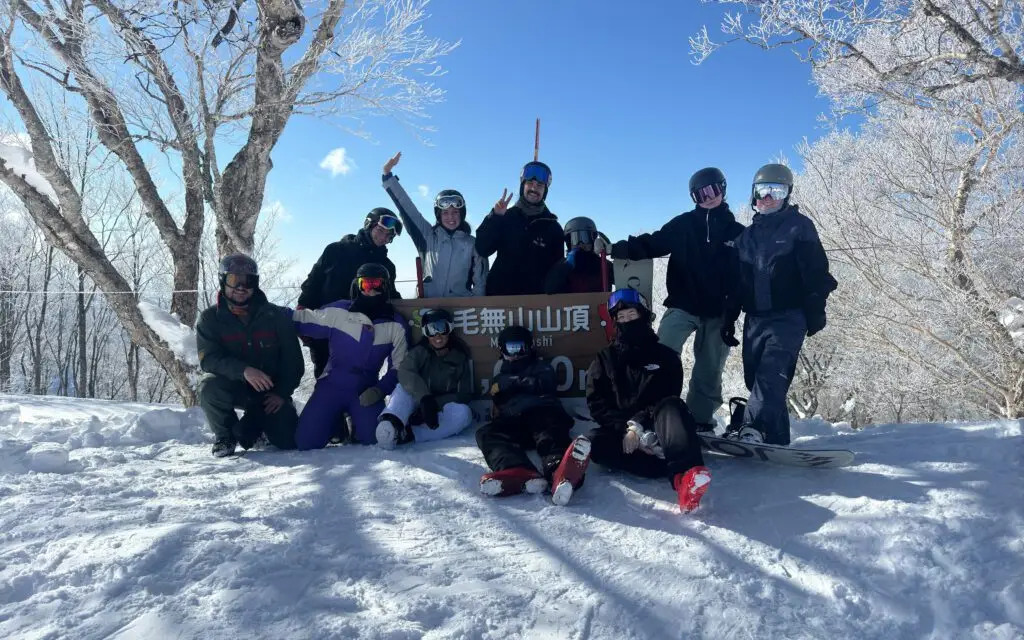
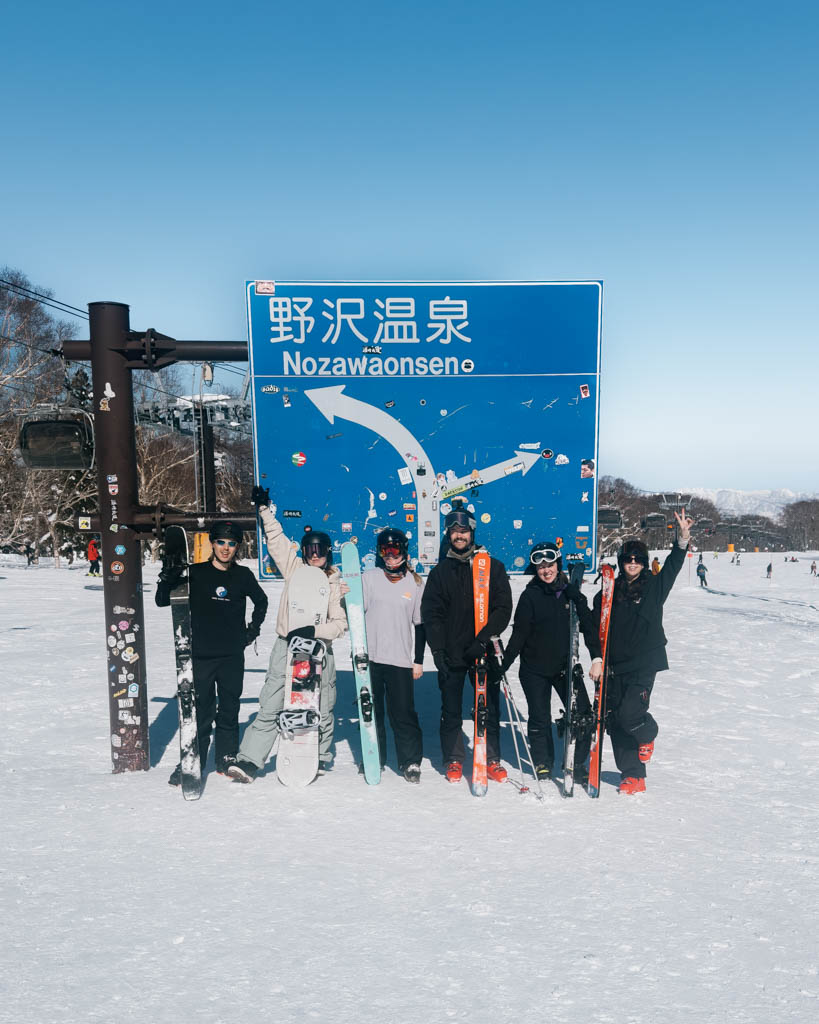
If you’re a beginner skier then we recommend turning left when you get off Nagasaka Gondola and riding the nice chill green slope that is Uenotaira down to the Paradise area. At the bottom of paradise you can swing right and enjoy a nice scenic cat track (trail) through a gorgeous cedar forest that gently winds its way down the mountain, all the way to the Hikage plateau. Then simply loop Paradise and the forest trail using the Hikage Gondola.
It’s the route we took our friends on when they were rediscovering their ski legs, and where we learnt to snowboard!
Nozawa's Out-of-bounds Skiing & Back Bowl Powder
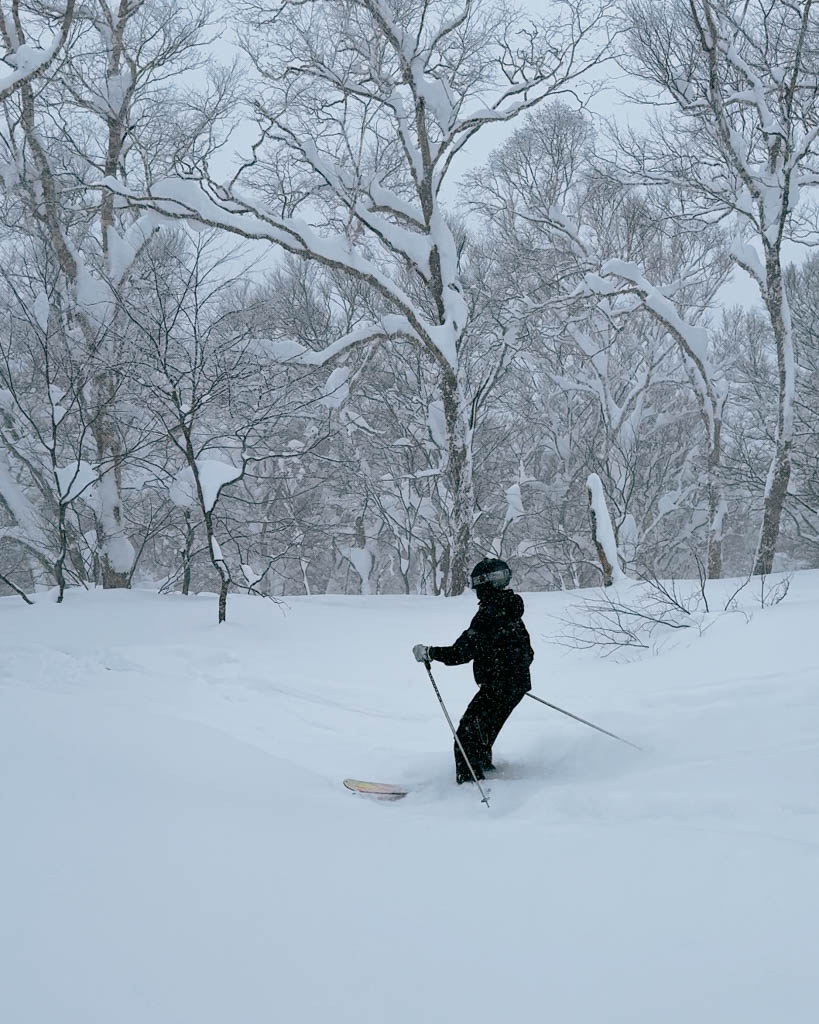
Skiing in Nozawa Onsen was our first introduction to powder skiing and we were totally spoiled. The season was BIG, with some nights dumping 1m of fresh snow! If this had been Niseko or Hakuba the lift lines would have been unbearable but Nozawa doesn’t get nearly as busy, making fresh powder laps easy to do.
Nozawa was the perfect place for newbies like us to dip our toes into powder skiing and we fell in love.
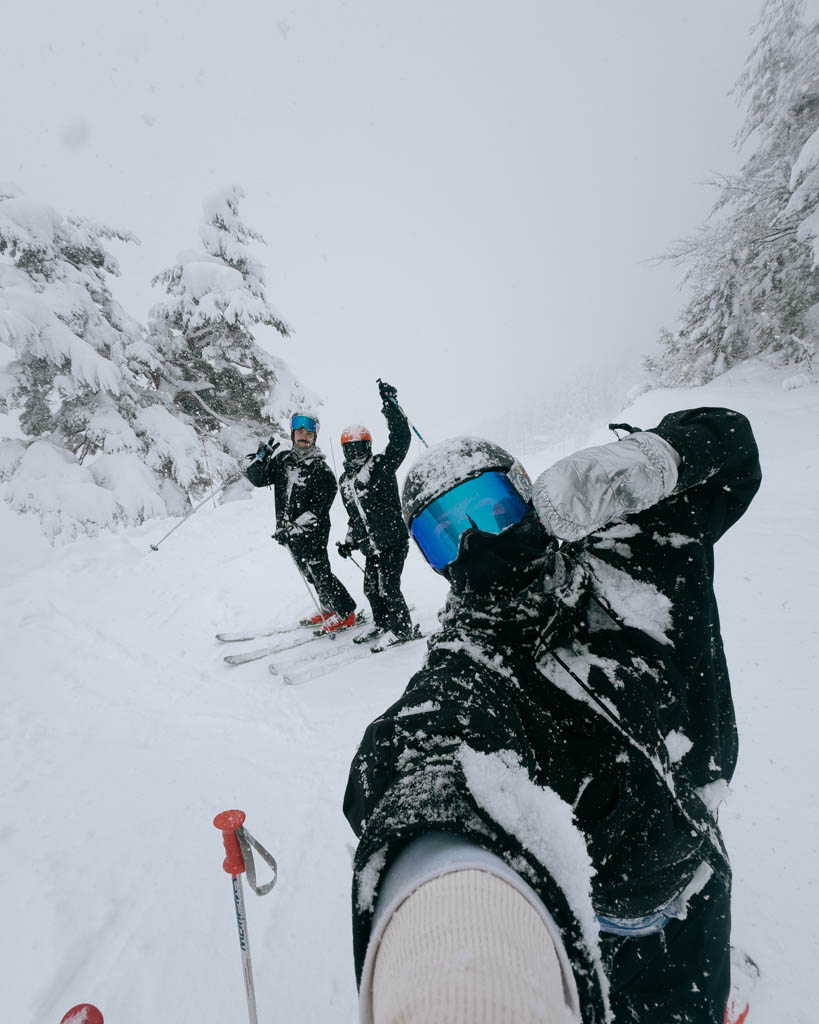
Off the top of Yamabiko at the summit you have access to two back country gates (no hiking required).
Gate 1 gives you access to out-of-bounds trees and powder lines that follow the side of the mountain and re-emerge back on-piste a bit further down. It’s important to not drop too low as you can get stuck out on the side of the mountain and it’s a long walk back.
This is the main one we used for off-piste adventures, feeling a bit too novice to tackle the other gate.
Gate 2 is the incredibly popular access to the back bowl which leads you through steep, perfect Japanese powder on the back of the mountain. The back bowl brings you out nicely into the Karasawa run where you can take a short 2 man chair lift back to the Nagasaka Gondola base station.
As with any back country skiing these areas aren’t patrolled or secured so you’re responsible for your own safety. We saw far too many people tackling the back bowl without any avalanche gear or awareness, so do be careful. We’ve heard enough horror stories and it’s not worth the risk if you don’t know what you’re doing.
Ski Rental & Prices
Whilst we didn’t need to rent skis during our ski season, thankfully our boss lent us some skis, we did rent the occasional snowboard to really humble ourselves. We found that the easiest and cheapest place to rent a board or skis was Sports Thanx, located just under Nagasaka Gondola.
This place can get pretty hectic in the morning but have some patience for the poor staff, they’re doing their best! To make life easier, if you can, try getting your gear fitted the evening before your first ski day. It costs nothing and makes collection in the morning easier.
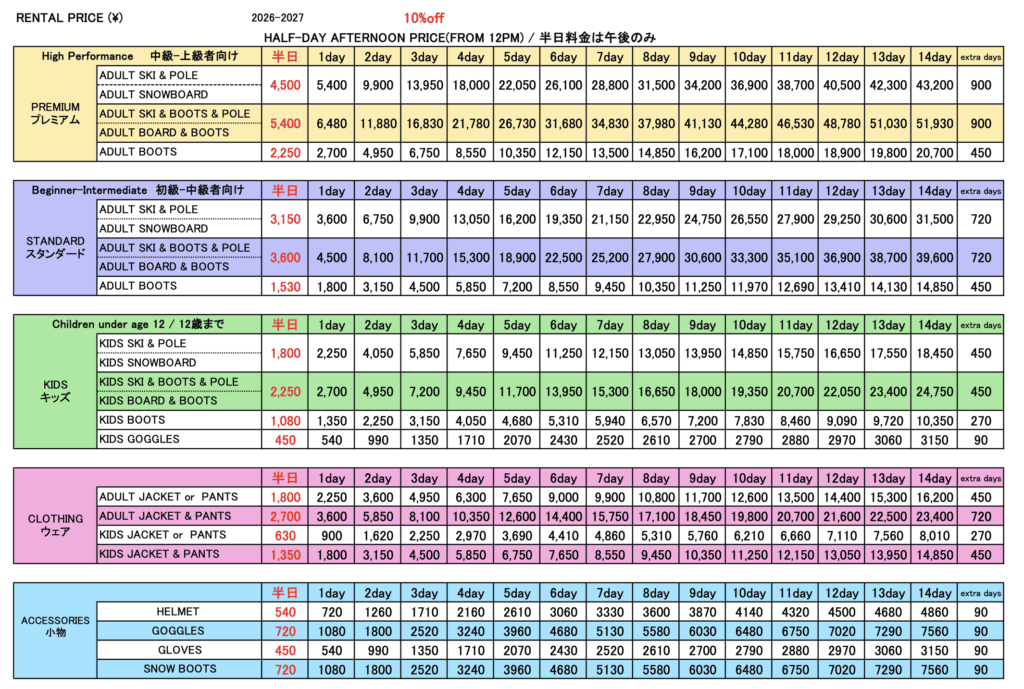
Sport Thanx Rental Prices (source)
Our friends visited during the season and rented all their gear from Sports Thanx, so if you don’t want to lug your ski clothing around on your Japan trip, you can rent it from here!
They also offer ski storage included with the rental. Rather than carry your skis back to your hotel you can leave them here and simply pick them up the next morning.
Lift Passes & Prices
An adult 1-day lift pass in Nozawa Onsen costs ¥7,800, 2-day is ¥14,500, and 3-day is ¥21,200. We recommend visiting Nozawa for at least 3-days if you’re visiting as part of a wider Japan trip. If you’re wanting to experience peak Japanese powder, you should try to maximise your chances of experiencing it.
You can purchase lift passes at the Nagasaka & Hikage gondola areas.
Some hotels and ryokans have special deals for discounted lift passes and ski rentals so be sure to check if you can get a package deal.
Nozawa Onsen Season Pass Prices
If you’re planning on spending the season in Nozawa then it’s worth knowing that a season pass costs ¥103,000. Be sure to keep an eye on the Nozawa Onsen Ski Resort social accounts because they publish early bird prices if you purchase your season pass around September/October time.
That’s what we did and were able to save ¥10,000 each! We’ve written a whole breakdown of how much a ski season in Nozawa Onsen cost us.
If you’re working the ski season in Nozawa you should check with your employer if they include personal or shared staff lift passes. It can be a great way to keep your season costs down.
Planning a Trip to Nozawa Onsen
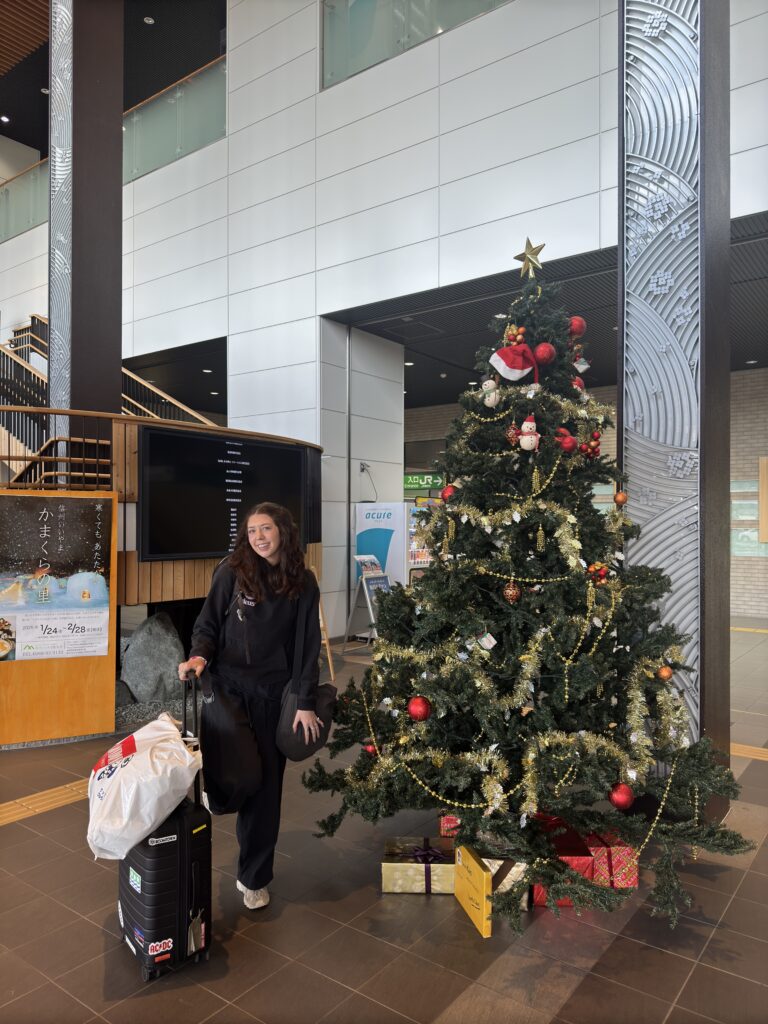
Arriving at Iiyama Station for the ski season.
How to Get to Nozawa Onsen
From Tokyo
Travel Time: ~ 2 hours from central Tokyo
Fare: ~ ¥9290 (¥8690 Shinkansen + ¥600 Nozawa Bus)
From Tokyo Station you can catch the Hokuriku Shinkansen to Iiyama City in 1 hour 40 minutes. Upon arrival at Iiyama you’ll find the Nozawa liner bus stop just as you exit the station. The bus from Iiyama station to Nozawa Onsen takes around 25 minutes and runs approximately every hour in the winter season. We recommend planning your Shinkansen journey so that it lines up with the Nozawa liner. One of the great things about Japan’s rail system is that it regularly runs on time!
From Osaka
Travel Time: ~ 4.5 hours from Shin-Osaka
Fare: ¥16,200 (¥15,600 + ¥600 Nozawa Bus)
The journey to Nozawa from Osaka takes quite a bit more effort, time and money. You first need to catch the Thunderbird express train (incredible name) from Shin-Osaka to Tsuruga Station and then transfer to the Hokuriku Shinkansen to get to Iiyama. From there it’s the same as the Tokyo route, simply catch the Nozawa liner bus from Iiyama Station to Nozawa Onsen.
Things to Know Before You Visit Nozawa
🚃 Suica Card: Getting got Nozawa is going to be easier with a Suica card. You can use it on the train and the Nozawa Liner! We’ve written a full guide on setting up a Suica card.
📱 Get an eSIM: Reliable data makes Google Maps and Translate so much easier. Even after 10 months in Japan, we still relied on it daily. Check our guide to the best eSIM options in Japan.
💴 Cash is Still King: Cards work almost everywhere now, but keep some cash for smaller shops and stalls. Bring a fee-free debit card (we like Chase or Revolut) and withdraw at a 7-Eleven ATM for a fair rate.
🛡️ Get Travel Insurance: Japan is safe, but insurance also covers lost luggage, cancelled flights, and theft. Sort it before you fly. Here’s our guide to the best travel insurance for long-term trips.
🗣️ Learn a Few Phrases: You don’t need fluency. Konnichiwa (hello), sumimasen (excuse me), and arigatou (thank you) go a long way. Bonus points for gochisousamadeshita after a meal.
Best Time to Visit for Skiing & Powder
January – February is usually when powder skiing peaks in Nozawa, but it is obviously the busiest time of year as everyone comes chasing that incredible snow.
January also happens to be the time of the famous Dosojin Fire Festival, it’s an incredible festival that is worth the trip to Nozawa alone. We’ve written a full guide on how to attend Japan’s iconic fire festival.
Weekends get even busier as locals head to the slopes to get some laps in. So if you can, plan your trip to land here on a weekday.
Where to Stay for Skiing in Nozawa Onsen
Whilst we were living in staff accommodation during our ski season in Nozawa, that didn’t stop us from getting to see some of the amazing accommodation options in the village. As well as having our friends stay in a local hotel, we also had the job of cleaning and turning over apartments that you can rent in the village.
Nozawa Onsen is only a small village and it’s getting more and more popular for its incredible powder skiing and chill atmosphere. If you’re planning to go to Nozawa Onsen this ski season then we recommend booking early to get the best deal on accommodation.
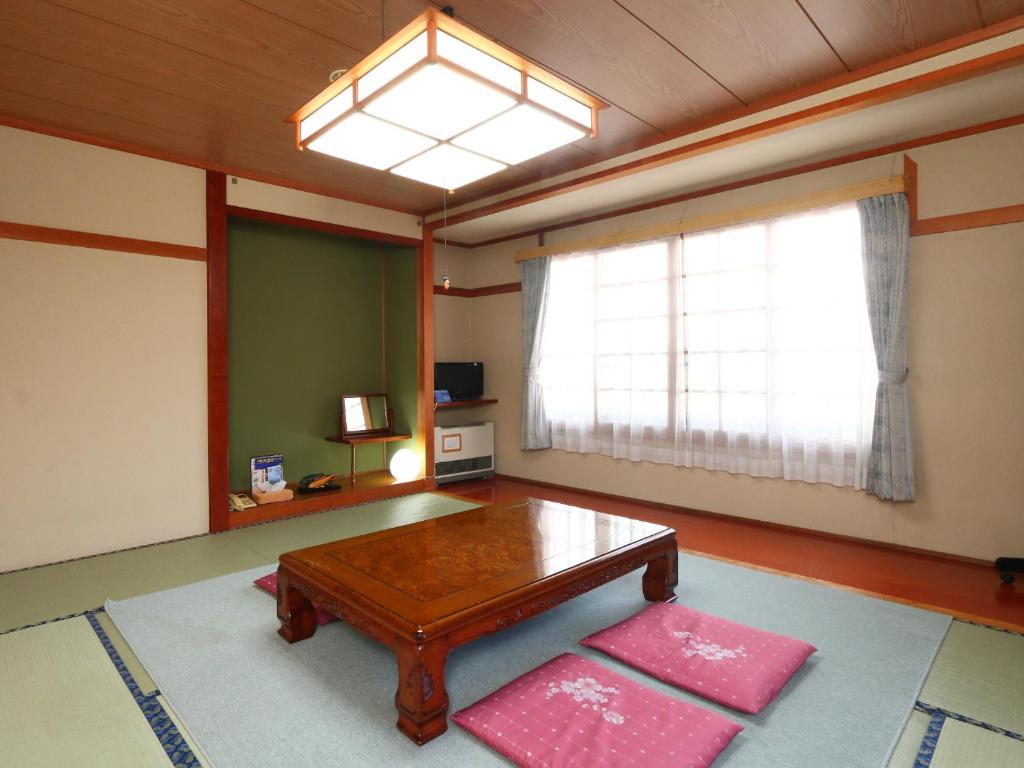
Ikemoto traditional tatami mat room.
Our friends were able to snag a last minute stay at Ikemoto Hotel over Christmas, which seems insanely lucky! It offered traditional tatami mat rooms and even had its own onsen located in the hotel.
The room and amenities were basic but it was ideally situated right next to the bus station, which meant they didn’t have to drag their luggage through town, and could easily hop on/off the free shuttle bus that goes from town to the mountain.
Ikemoto hotel is also right next to an incredible Gyoza place that we’ll get to later!
Ryokans & Hotels in Nozawa Onsen: Our Recommendations
We’ve written a full detailed guide on where to stay in Nozawa Onsen to help you choose the best area for your trip!
Food, Nightlife & Apres in Nozawa Onsen
Restaurants & Izakayas
Finding somewhere to eat can sometimes be difficult in Nozawa, especially during peak ski season (January-February). Restaurants book up in advance, some only accept walk-ins, and you just have to get lucky.
If you’re looking for somewhere to book in advance, then here’s some of our recommendations:
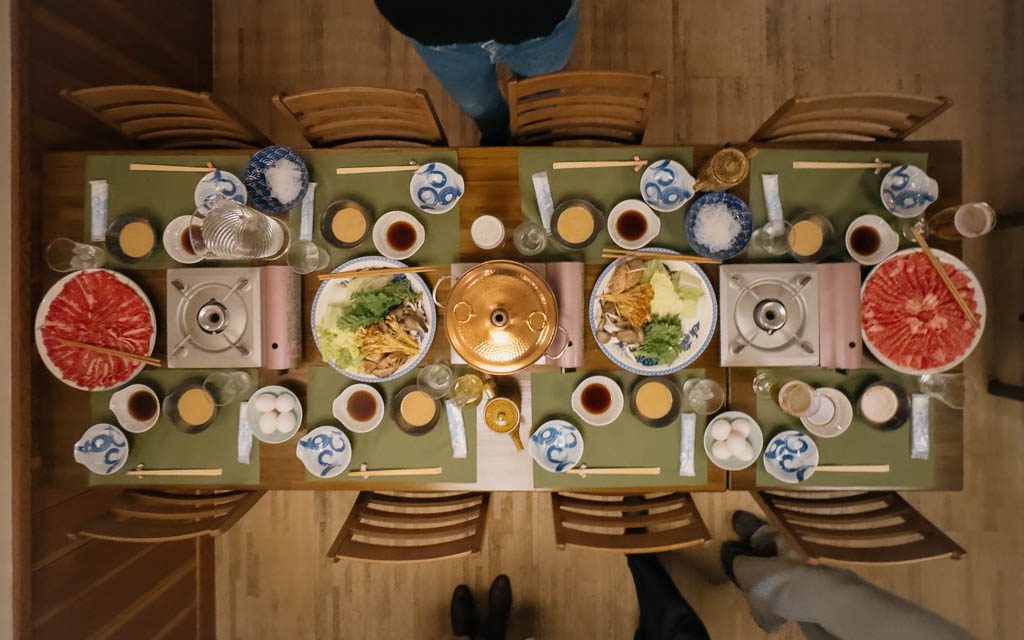
Wagyu-Tei – Delicious Japanese wagyu beef served as either shabu-shabu or Sukiyaki that you cook to your own liking. Great for families and when you want to treat yourself.
Yama Bar – Serving their own Nama Yama lager complemented with Kushikatsu (fried skewers), think of it like tapas on a stick, and everything is fried. We would go here for special occasions during the season.
Winterland – One of our favourite post mountain dinner spots. A range of delicious Gyoza flavours served with their own in house beers on tap. This place is a seasonaire favourite and books up in the evenings.
Bars & Clubs
Japan ski resorts aren’t exactly known for their incredible night life. Skiing in Japan offers a more laid back and chill vibe compared to the huge apres club scene in Europe.
That doesn’t mean there isn’t at least some good nightlife to be had in Nozawa.
If you’re looking for chill drinks with some atmospheric music in the evening then check out Guruguru or Pig & Barrel on the main street.
For nice cocktails and a lo-fi atmosphere we like to go to Tanuki bar, they have delicious cocktails and the largest variety of chu-hai flavours we’ve seen. Started many a night out here.
For a lively atmosphere and djs late into the night head to Balance and Stay Bar, this is usually where our nights would end before stumbling back home.
Onsens
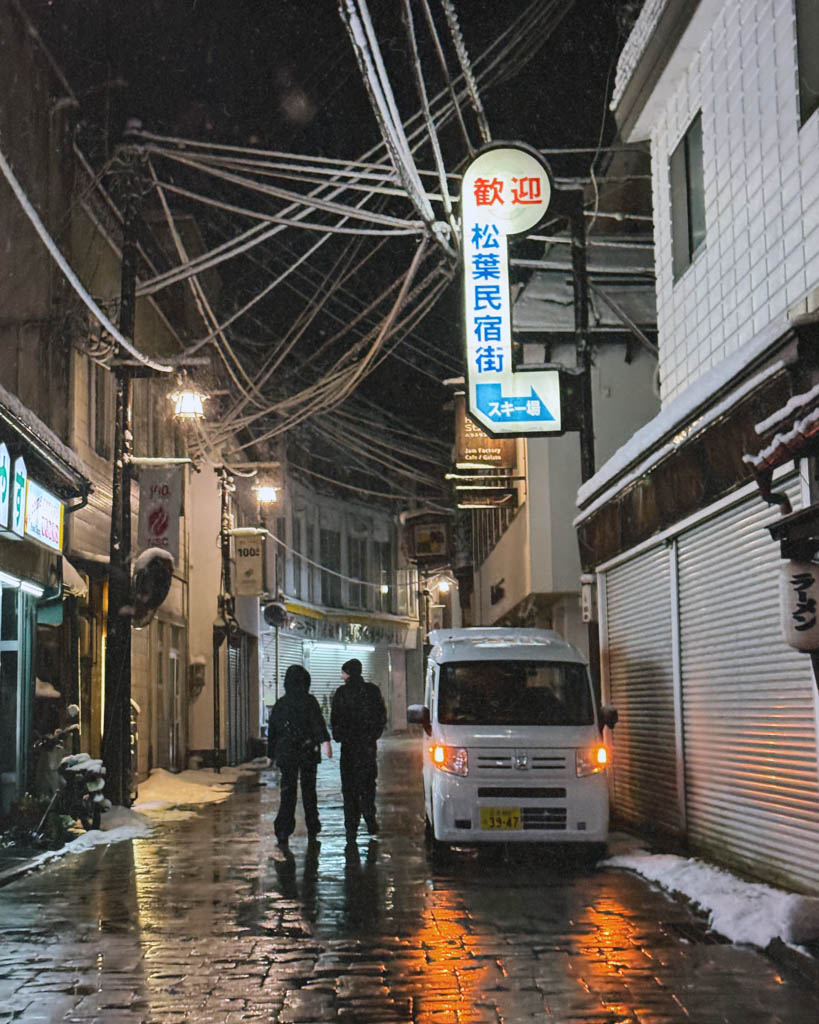
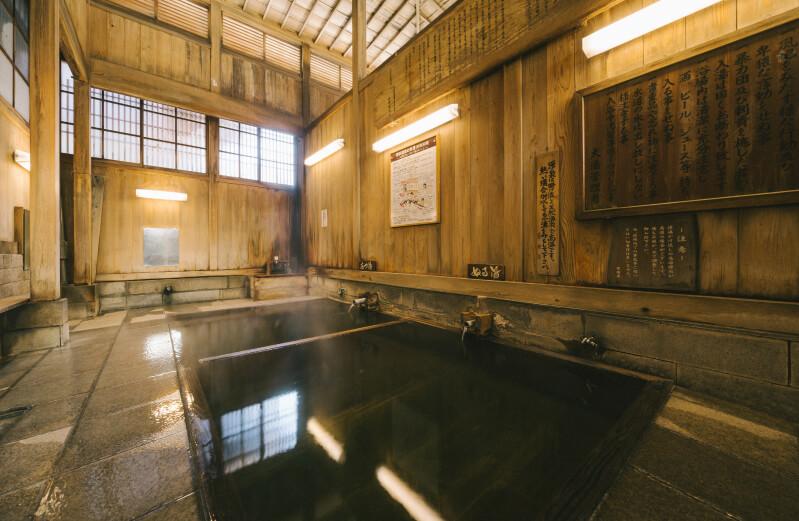
This is what makes skiing in Nozawa truly unique. Being able to soak your tired muscles in a traditional Japanese onsen after a hard day of skiing is the best end to a ski day.
Nozawa is home to 13 free public onsens, dotted throughout the village. So no matter where you’re staying in the village, there’s a traditional hot spring bath around the corner. There’s also a paid public onsen (Furusato no Yu) that offers a few extra amenities and is larger with an outdoor section.
Make sure to bring your own towel and soap, read the rules before entering, and follow onsen etiquette. All the onsens in Nozawa are tattoo friendly and familiar with foreigners visiting, especially in the winter.
The free onsen are cared for by local volunteers, and whilst we don’t normally recommend tipping in Japan, we think it’s a show of appreciation to leave a small donation in the box outside each onsen.
Final Thoughts on Skiing in Nozawa Onsen
Skiing in Nozawa Onsen is a fantastic experience for beginner skiers wanting to learn the ropes or for powder heads seeking that untouched Japanese pow.
We spent the whole season in Nozawa Onsen and absolutely loved it. The cosy village vibe, the people, the incredible skiing. It’s a small part of the world that we keep thinking back to and can’t wait to revisit.
We’ve written a full guide on what to do in Nozawa Onsen so that you can enjoy those days off the mountain when you need a break from skiing.
FAQs About Skiing in Nozawa Onsen
How many runs and lifts does Nozawa Onsen have?
41 runs and 20 lifts spread across Mt. Kenashi, with roughly a 40/30/30 split between beginner, intermediate, and advanced terrain. It's not the biggest resort in Japan, but it doesn't need to be, the easy access to off-piste is what makes it special.
How much is a lift pass in Nozawa Onsen?
A 1-day adult pass costs ¥7,800, 2-day is ¥14,500, and 3-day is ¥21,200. If you're spending the whole season there like we did, a season pass is ¥103,000, though keep an eye on Nozawa's socials for early bird pricing around September or October, we saved ¥10,000 each buying that way.
Where should I rent ski or snowboard gear in Nozawa Onsen?
We'd point you to Sports Thanx, right under the Nagasaka Gondola. It's where our friends rented everything when they visited, and they also do overnight ski storage so you're not lugging gear back to your hotel every evening.
How do I get to Nozawa Onsen from Tokyo or Osaka?
From Tokyo it's the Hokuriku Shinkansen to Iiyama Station, then the Nozawa liner bus, about 2 hours door to door. From Osaka you'll transfer via the Thunderbird express to Tsuruga before picking up the same Hokuriku Shinkansen route, closer to 4.5 hours all in. Full breakdown, including fares, is above.
Is Nozawa Onsen good for off-piste and backcountry skiing?
Yes, and it's genuinely where we learned to love powder skiing. Two gates off the top of Yamabiko get you into the trees or the back bowl without any hiking required. Neither is patrolled, so don't head out there without avalanche gear and some idea of what you're doing.
When’s the best time to visit Nozawa Onsen for powder?
January and February are peak powder months, but also peak crowds. If you can swing a weekday over a weekend, you'll dodge most of the local skiers who pile in for their days off.
Related Posts
Hi! We’re Mark & Sarah.
We’ve been travelling the world together for the past 4 years. Exploring destinations such as Europe, South America, South East Asia, Japan and Australia. Now we’re sharing everything we’ve learned on our travels, to help you get out there and have your own adventures!