Mt. Fuji Day Trip from Tokyo: Best Views, Things to Do & Itinerary
- Last Updated On September 5, 2026
Disclaimer: Some of the links on this site are affiliate links. This means I may earn a small commission if you make a purchase through them at no extra cost to you. I only recommend things I genuinely use or believe in.
Our first trip to Mt. Fuji was a 2 night stay at Fuji Kawaguchiko in March 2023 that left us slightly disappointed and teased.
One of the hardest parts about planning a trip to Mt. Fuji is trying to predict the weather, so when we booked a 2 night stay in Fuji Kawaguchiko we just had to cross our fingers that we’d get clear visibility…
We spent 2 days in the pouring down rain with only the slightest glimpse of Fuji as we were leaving.
This is where a Mt Fuji day trip from Tokyo wins.
Without having to book accommodation near Fuji, a day trip lets you decide at the last minute if it’s worth making the journey to Fuji from Tokyo.
In this guide we’ll walk you through our favourite view points around Fuji that are accessible as a day trip from Tokyo, as well as things to do and where to eat.
In a Rush? Here Are Our Favourite Hotels in Tokyo
Mt. Fuji Day Trip from Tokyo at a Glance
- Travel time: ~120 minutes each way from Shinjuku (Busta Shinjuku to Kawaguchiko Station)
- Fare: ~¥2,300 one way by highway coach
- Best time to visit: Autumn, for the clearest and most consistent Fuji views
- Fuji visibility: Only around 80 days a year, so check the weather before you go
- Getting around: Bus (Red Line) or bike around Lake Kawaguchiko
- Top viewpoints: Kogamasao Memorial Park, Oishi Park, Rusugaiwa (autumn only), Chureito Pagoda, Honcho Street
- Ideal for: First-timers short on time, or anyone not ready to commit a full overnight stay to the weather gamble
Is Mt. Fuji Worth a Day Trip from Tokyo?
We’d go as far as to say that a trip to Japan isn’t complete without at least trying to see Mt. Fuji, and a day trip from Tokyo can be the ideal way to see Japan’s most iconic mountain.
We’ve visited several times now and always find new viewpoints, new conditions, and new reasons to come back.
Visiting Mt. Fuji is absolutely doable as a day trip from Tokyo, but we usually recommend trying to extend it into an overnight trip. This way you get a greater chance of actually seeing Mt. Fuji, and an opportunity for a sunset or sunrise in the Fuji area.
In this guide we’ll stick with only having 1 day to see Fuji as a day trip from Tokyo, but we’ll include a few extra recommendations at the end for what to do if you have the extra time.
How to Get to Mt. Fuji from Tokyo
Travel Time: ~120 minutes from Shinjuku
Fare: ~ ¥2300
The cheapest and most efficient way to get to Mt. Fuji is by taking the coach from the bus station in Shinjuku (Busta Shinjuku). Make sure you book online in advance and don’t forget the return trip!
The bus will drop you off at Kawaguchiko Station, where you can change to the local bus lines depending on what part of Fuji you want to explore.
Book your Mt. Fuji highway coach in advance.
Best Time to Visit Mt. Fuji
Mt. Fuji is worth a visit any time of year, but if you’re wanting to make the most of your visit, it’s worth knowing there’s a real key to significantly better odds of actually seeing it.
We were shocked to discover that Mt. Fuji is only visible around 80 days a year! So if you’re planning it as a day trip from Tokyo, you might want to plan your trip around the right month.
Spring
Spring brings huge crowds and incredible scenes as cherry blossoms bloom around Mt. Fuji. Our first visit was in late March 2023, and we were hoping for full bloom framing the mountain, exactly like we’d seen on social media.
Instead it was cloudy, rainy, and the sakura was only just starting to bloom. Spring can be hit or miss with the weather, and the blossoms bloom later in the mountainous region than they do in Tokyo.
Summer
Summer isn’t a time we’ve visited, mainly because we know it has some of the worst visibility. If you’re wanting to optimise your chances of seeing Mt. Fuji, try to plan your visit around another season. If you’re visiting in summer and want to take a gamble on a day trip to Fuji, keep a close eye on the weather.
Summer is the only time you can climb Mt. Fuji though, as once the snow has melted and the mountain stations open, thousands of hikers take to the mountain in the short climbing period. So if hiking Mt. Fuji is high on your list for your Japan visit, definitely visit in summer.
Autumn
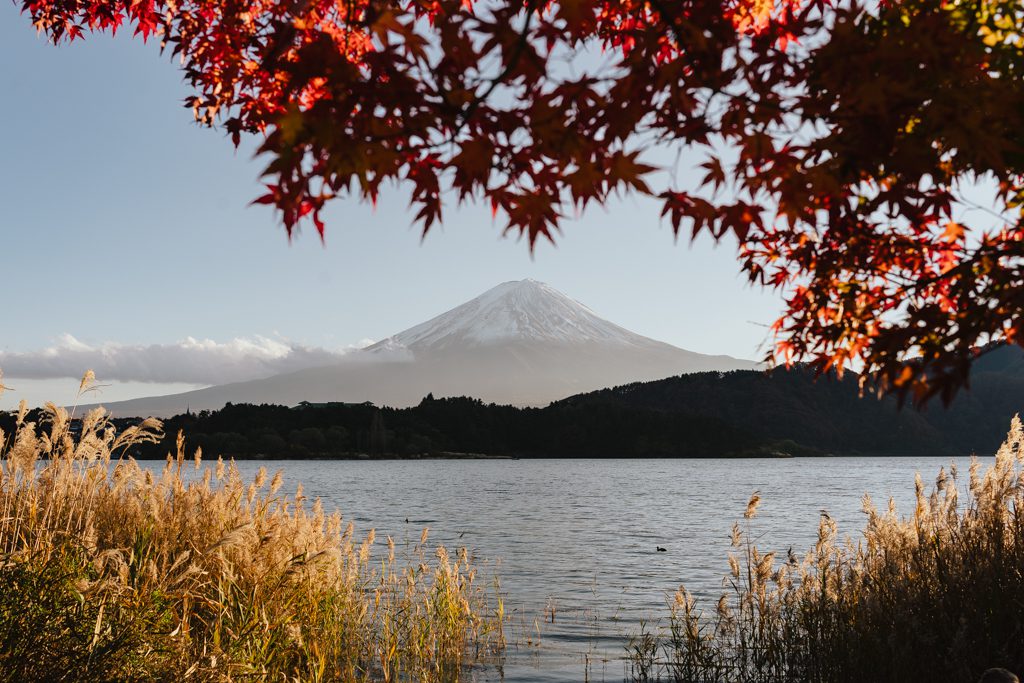
Autumn is our favourite time to visit Mt. Fuji, hands down. We spent 10 days in Fuji Kawaguchiko in November 2024 as part of Sarah’s birthday surprise, and we honestly couldn’t believe our luck, 10 straight days of clear Mt. Fuji views.
With a hire car we were able to explore so many viewpoints and get a true taste of everything the area had to offer. The only downside was that Japan was having an unexpectedly long summer that year, so a lot of the autumn foliage was late, and Mt. Fuji was still missing its snow cap. It set a new record for the latest snow cap on Mt. Fuji (just our luck).
It was something we wanted to see so badly that we hired a car a week later from Tokyo and drove back once the autumn foliage was in bloom and the snow had returned to Fuji.
Winter
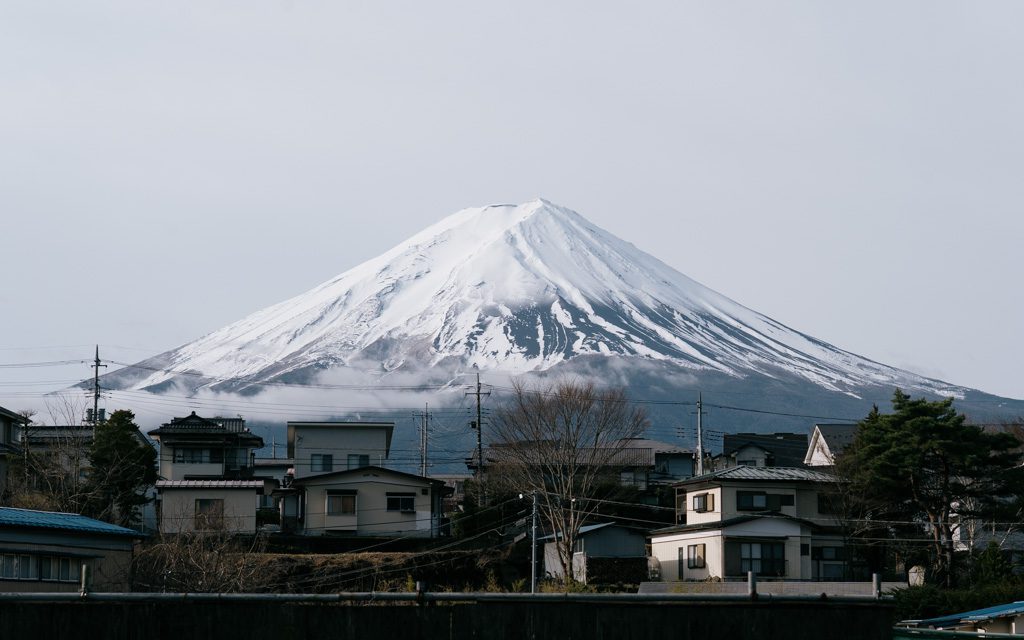
Winter is when Mt. Fuji is at its clearest, and if we’re honest, it’s the season we regret missing most. We were working a ski season out in Nozawa Onsen that winter instead of chasing Fuji views, so we’ve only seen it through someone else’s photos so far. Our family visited during that same trip, staying at a hotel with Fuji filling the window, and came back genuinely stunned. They described a solid white blanket running from the summit all the way down to the town below, with barely a cloud in sight the entire stay. It’s the clearest we’ve heard anyone describe it, and it’s pushed winter right to the top of our own list for next time.
Mt. Fuji Day Trip Itinerary
We’re going to assume that as well as only visiting for one day from Tokyo, you’re one of the fortunate ones who got a clear day with incredible views of Mt. Fuji. So this itinerary is going to be very viewpoint centric.
If you’re unfortunate like we were on our first visit, and you’re faced with a rainy day in Fuji, we’ll include some recommendations at the end. Be sure to read on!
Morning: Lakeside Views and Lawson Selfies
It’s going to be an early start from Tokyo. The bus from Shinjuku leaves approximately every 10 minutes from 6:45am, with the first bus arriving in Kawaguchiko Station at 8:30am. Aim to get here as early as you can if you want to make the most of your time at Fuji Kawaguchiko.
Budget around 3–4 hours for this morning stretch, from your arrival at Kawaguchiko Station to leaving Oishi Park (or Rusugaiwa, if you’re chasing autumn colour).
A short walk from Kawaguchiko Station is the famous Mt. Fuji Lawson. It’s become such a viral sensation that it’s become a nightmare for locals, with tourists running into traffic just to snap a photo.
Don’t be that person.
Sure, go take a look at it, it makes for an iconic Japan photo, but try not to inconvenience people.
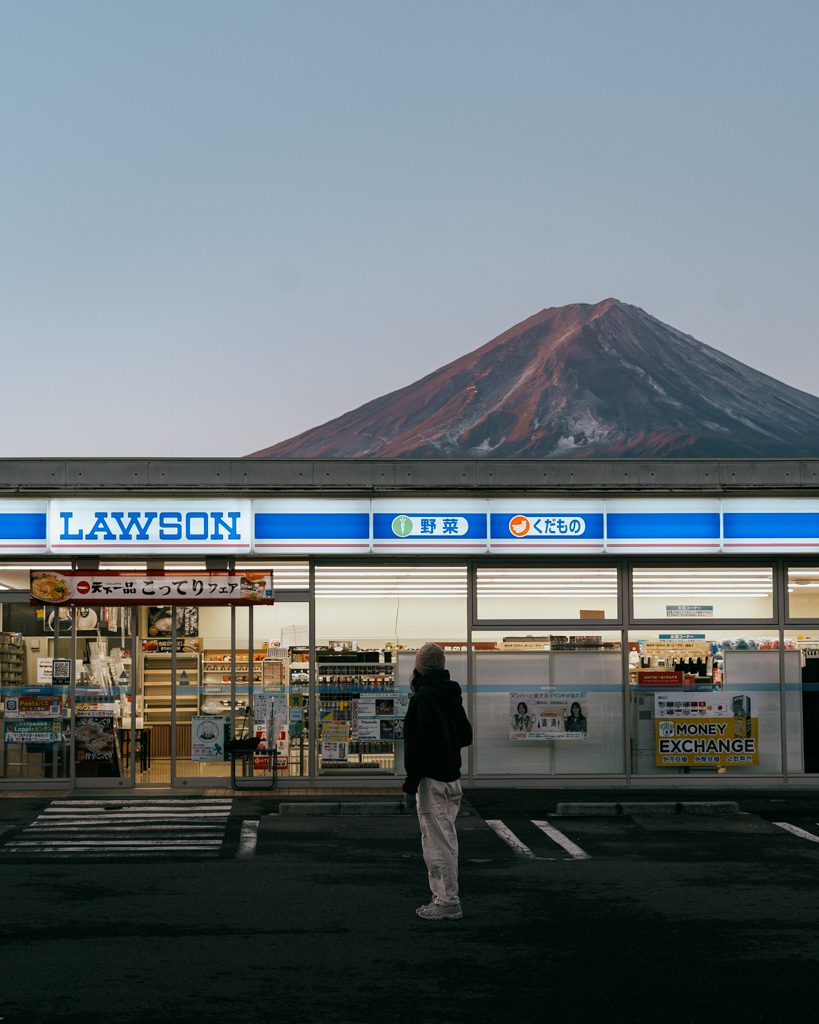
Sunrise at Lawson near Kawaguchiko Station.
We usually hire a car when we visit Fuji in order to see as much as possible and chase those Fuji shots. But if you’re here on a day trip from Tokyo, the two best ways to get around the lake are by bus or by bicycle.
Cycling around Kawaguchiko is an activity in itself, and a great way to see Fuji from all angles around the lake. There’s plenty of bike rental shops around the station, so if cycling is your thing, grab a bike and set off towards Kogamasao Memorial Park.
If you’re going by bus, hop on the Red Line local bus and ride round to Kogamasao Memorial Park, right on the lake’s north shore. It’s a 25 minute journey and costs around ¥440.
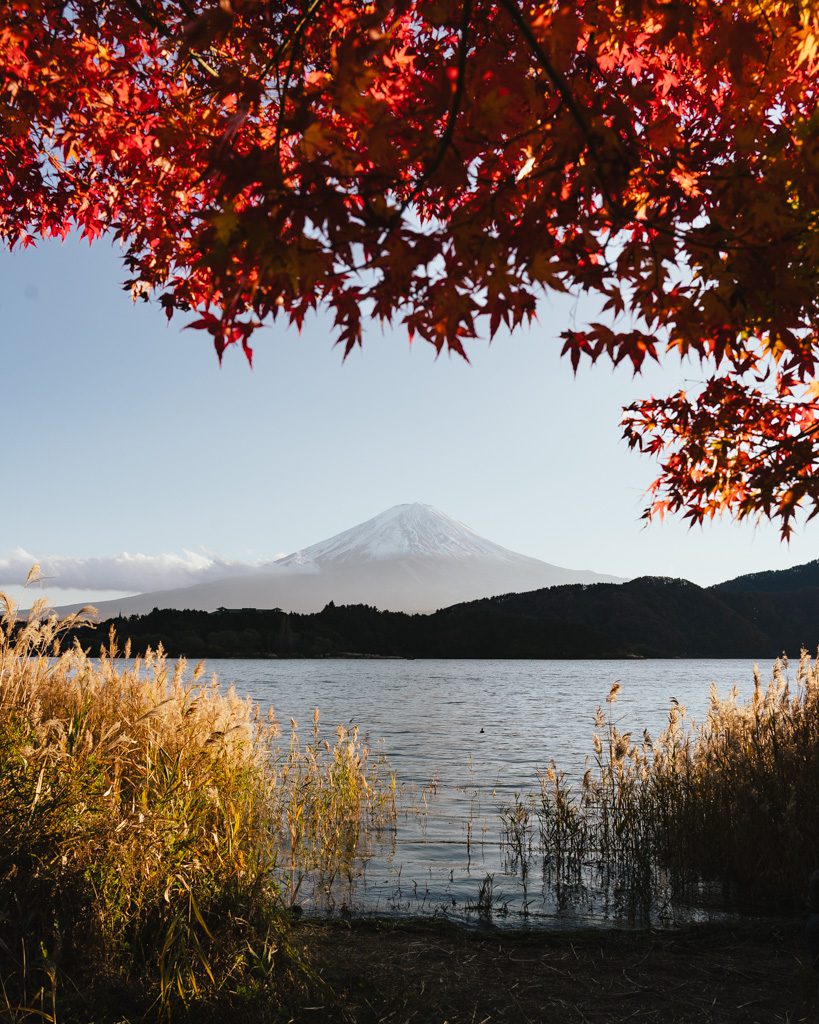
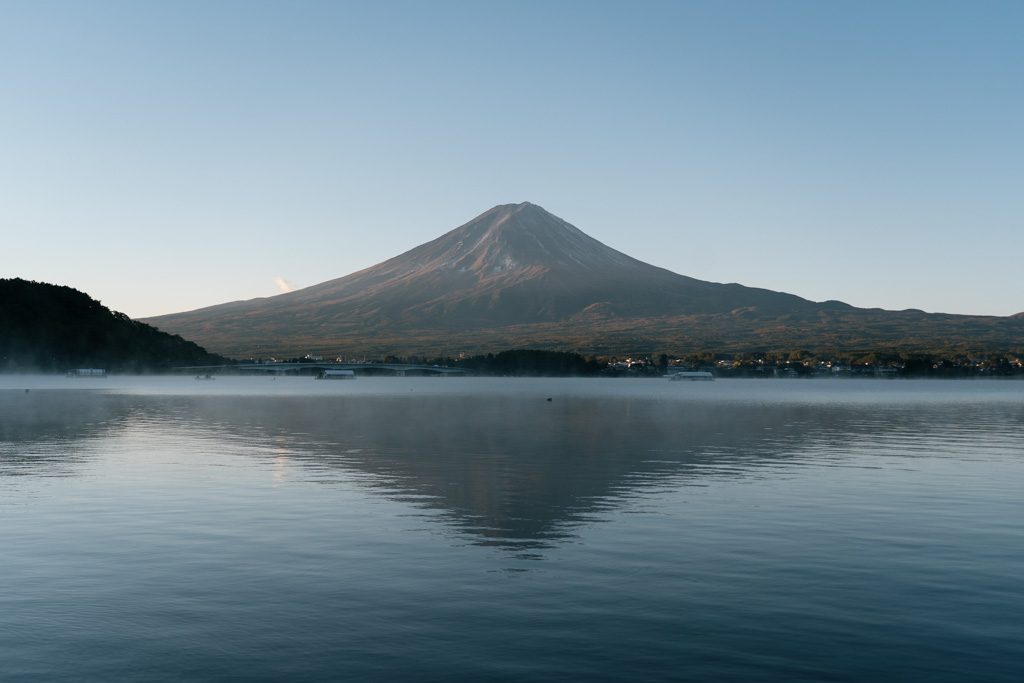
Kogamasao Memorial Park is our favourite lakeside spot on this entire itinerary. Spend some time here taking photos of Fuji reflected in the lake on a still day, or framed by momiji in autumn and cherry blossoms in spring.
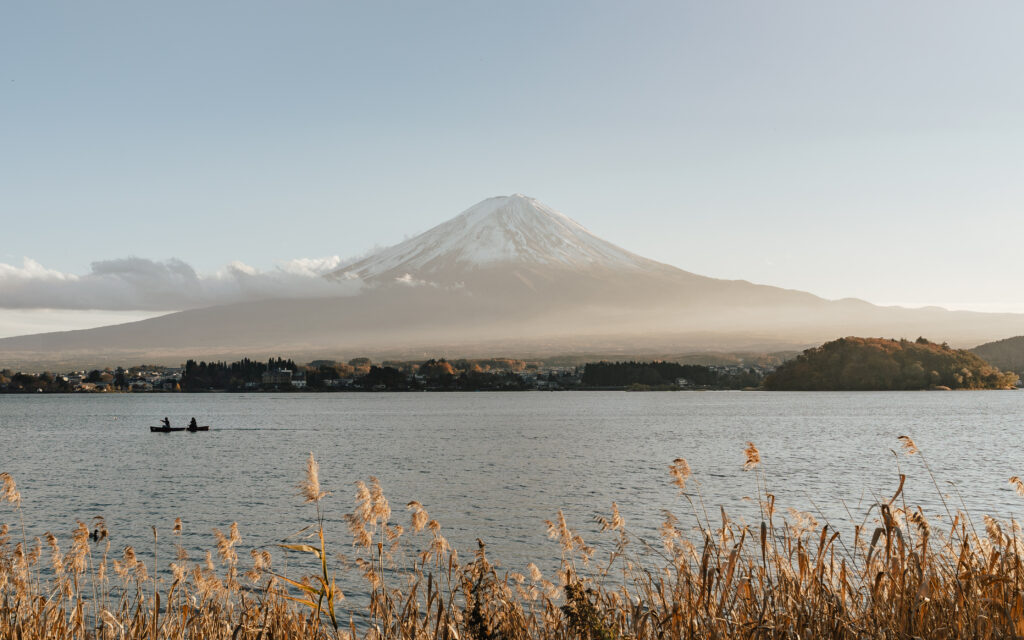
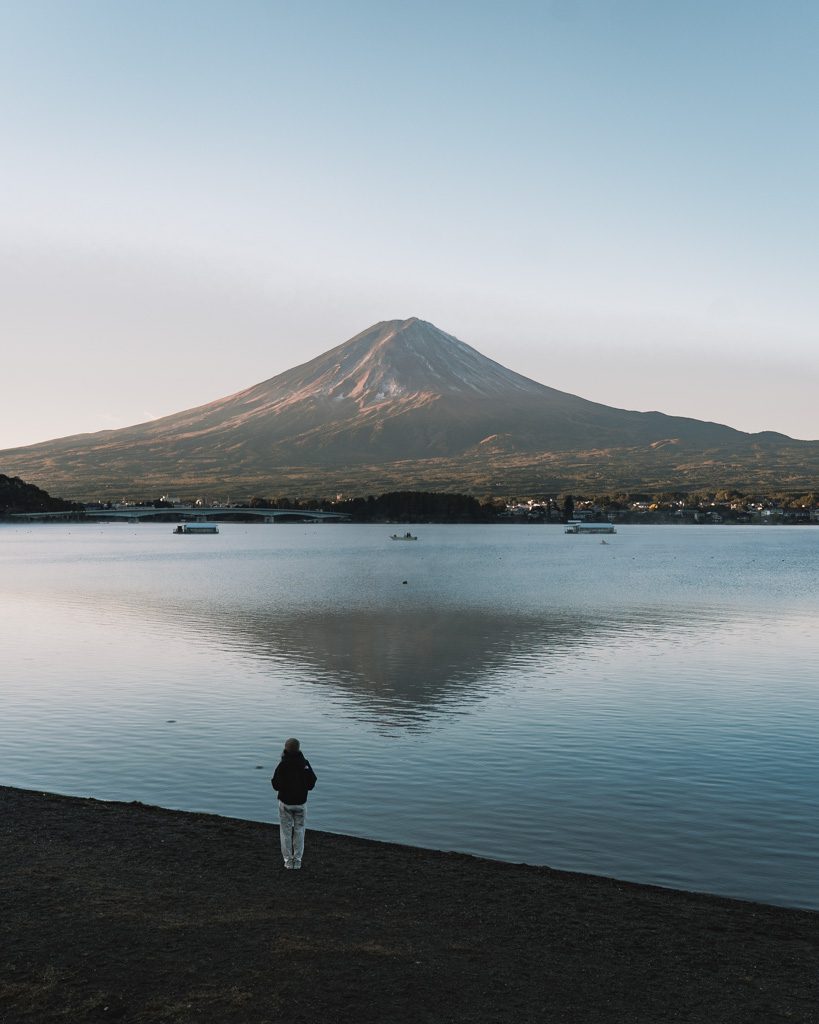
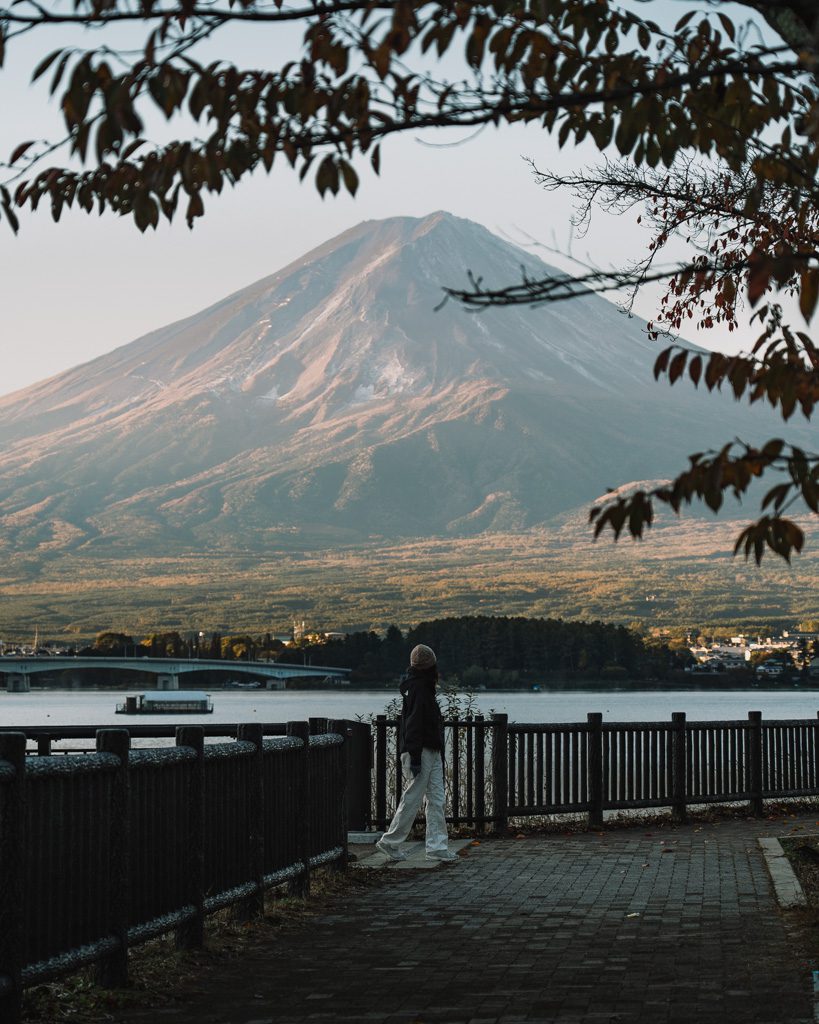
Once you’ve had your fill of the park, Cafe Mimi is just around the corner. It’s a good spot to grab brunch before carrying on round the lake. Afterwards, hop back on the bike (or bus) and head to Oishi Park a bit further around the north shore of the lake.
Oishi Park offers different lakeside views of Fuji, with its flower fields that change from season to season. There’s also a small cafe near the park if you fancy a coffee, but be warned this place can get super busy, it’s a popular stop for the coaches full of tourists.
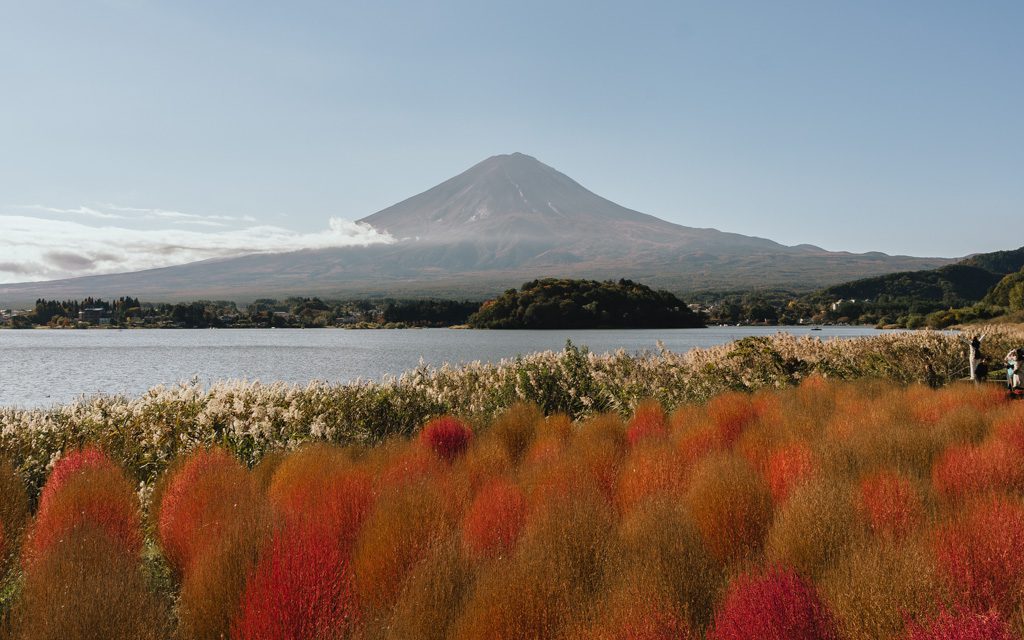
Red kochia bushes at Oishi park in November
Autumn Tip: If you’re looking for a quieter view of Fuji that absolutely shines in autumn, head to Rusugaiwa (Rusu Rock). This sits right next to something known as Momiji Tunnel, a row of incredible momiji trees that shimmer like fire in the autumn sun. It’s an incredible location for photos of Mt. Fuji framed in autumn leaves. Only a 20 minute walk from Oishi Park and significantly quieter.
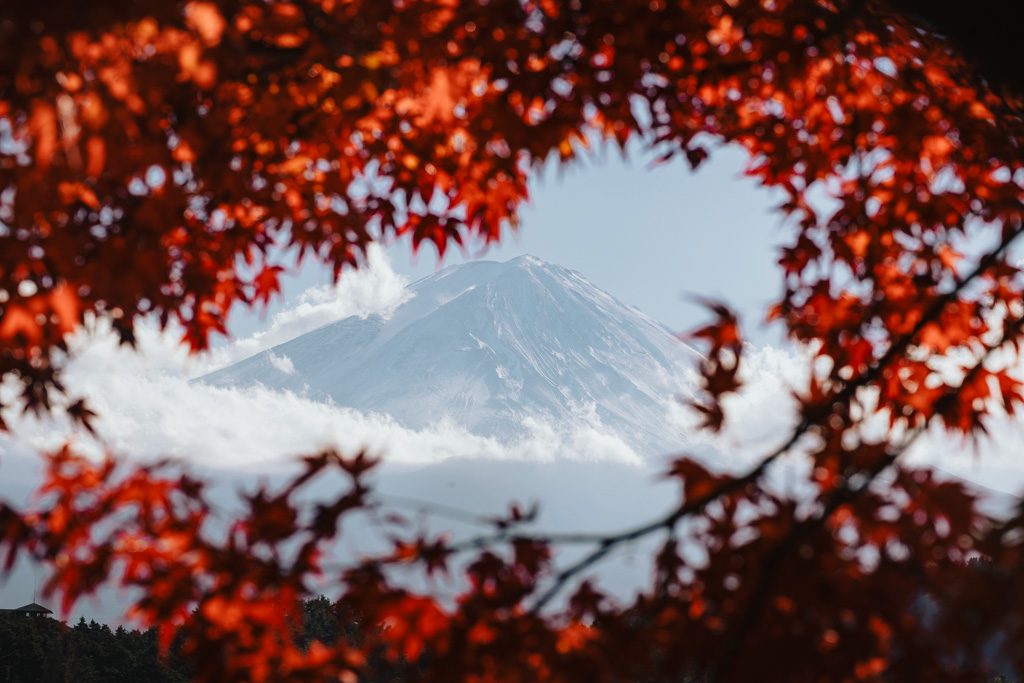
Mt. Fuji through momiji tunnel
Afternoon: Chureito Pagoda and the Streets of Fujiyoshida
Hop back on your mode of transport all the way back to Kawaguchiko Station. If you cycled here, the quickest route is to back track and enjoy the Fuji views in reverse. Drop off the bike back at the rental shop and be ready for more Fuji views.
Catch the Fujikyuko Line from Kawaguchiko Station to Shimoyoshida Station, it only takes around 13 minutes (4 stops).
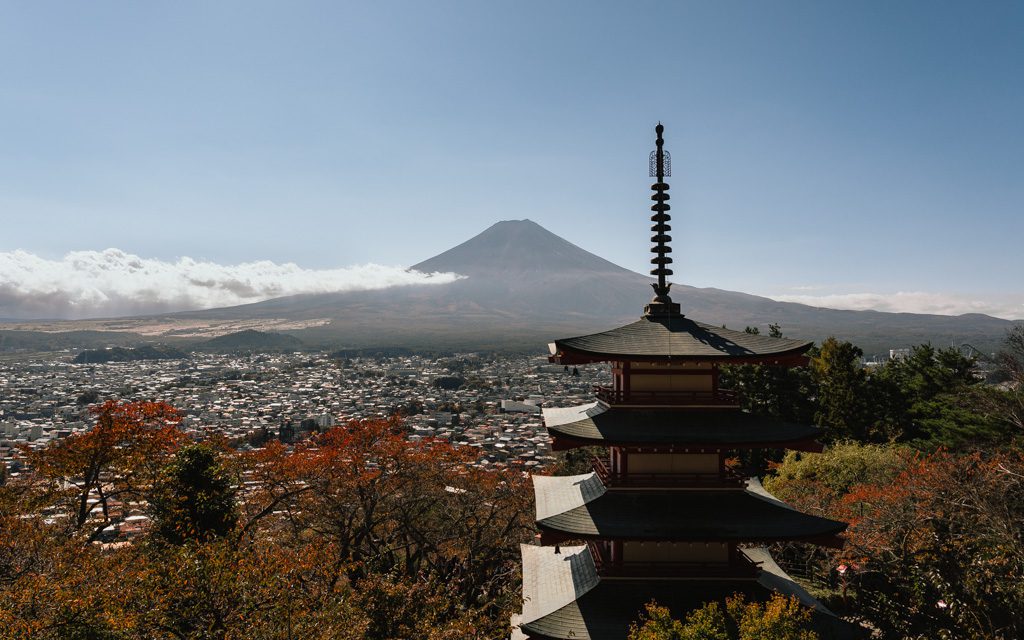
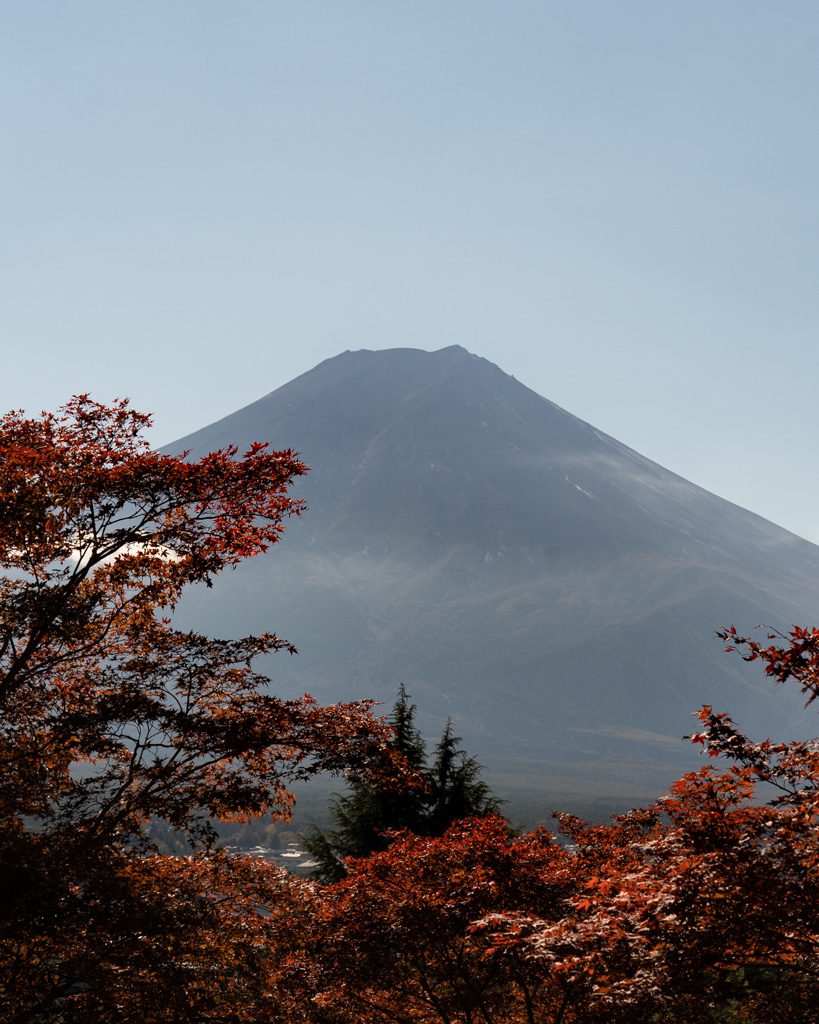
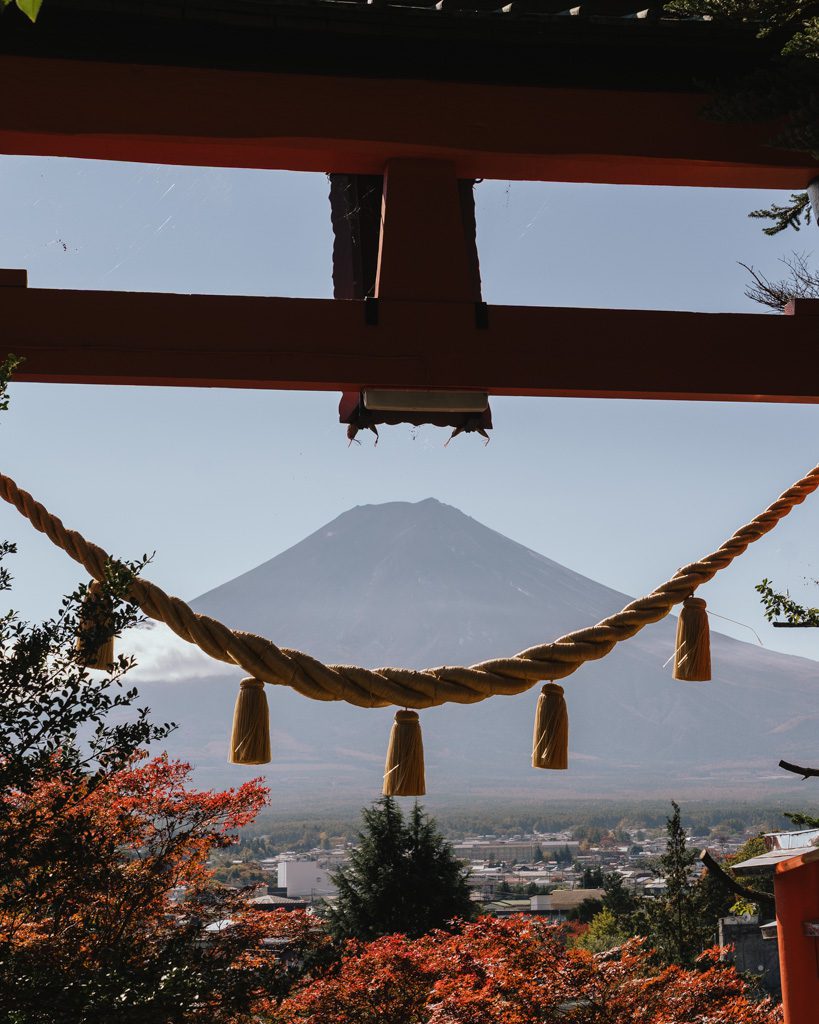
From here it’s just a 20 minute walk to Chureito Pagoda, probably the prettiest temple view in all of Japan. The observation deck at the top of this hill gives stunning views of a traditional five storey pagoda back dropped by Mt. Fuji. This is somewhere we keep coming back to as it looks dramatically different from season to season.
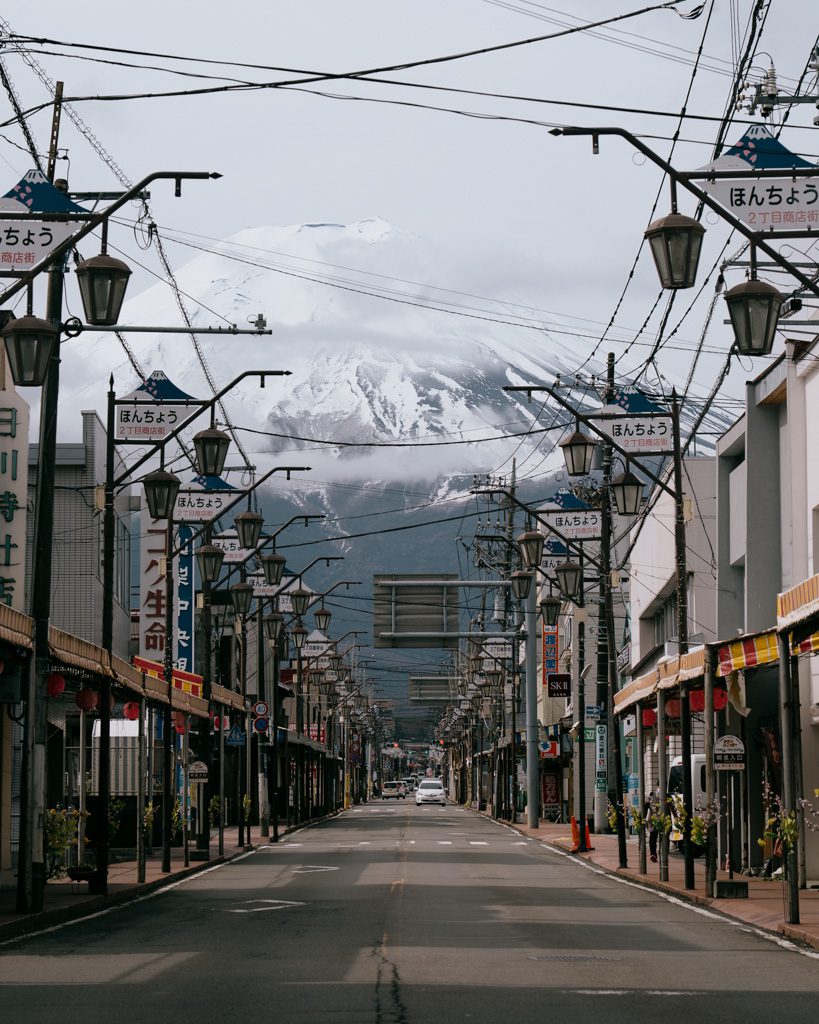
Our last Fuji viewpoint of the day is back down the hill and a short walk into town. This spot gives an incredible perspective of Mt. Fuji looming over the shops and streets of Fujiyoshida. It’s actually the only shot we got of a clear Mt. Fuji on our first trip, just as we were heading to the station for the journey back to Tokyo.
Be sure to grab a coffee from FabCafe Fuji, somewhere we always stop for a sweet treat and a latte when we pass through Fujiyoshida.
Rather than head back to Kawaguchiko to catch the highway bus back to Tokyo, you can instead book your ticket to pick you up from Fujisan Station.
Mt. Fuji Rainy Day Activities
As we said, our first trip to Mt. Fuji was met with 2 days of rain. So to make the most of it, we had to find some solid rainy day activities.
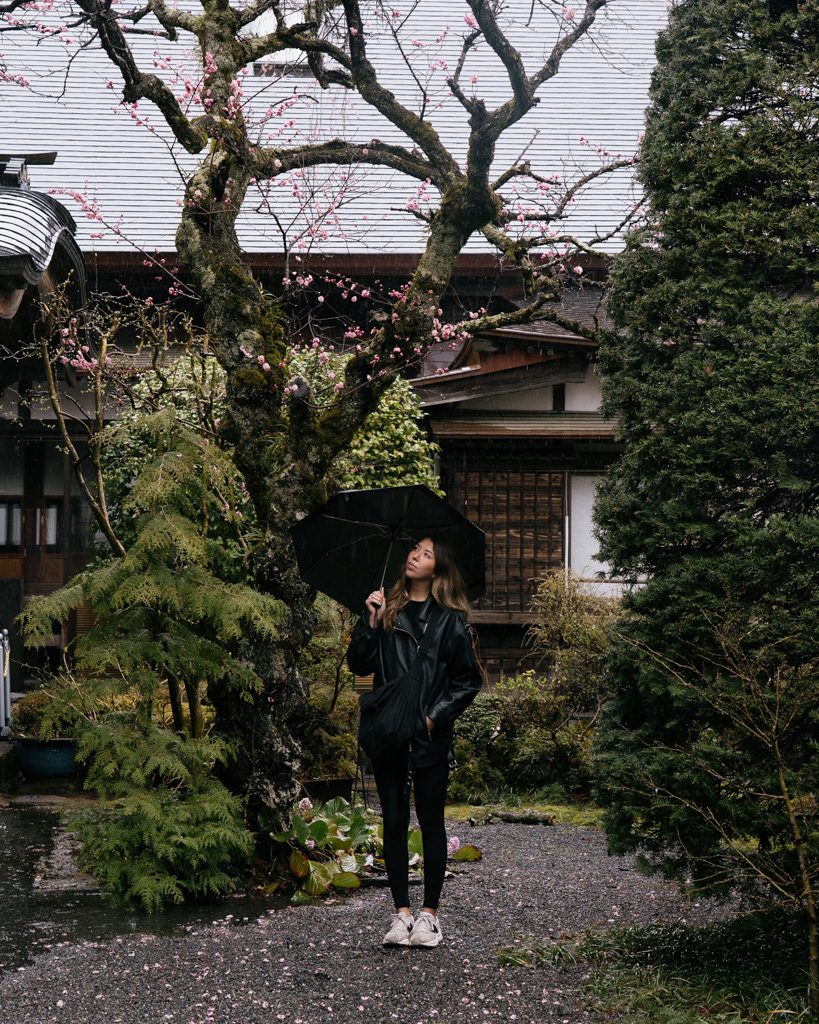
Feeling a bit lost, we decided to just go for a wander in the rain and see what we could find near our hotel. That’s when we stumbled across Entsūji Temple, a small, beautiful temple just off the main tourist trail. We stopped to shelter from the rain and take some pictures.
Afterwards we stopped by Le Pain de Daniel for a coffee and some French pastries, once again hiding from the rain. The gist of the day was to hop from shelter to shelter.
We ended the day early by getting drunk, because if you can’t have a good time, why not have a drink? We did it the Japanese way though, with sake.
We went to Ide Sake Brewery, where we paid ¥100 per sake tasting. You can buy 5 tokens for ¥500 on site and use them on these cool little machines that let you choose what type of sake you want.
Being around Mt. Fuji is also a great opportunity for an onsen experience. In fact, our first time in an onsen was at our hotel in Fuji Kawaguchiko. If you’re looking for one, we recommend Kaiun-no-yu at the Royal Hotel Kawaguchiko. It’s accessible from the local sightseeing bus we’ve used throughout this guide, simply get off at the No.5 Kawaguchiko Herb Hall bus stop and walk 1 minute.

Where to Eat Around Mt. Fuji
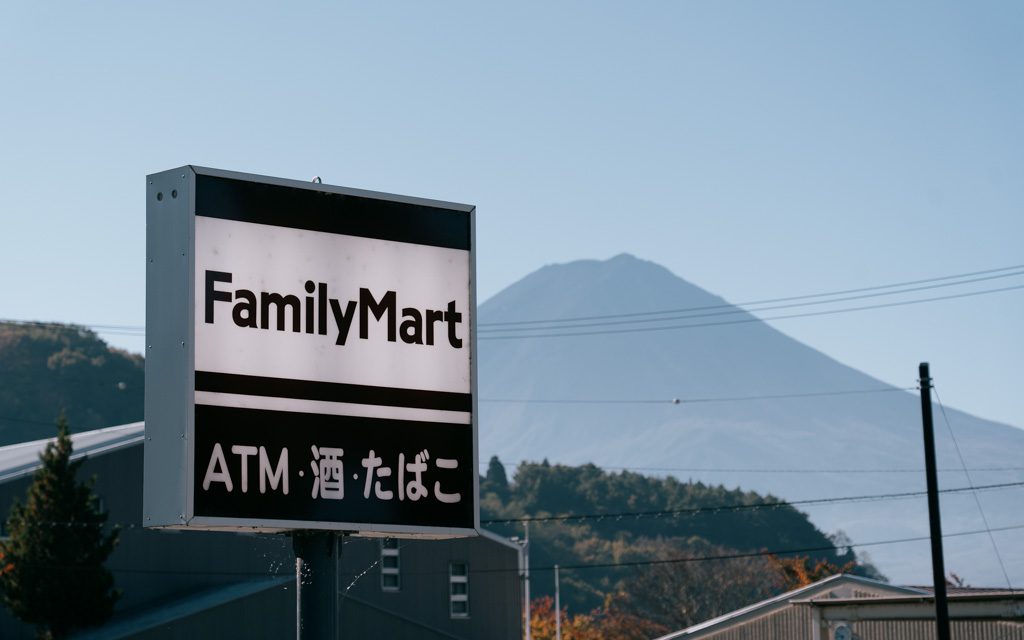
On a day trip like this we like to focus on views and activities rather than spending our time in a restaurant. We prefer to grab food on the go so it’s much more of a konbini kind of day for us. Our mornings usually start with a quick Lawson coffee, churro, and onigiri in the bag for later.
Saying that, on this itinerary you’ll still pass a few solid food stops on the way.
Cafe Mimi, right by Kogamasao Memorial Park, is where we like to stop for brunch before carrying on round the lake. It’s a gorgeous cafe that looks like it’s been plucked out of France and popped next to Mt. Fuji. Definitely find a table outside on a nice day for lakeside Fuji views whilst you eat.
There’s a small cafe by Oishi Park too if you need a coffee stop, though be warned it gets busy with the tour coaches that pull in here. We’d treat this as a top-up rather than a proper meal stop given how packed it can get.
Once you’re in Fujiyoshida, FabCafe Fuji on Honcho Street is our go to. We always stop here for a sweet treat and a latte when we’re passing through, and it’s got the added bonus of sitting right on the same street as the Fuji street view, so you’re not going out of your way for it.
Things to Know Before You Visit Mt. Fuji
🚃 Suica Card: Kawaguchiko buses let you tap on and off with a Suica card. We’ve written a full guide on setting up a Suica card.
📱 Get an eSIM: Reliable data makes Google Maps and Translate so much easier. Even after 10 months in Japan, we still relied on it daily. Check our guide to the best eSIM options in Japan.
💴 Cash is Still King: Cards work almost everywhere now, but keep some cash for smaller shops and stalls. Bring a fee-free debit card (we like Chase or Revolut) and withdraw at a 7-Eleven ATM for a fair rate.
🛡️ Get Travel Insurance: Japan is safe, but insurance also covers lost luggage, cancelled flights, and theft. Sort it before you fly. Here’s our guide to the best travel insurance for long-term trips.
🗣️ Learn a Few Phrases: You don’t need fluency. Konnichiwa (hello), sumimasen (excuse me), and arigatou (thank you) go a long way. Bonus points for gochisousamadeshita after a meal.
Final Thoughts About This Mt. Fuji Day Trip from Tokyo
We’d easily put Mt. Fuji as the number one day trip you should do from Tokyo. Especially if your trip to Japan doesn’t have a few nights scheduled near Fuji already.
A day trip to Mt. Fuji won’t give you everything an overnight stay would, but it’s a genuinely solid way to see the mountain without gambling a full itinerary on the weather. If the day doesn’t play ball, you’ve lost a day trip, not two nights like we did back in March 2023.
If you’re in Tokyo and the forecast is showing no signs of good Fuji weather then honestly, maybe skip it. We’ve written about other day trips from Tokyo that aren’t as reliant on the weather. Fuji will still be there when you come back! And we’re big believers in the fact that one trip to Japan just isn’t enough.
If you’re planning your trip to Japan and wondering how to spend your time in Tokyo, check out our 5-Day Tokyo Itinerary to see how we’d make the most of our time in Japan’s capital.
FAQs About This Mt. Fuji Day Trip from Tokyo
Is Mt. Fuji worth a day trip from Tokyo?
Yes, though we'd recommend an overnight stay if you can manage it. A day trip is a great option if you're short on time or don't want to gamble a full itinerary on the weather, since Mt. Fuji is only visible around 80 days a year.
How long does it take to get to Mt. Fuji from Tokyo?
The highway coach from Busta Shinjuku to Kawaguchiko Station takes around 120 minutes. It's the cheapest and most efficient way to get there without a car.
How much does the bus from Tokyo to Mt. Fuji cost?
The highway coach from Shinjuku to Kawaguchiko costs around ¥2,300 one way. Book online in advance and don't forget to sort your return trip too.
What is the best time of year to see Mt. Fuji?
Autumn is our favourite, with the clearest, most consistent views. Winter looks even clearer based on what we've heard from family who've visited, though we haven't experienced it ourselves yet. Summer has the worst visibility of the four seasons.
Is it better to cycle or take the bus around Lake Kawaguchi?
Both work well. Cycling is a great way to see Fuji from multiple angles around the lake and is an activity in itself, while the Red Line bus is the easier option if you'd rather not pedal, or if the weather isn't playing along.
Can you visit Chureito Pagoda and Lake Kawaguchiko on the same day?
Yes. From Kawaguchiko Station, the Fujikyuko Line gets you to Shimoyoshida Station in around 13 minutes, and Chureito Pagoda is about a 20 minute walk from there. It pairs easily with a morning around the lake.
Do you need to return to Kawaguchiko Station to get back to Tokyo?
Not if you're taking the highway bus. You can pick it up directly from Fujisan Station in Fujiyoshida, saving you the trip back to Kawaguchiko once you've finished exploring the pagoda and town.
What should you do if it's raining on your Mt. Fuji day trip?
Don't write the day off. On our own rained-out first visit, we found shelter in Entsūji Temple, warmed up with coffee and pastries at Le Pain de Daniel, and ended up sake tasting at Ide Sake Brewery. An onsen, like Kaiun-no-yu at the Royal Hotel Kawaguchiko, is also a great rainy day option.
Related Posts
Hi! We’re Mark & Sarah.
We’ve been travelling the world together for the past 4 years. Exploring destinations such as Europe, South America, South East Asia, Japan and Australia. Now we’re sharing everything we’ve learned on our travels, to help you get out there and have your own adventures!