Nikko Day Trip from Tokyo: Toshogu Shrine, Kegon Falls & the Irohazaka Mountain Pass
- Last Updated On September 7, 2026
Disclaimer: Some of the links on this site are affiliate links. This means I may earn a small commission if you make a purchase through them at no extra cost to you. I only recommend things I genuinely use or believe in.
Our day trip to Nikko from Tokyo didn’t exactly go to plan. Poor planning, having to catch the slow train, and bad weather left us feeling like we’d wasted our time in a place that’s home to some of Japan’s most impressive scenery.
That doesn’t mean it has to happen to you!
Nikko is a great day trip from Tokyo when done correctly, and in this guide we’ll lay out exactly how we’d do it if we were to revisit, how to get there, and which temples and waterfalls are actually worth your time.
In a Rush? Here Are Our Favourite Hotels in Tokyo
Nikko Day Trip from Tokyo at a Glance
- Travel Time: ~2 hours from central Tokyo on the Tobu Limited Express
- Fare: ~¥4,250–¥4,940 return (basic round-trip ticket + one-way Limited Express surcharge)
- Nikko Pass: Not recommended for this itinerary — doesn't cover the Akechidaira bus
- Best Time to Visit: Autumn for foliage, but check timing between mountain and town areas
- Key Stops: Shinkyo Bridge, Toshogu Shrine, Akechidaira Ropeway, Lake Chuzenji
- Getting Around: On foot in town, Tobu bus up to Akechidaira/Chuzenji Onsen
- Ideal For: A full day — start early on the first Limited Express
Is Nikko Worth a Day Trip from Tokyo?
Absolutely!
After the experience we had you might think we’d be telling you to avoid Nikko as a day trip from Tokyo, but it’s actually the opposite.
We might not have had the best time (that’s our fault), but we’ve seen the potential and would love to go back and give it another shot. Perhaps with a bit more planning this time.
The rich history and gorgeous mountain views are too incredible to pass up on. It’s also a great opportunity to escape the chaos of the city and experience rural mountainous Japan, especially if you’ve already done Mt. Fuji.
Keep reading to learn from our mistakes and plan the best day trip to Nikko from Tokyo.
How to Get to Nikko from Tokyo
Travel Time: ~120 minutes from central Tokyo
Fare: ~¥4,250–¥4,940 return (basic round-trip ticket + one-way Limited Express surcharge)
Out of all of our day trips from Tokyo, Nikko was probably the hardest one to get our heads around. Hopefully we can clear things up if you’re struggling like we were.
From Asakusa Station you need to catch the Tobu Limited Express to Nikko, this is the fastest train that takes roughly 2 hours. Don’t make the same mistake we did and assume you’ll be able to get tickets for the first train on the day. Book the limited express ticket in advance.
We had to take the local train which cost less but took an extra hour, gave us less time in Nikko, and left us feeling very unprepared.
A note on the Nikko Pass: you’ll see the Nikko Pass World Heritage Area (¥3,000 for adults, valid 2 days) recommended everywhere for Nikko trips, and for a lot of itineraries it’s genuinely good value. For this one, though, we wouldn’t bother. The pass covers a round trip on the base fare plus unlimited local transport around the temple area, but it does not cover the bus out to Akechidaira for the gondola and lake viewpoint, which is a key stop on this itinerary.
We found this out the hard way and ended up paying for that bus separately anyway. The pass also costs ¥200 more than a plain round-trip ticket (¥3,000 versus ¥2,800), so you’re paying extra for local transport you won’t actually use enough of to make it worthwhile on this particular route.
Instead, just buy the basic round-trip ticket (¥2,800) and add the Limited Express seat reservation on top, which costs roughly ¥1,450–¥2,140 one-way depending on which train you book. We recommend at least getting the Limited Express there so you have more time in Nikko.
The way back? Maybe not as important if you’re on a budget, and the local train works fine if you’d rather save the money.
You’ll also need to budget for the Akechidaira bus separately later in the day (around ¥1,250 one-way), since the Nikko pass doesn’t cover this area.
You can purchase your ticket and Limited Express reservation at Asakusa Tobu Station.
Best Time to Visit Nikko
Autumn
Autumn is absolutely the best time to visit Nikko. It’s the most popular time to visit thanks to the incredible momiji (autumn foliage), which is what we went there to see.
However, we didn’t account for how much sooner autumn reaches the higher mountainous regions. Nikko’s foliage moves down the mountain over about a month, with the upper areas around Lake Chuzenji and Kegon Falls turning in mid-to-late October, well before the shrines in town peak in early November. Check the autumn foliage forecast in advance and decide whether you’re chasing the mountain colour or the shrine-and-town colour, since they rarely line up on the same visit.
We went chasing the mountain colours but got there too late. Just another reason to go back though!
Winter
Winter is when the crowds disappear almost entirely and the temples take on a stripped back, snowy look that autumn’s colour completely hides. It’s colder and some of the higher routes around Lake Chuzenji can be affected by snow, but if you want Toshogu Shrine without the crowds, this is when to go.
Spring
Spring brings fresh greenery and thinner crowds than autumn. It’s a solid choice if your dates don’t line up with foliage season and you’d rather avoid the October-November crowds. Just don’t expect to see much cherry blossom if that’s your goal. There are much better places in Tokyo to see cherry blossoms.
Summer
Summer is Nikko’s quietest season.
Just like the rest of Japan, the heat and humidity make everyday activities feel sluggish. Though the waterfalls run fuller with snowmelt and rainy season runoff, so it’s not a write-off if a waterfall focused trip is more your priority than the shrines. We haven’t visited in summer yet but it’s on the cards for our next road trip.
Nikko Day Trip Itinerary
Start the day early and catch the Tobu Limited Express from Asakusa to Nikko. We recommend buying your limited express ticket in advance. If you’re following our 5-day Tokyo guide then be sure to pop into Asakusa Station on day two to buy your ticket.
Aim to catch the ~7:45am limited express train, it takes around two hours and will give you plenty of time to get around Nikko. It’s always best to get there early and not need the time than get there late and run out of time.
Before you start exploring, it’s worth stopping at the Family Mart near the station to pick up lunch. Nikko is spread out more than you’d expect, and once you’re away from the town centre, there aren’t as many food options. So grabbing something now saves you hunting for food later.
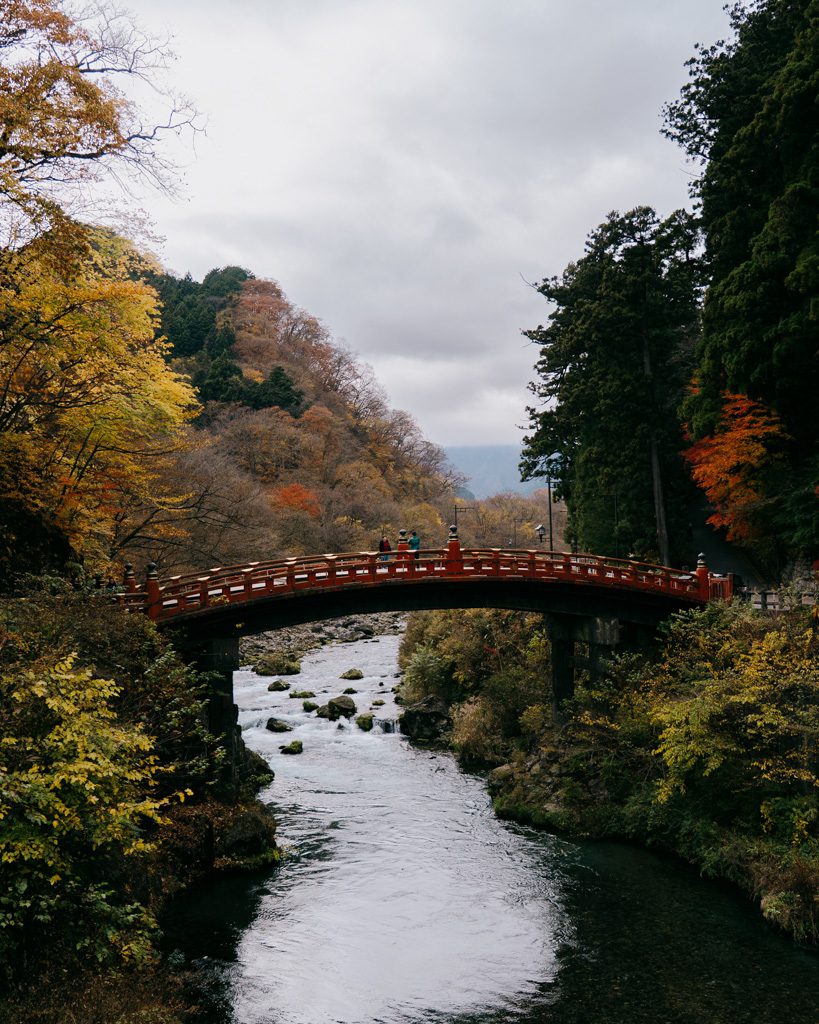
Just up the road from the station is Shinkyo Bridge, the vivid red bridge arching over the Daiya River, has become one of the most recognisable images of Japan. In autumn, with the forest behind it turning orange, it’s genuinely one of the best photo spots we found anywhere on our trip to Nikko.
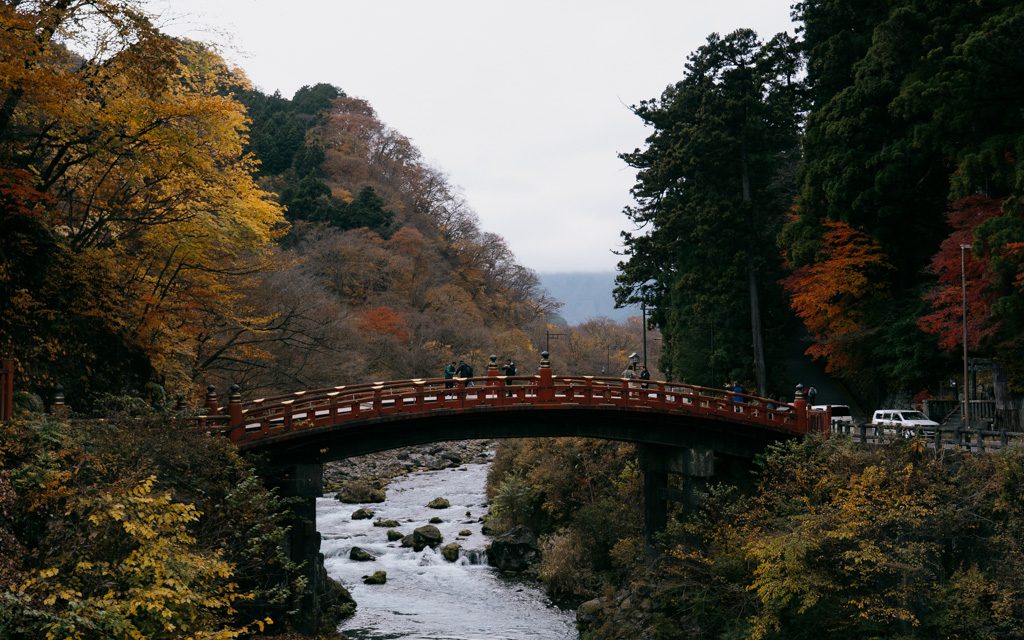
Honestly, our poorly planned day was saved by this spot.
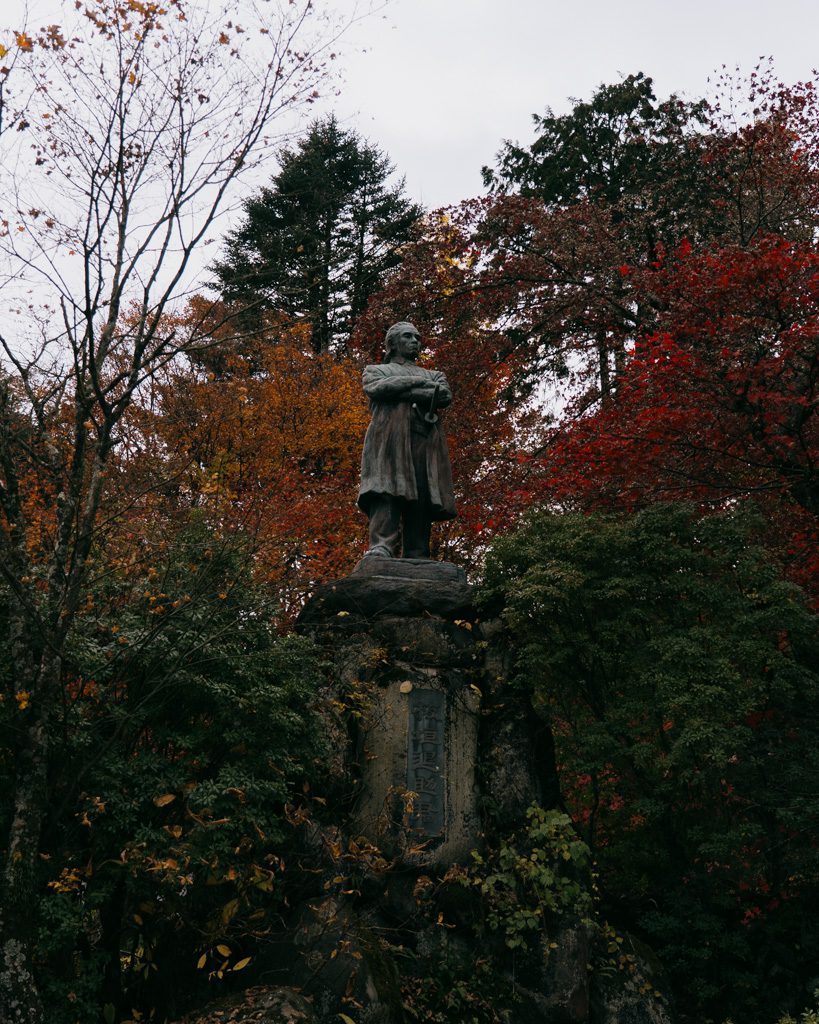
From Shinkyo Bridge, a 15-minute walk through the forest path brings you to Toshogu Shrine, the elaborate memorial shrine built for Tokugawa Ieyasu, the shogun who unified Japan. This is an incredible piece of Japanese history, and the shogun the shrine memorialises is the one the Disney+ show Shogun is based on!
Do this before you go chasing the lake and waterfall viewpoint.
We made the mistake of skipping Toshogu first and heading straight for the autumn colours further up the mountain. By the time we came back down, the rain had set in, what little colour we’d hoped for was already gone, and Toshogu had closed for the day at 4pm.
We missed one of Nikko’s biggest highlights entirely because we prioritised a view that didn’t even pay off. Save yourself the same regret and visit the shrine first.
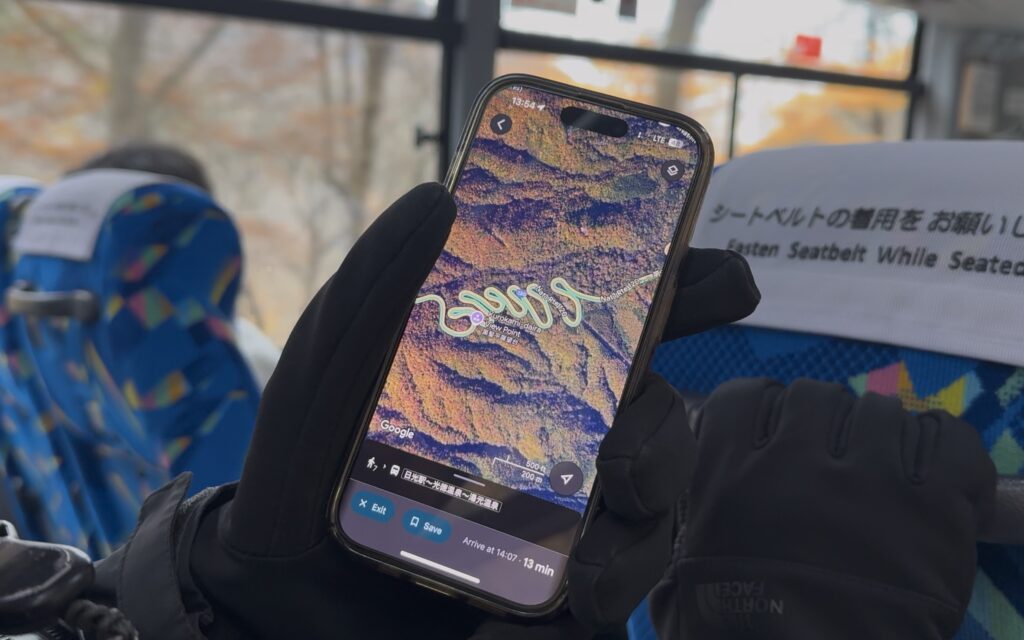
Once you’ve done Toshogu, walk back to Tobu Nikko Station and catch the bus heading towards Chuzenji Onsen or Yumoto Onsen, and get off at the Akechidaira stop. This stretch of road is called Irohazaka, a famous switchback mountain pass with 48 hairpin turns, and it’s an attraction in its own right. It’s about a 35-minute ride and costs roughly ¥1,250 one-way, with buses running every 15–20 minutes.
The ride up is incredible as the bus snakes its way up Irohazaka through dense forest that’s normally blazing with momiji colours in autumn. We arrived a little too late in the season to catch it at its peak, but even bare, the switchback road and mountain views make the ride worth it on its own.
The Akechidaira stop is the reason we don’t recommend the World Heritage Pass. The pass doesn’t cover the bus up the mountain, and all the other stops we recommend visiting are walkable from the station. We’d say the only reason to get the pass is if you struggle with walking in 30–40 minute stints, or you have other plans in Nikko.
Once you get to the top of the mountain pass, the Akechidaira Ropeway takes you up in about 3 minutes to an observation deck looking out over Lake Chuzenji.
The ropeway costs ¥1,000 round trip for an adult and ¥500 round trip for a child.
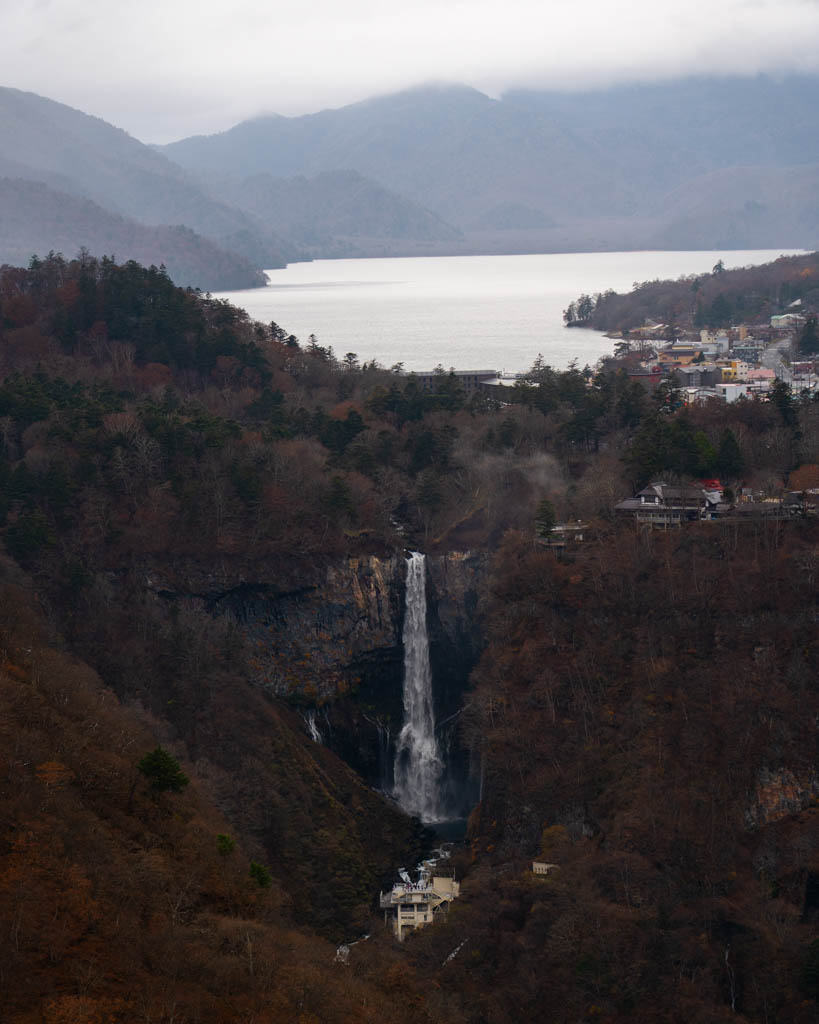
The views from the top are stunning even on an overcast day, looking out across Lake Chuzenji with Kegon Falls visible in the valley below. On a clear day this must be one of the best viewpoints in the whole Kanto region.
From Akechidaira, the bus back down doesn’t traverse the same road. Irohazaka actually runs as two separate one-way roads, one for the climb and one for the descent, so instead of turning around, the bus carries on further up to Chuzenji Onsen first, where you swap onto a different bus heading back down.
It sounds like a hassle, but it’s a good excuse to get off and explore rather than just sitting on a connecting service. Chuzenji Onsen sits right on the edge of Lake Chuzenji, and there’s an easy lakeside path near the bus terminal worth a short walk, especially if you want a closer look at the lake than you got from the viewpoint above.
If you’re hungry, this is also a good spot to try yuba (Nikko’s local tofu skin speciality) or a bowl of soba, with a few small restaurants and cafes clustered around the terminal.
We didn’t get the chance to explore Chuzenji Onsen properly ourselves since our day was already running late by this point, but if you’ve planned your timings better than we did, it’s worth building in half an hour before heading back down the mountain.
From Chuzenji Onsen, catch the connecting bus back to Tobu Nikko Station, then it’s the journey back to Tokyo. We took the slow train back, partly by circumstance and partly because after the day we’d had, we were feeling a bit defeated.
It took the better part of two and a half hours, but honestly, watching the mountains fade back into the Tokyo suburbs was a nice, quiet way to end the day.
Things to Know Before You Visit Nikko
🚃 Suica Card: Tokyo runs on rail, so a Suica card is essential to get to Asakusa station. We’ve written a full guide on setting up a Suica card.
📱 Get an eSIM: Reliable data makes Google Maps and Translate so much easier. Even after 10 months in Japan, we still relied on it daily. Check our guide to the best eSIM options in Japan.
💴 Cash is Still King: Cards work almost everywhere now, but keep some cash for smaller shops and stalls. Bring a fee-free debit card (we like Chase or Revolut) and withdraw at a 7-Eleven ATM for a fair rate.
🛡️ Get Travel Insurance: Japan is safe, but insurance also covers lost luggage, cancelled flights, and theft. Sort it before you fly. Here’s our guide to the best travel insurance for long-term trips.
🗣️ Learn a Few Phrases: You don’t need fluency. Konnichiwa (hello), sumimasen (excuse me), and arigatou (thank you) go a long way. Bonus points for gochisousamadeshita after a meal.
⛅️ Check the Forecast: Keep a close eye on the weather and foliage forecasts. The conditions in the mountainous regions can change quickly, and the weather can make or break a trip to Nikko.
Final Thoughts About This Nikko Day Trip from Tokyo
Nikko has earned a permanent spot on our list of places to go back to and do properly.
The view from Akechidaira was genuinely excellent even on an overcast day, and Shinkyo Bridge alone made the trip worth it. But we never actually made it inside Toshogu Shrine, arguably Nikko’s biggest highlight, because we prioritised the mountain in the wrong order and it had closed by the time we got back. That’s on us for not planning ahead rather than anything to do with Nikko itself.
Follow this itinerary, do Toshogu first like we should have, and you’ll get more out of a day here than we did. When we do go back, likely later this year, Toshogu is at the top of the list, along with a couple of stops we skipped entirely this time.
Rinno-ji Temple and Futarasan-jinja, both right next to Toshogu in the same World Heritage complex, .and Kanmangafuchi Abyss, a short gorge walk lined with stone Jizo statues that keeps coming up on our socials, are definitely places we’d recommend adding onto your trip if you have the time.
This itinerary is definitely doable as a day trip from Tokyo if you plan in advance and don’t wing it like we did. The only good thing about doing it poorly once is that we can always try again!
FAQs About This Nikko Day Trip from Tokyo
Is Nikko worth a day trip from Tokyo?
Absolutely. Nikko is home to Toshogu Shrine, one of Japan's most important temples, and the dramatic Kegon Falls, all within a two-hour train ride of central Tokyo. It's a great way to escape the city and experience rural, mountainous Japan, especially if you've already visited Mt Fuji and want more of that same feeling.
Is the Nikko Pass World Heritage Area worth it?
Not for this itinerary. The pass costs ¥200 more than a plain round-trip ticket and covers unlimited local transport around the temple area, but it doesn't cover the Akechidaira bus up the mountain, which is a key stop on this route. Unless you're planning extra stops elsewhere in Nikko, you're better off with a basic round-trip ticket plus a Limited Express seat reservation.
How long does it take to get to Nikko from Tokyo?
Around two hours from central Tokyo on the Tobu Limited Express from Asakusa Station. The local train is cheaper but takes roughly an extra hour each way.
Do you need to book the Limited Express train in advance?
Yes. Seats can sell out, especially on the earlier departures, so book your Limited Express ticket ahead of time rather than assuming you can buy it on the day.
What is Irohazaka?
Irohazaka is the famous switchback mountain pass connecting Nikko town to Lake Chuzenji and the Akechidaira area, made up of 48 hairpin turns split across two separate one-way roads, one for climbing and one for descending.
When is the best time to visit Nikko?
Autumn, for the momiji foliage, though timing matters. The higher areas around Lake Chuzenji and Kegon Falls peak in mid-to-late October, while the shrines in town peak in early November, so check a foliage forecast before you go.
Related Posts
Hi! We’re Mark & Sarah.
We’ve been travelling the world together for the past 4 years. Exploring destinations such as Europe, South America, South East Asia, Japan and Australia. Now we’re sharing everything we’ve learned on our travels, to help you get out there and have your own adventures!